1. The Rise of Off-the-Shelf Conformal Cooling
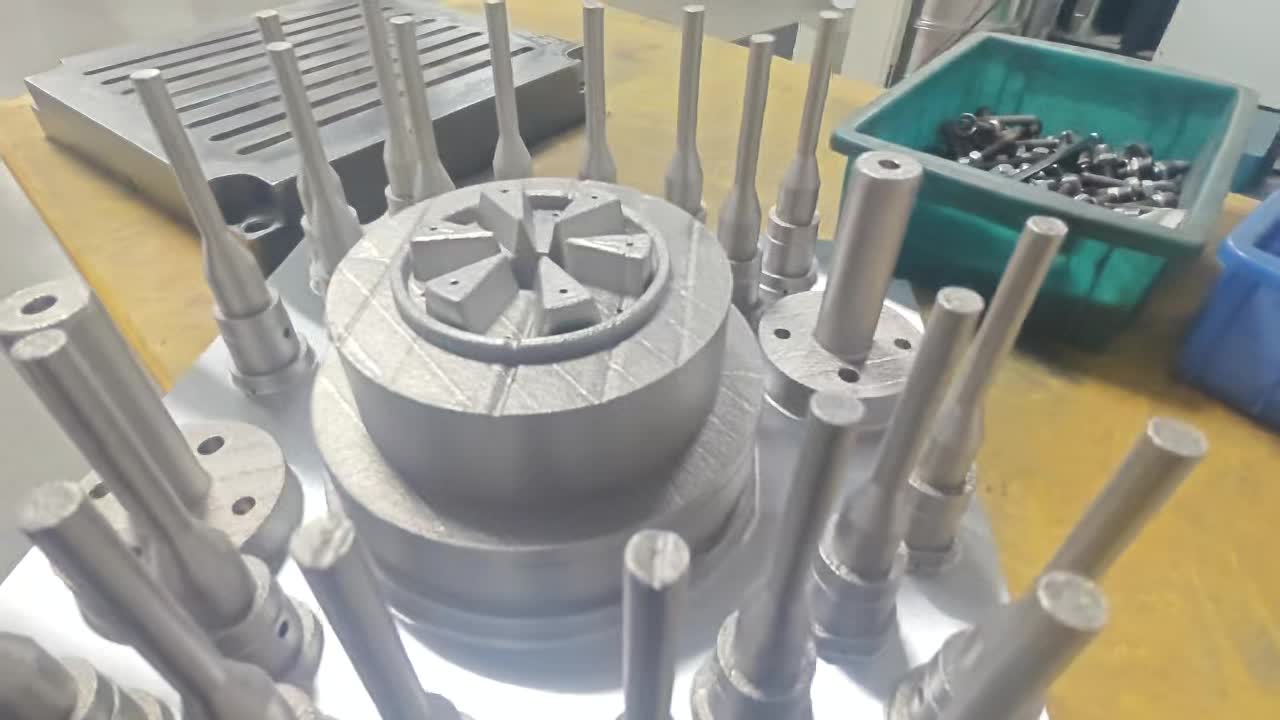
For years, conformal cooling channels were exclusively the domain of custom 3D-printed mold components. Every insert required CAD design, simulation, LPBF (laser powder bed fusion) printing, post-machining, and heat treatment. The process delivered outstanding thermal performance but came with lead times of 10 to 20 days and costs starting at $800 per insert.
That landscape has shifted. Three major mold component suppliers now offer standardized conformal cooling products that ship from catalog: DME (Milacron), TruCool by Progressive Components, and HTS (Hasco Temperature Solutions). These off-the-shelf solutions cover the most common hot-spot locations in injection molds — sprue bushings, core pins, and round cavity inserts — with pre-engineered conformal cooling channels built in.
This guide compares all three product lines, evaluates their performance against fully custom 3D-printed conformal cooling inserts, and outlines a practical decision framework for tooling engineers and purchasing managers who need to choose the right approach for each application.
2. DME Conformal Cooling Product Line
DME, a division of Milacron and one of the oldest names in North American mold components, offers the broadest catalog of standard conformal cooling products. Their line covers three primary categories:
2.1 Conformal Cooling Sprue Bushings
DME's conformal cooling sprue bushings replace conventional straight-drilled sprue bushings with units that incorporate helical conformal cooling channels around the sprue bore. Available in standard DME mold base sizes (A, B, and C series nozzle radii), they address one of the most common hot spots in injection molds — the sprue area, where material lingers at melt temperature longer than anywhere else in the tool.
- Sizes: 1/2", 3/4", and 1" sprue orifice diameters; lengths from 3" to 7" in 1/2" increments
- Material: H13 tool steel, hardened to 44–48 HRC
- Channel design: Helical conformal circuit with 4–6 mm diameter channels, optimized for turbulent flow at 2–4 GPM
- Performance: Typically reduces sprue-area cooling time by 30–50% and eliminates stringing on hot runner-to-cold runner transitions
- Price range: $200–$450 per unit depending on length and diameter
2.2 Standard Conformal Inserts
DME's round conformal inserts are designed for core-side applications where the hot spot occurs on a cylindrical feature — bosses, round cores, and tubular sections. They ship as finished H13 inserts with internal conformal channels, ready to drop into a standard DME pocket.
- Diameters: 12 mm to 50 mm in 2 mm increments
- Lengths: 40 mm to 120 mm
- Cooling circuit: Spiral conformal channel, single-circuit with inlet/outlet on the bottom face
- Price range: $180–$380 depending on size
2.3 Conformal Core Pins
The smallest category in DME's line, conformal core pins address the perennial problem of cooling tall, thin cores. These are produced by LPBF from maraging steel (MS1) and post-machined to standard tolerances. They feature a micro-channel conformal circuit inside cores as small as 6 mm diameter — geometries that are impossible to cool with conventional bubblers or baffles.
- Diameters: 6 mm to 25 mm
- Material: Maraging steel (1.2709 / MS1), age-hardened to 50–54 HRC
- Price range: $250–$600
DME's product range spans three categories (sprue bushings, inserts, core pins) with over 120 SKUs. Their distribution network means most standard sizes ship within 1–2 business days to US addresses, making them the fastest option for emergency mold fixes where a hot spot is causing production downtime.
3. TruCool by Progressive Components
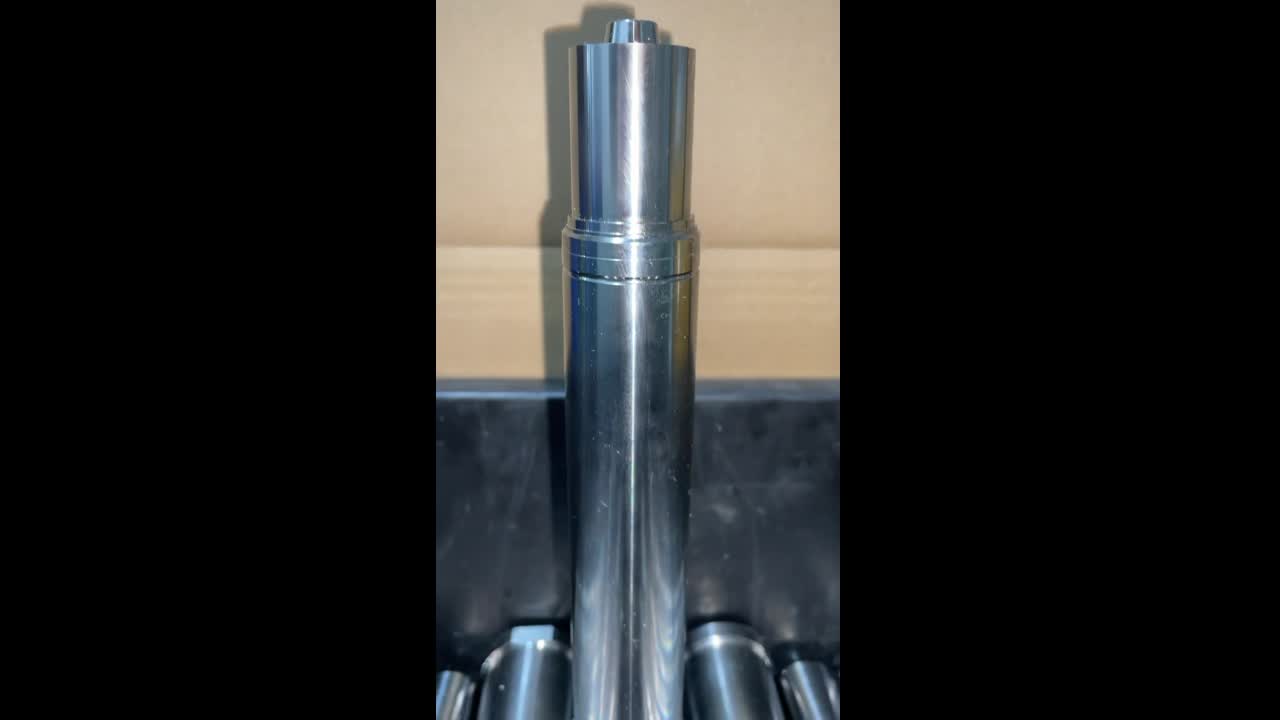
Progressive Components, known for their mold monitoring and standardized mold component systems, markets their conformal cooling line under the TruCool brand. TruCool takes a more focused approach than DME, concentrating on standardized conformal inserts rather than trying to cover every product category.
3.1 TruCool Standard Conformal Inserts
TruCool inserts are available as round cylinders with pre-engineered internal conformal cooling channels. The product line is built around a modular sizing system that aligns with common core dimensions used in packaging, consumer goods, and medical device molds.
- Diameters: 10 mm to 60 mm
- Lengths: 30 mm to 150 mm
- Material: Maraging steel (MS1), heat-treated to 50–54 HRC
- Channel design: Proprietary helical-spiral hybrid circuit designed for maximum heat extraction per unit volume
- Surface finish: Ground OD to h6 tolerance, ready for direct press-fit installation
- Price range: $220–$500 depending on dimensions
3.2 TruCool Sizing Options
One of TruCool's differentiators is their sizing flexibility. While each insert ships as a standard OD, the internal bore can be ordered in multiple diameters to match different core geometries. This effectively multiplies the number of available configurations without requiring custom manufacturing.
TruCool also offers a semi-custom service where customers can order non-standard lengths cut from stock blanks, with lead times of 5–7 days — faster than fully custom LPBF but slower than pure catalog ordering.
TruCool inserts arrive with ground OD surfaces to h6 tolerance, eliminating the need for post-machining that many custom 3D-printed inserts require. For shops without in-house grinding capability, this can save $100–$200 per insert in secondary operations and 2–3 days of shop time.
4. HTS (Hasco Temperature Solutions) Offerings
HTS operates within the Hasco Group, Europe's dominant mold component standard. Their conformal cooling products are designed specifically for integration with Hasco's Z-series modular mold system, which is the default standard across most of Europe and widely used in Asia.
4.1 Product Range
- Conformal-cooled gate inserts: Designed for hot runner gate areas, available in sizes matching Hasco Z10 and Z100 series bushings. These address the critical gate vestige area where cooling quality directly affects gate quality and cycle time.
- Conformal nozzle tips: Replacement nozzle tips with internal conformal channels for Hasco hot runner systems. Reduce tip-area temperature by 20–40°C compared to conventional tips.
- Core inserts: Round core inserts compatible with Hasco Z40 series ejector hole patterns, available from 8 mm to 45 mm diameter.
- Material: 1.2709 maraging steel, age-hardened to 52 HRC
- Price range: €200–€550 ($220–$600 USD), typically 10–20% above DME equivalents
4.2 Hasco Ecosystem Integration
The primary selling point of HTS products is seamless compatibility with the Hasco mold standard. Every HTS conformal cooling component uses Hasco's standardized mounting dimensions, coolant port locations, and O-ring groove specifications. For shops running Hasco mold bases, this eliminates the engineering effort required to adapt third-party components.
HTS also provides Moldflow-compatible thermal data files for each product, allowing mold designers to simulate the exact thermal performance of the standard insert before purchasing — a feature that neither DME nor TruCool currently matches.
For the estimated 60% of European molds built on Hasco standards, HTS products are the lowest-friction option. Guaranteed dimensional compatibility with Z-series mold bases eliminates the adaptation engineering that DME or TruCool products may require in Hasco-standard tools.
5. Head-to-Head Product Comparison
The following table summarizes the key differences across all three product lines and custom 3D-printed inserts:
| Feature | DME | TruCool | HTS (Hasco) | Custom LPBF |
|---|---|---|---|---|
| Product categories | Sprue bushings, inserts, core pins | Inserts (round) | Gate inserts, nozzle tips, core inserts | Any geometry |
| Materials | H13, MS1 | MS1 | 1.2709 (MS1) | MS1, H13, 316L, CuCrZr, etc. |
| Hardness | 44–54 HRC | 50–54 HRC | 52 HRC | 44–54 HRC |
| Max insert diameter | 50 mm | 60 mm | 45 mm | Unlimited |
| Cooling channel design | Helical / spiral | Helical-spiral hybrid | Application-specific | Part-specific optimized |
| Typical lead time | 1–2 days | 1–3 days | 3–5 days (EU), 7–10 days (US) | 10–15 days |
| Price range | $180–$600 | $220–$500 | $220–$600 | $800–$3,000+ |
| Cycle time reduction | 15–25% | 15–25% | 15–25% | 25–40% |
| Mold base standard | DME / North American | Universal (ground OD) | Hasco Z-series | Any |
| Simulation data included | No | No | Yes (Moldflow files) | Yes (custom report) |
6. Standard Products vs. Custom 3D-Printed Inserts
The fundamental trade-off between standard conformal cooling products and custom 3D-printed inserts comes down to geometry specificity. Standard products use generic cooling channel patterns — helical spirals, concentric loops — that work reasonably well across a range of part geometries. Custom inserts use cooling channels designed specifically to follow the contour of the part surface, maintaining a constant distance from every point on the molding surface.
Where standard products perform well
- Sprue bushings: The sprue geometry is inherently cylindrical, making a helical channel pattern nearly optimal. Standard conformal sprue bushings capture 80–90% of the performance of a custom design.
- Round cores and bosses: Cylindrical cores have symmetrical heat loads, so a spiral channel pattern provides uniform cooling. Standard inserts work well for core diameters from 10–50 mm.
- Gate areas: The gate zone is typically small and axially symmetric around the gate orifice. Standard gate inserts from HTS deliver excellent results.
Where custom inserts are necessary
- Complex cavity surfaces: Parts with deep ribs, variable wall thickness, or asymmetric geometry need cooling channels that follow the part contour. No standard product can match this.
- Non-round cross sections: Rectangular cavities, irregular shapes, and multi-feature cores require custom channel routing.
- High-performance materials: When molding high-temperature resins (PA66-GF, PPS, PEEK) with mold temperatures above 100°C, custom channel placement within 3–5 mm of the surface becomes critical for thermal control.
- Maximum cycle time targets: When the production economics demand every possible second of cycle time reduction, custom inserts deliver 10–15 percentage points more improvement than standard products.
7. When to Buy Off-the-Shelf vs. Custom
Use this decision framework to select the right approach for each insert position in a mold:
| Scenario | Recommendation | Rationale |
|---|---|---|
| Sprue bushing hot spot | Catalog (DME/HTS) | Standard geometry, catalog price $200–$450, ships in 1–2 days |
| Round core ≤50 mm | Catalog (TruCool/DME) | Standard insert captures 80%+ of benefit at 25% the cost of custom |
| Emergency fix — mold running hot | Catalog (fastest available) | Lead time is the primary driver; even 15% cycle reduction stops scrap immediately |
| Complex cavity with deep ribs | Custom LPBF | Standard products cannot follow non-cylindrical contours; performance gap is 15–20% |
| High-volume automotive (>500k shots/yr) | Custom LPBF | Extra 10–15% cycle reduction at high volume justifies $2,000–$3,000 insert cost within weeks |
| Multi-cavity mold, mixed geometries | Hybrid (catalog + custom) | Use catalog for sprue/cores, custom for complex cavities — best cost/performance balance |
| Prototype or low-volume mold (<50k shots) | Catalog (if applicable) | Low total shot count means ROI on custom inserts is marginal; catalog is adequate |
| Thin core pin ≤25 mm, length >3× diameter | Catalog (DME core pin) | DME core pins solve the bubbler/baffle limitation at catalog pricing |
8. Pricing Comparison: Catalog vs. Custom LPBF
Understanding the true cost difference requires looking beyond the unit price of the insert. The table below breaks down total delivered cost for a typical conformal cooling insert at two sizes:
| Cost Element | Catalog Insert (25 mm dia) | Custom LPBF Insert (25 mm dia) | Catalog Insert (50 mm dia) | Custom LPBF Insert (50 mm dia) |
|---|---|---|---|---|
| Insert price | $220 | $900 | $380 | $1,800 |
| Design / CAD engineering | $0 (pre-designed) | $200–$400 | $0 | $300–$600 |
| Simulation (optional) | $0 | $150–$300 | $0 | $200–$400 |
| Post-machining | $0 (finished) | $100–$200 | $0 | $150–$300 |
| Shipping | $15–$30 | $15–$30 | $15–$30 | $15–$30 |
| Total delivered cost | $235–$250 | $1,365–$1,830 | $395–$410 | $2,465–$3,130 |
| Cost ratio | Catalog is 5.5–7.3× cheaper | Catalog is 6.0–7.6× cheaper | ||
The cost multiple is striking — catalog products cost 5 to 8 times less than custom LPBF inserts on a total-delivered basis. However, this comparison only tells half the story. The full cost analysis must include the production-side savings from better cooling performance, which are volume-dependent.
Catalog insert: 20% cycle time reduction × 30s baseline = 6s saved × $90/hr machine rate = $0.15/shot saved. At 500k shots: $75,000/year savings on a $250 insert.
Custom LPBF insert: 35% cycle time reduction × 30s baseline = 10.5s saved × $90/hr machine rate = $0.26/shot saved. At 500k shots: $131,250/year savings on a $2,000 insert.
The custom insert pays back its extra $1,750 cost in just 11 days of production — then delivers an additional $56,250/year in savings over the catalog product.
The takeaway: at volumes above 100,000 shots per year, the higher cost of custom inserts is almost always justified by superior thermal performance. Below 50,000 shots, catalog products typically provide the better return. The 50,000–100,000 range is where detailed ROI analysis becomes important.
9. Lead Time Advantages of Catalog Products
Lead time is often the deciding factor, not cost. When a mold is running hot and producing scrap at 5–8%, every day of production delay costs thousands of dollars. Here is how the options compare:
| Solution | Lead Time | Notes |
|---|---|---|
| DME catalog (in stock) | 1–2 business days | Overnight shipping available for US addresses |
| TruCool catalog (in stock) | 1–3 business days | Ships from Progressive Components distribution |
| HTS catalog (EU stock) | 3–5 business days (EU) | Add 5–7 days for US/Asia delivery |
| TruCool semi-custom (cut to length) | 5–7 business days | Non-standard lengths cut from blanks |
| Custom LPBF insert | 10–15 business days | Includes design, print, heat treat, post-machine |
| Custom LPBF (rush service) | 7–10 business days | Available from MouldNova with priority scheduling |
For emergency mold repairs, the speed advantage of catalog products is decisive. A DME conformal sprue bushing shipped overnight can be installed the next morning, immediately reducing the sprue-area hot spot. The same fix with a custom insert would take 10+ days. Many shops keep one or two catalog conformal inserts in standard sizes on the shelf as emergency stock, just as they stock standard ejector pins and guide bushings.
10. Mold Base Compatibility
Compatibility with existing mold tooling standards is a practical consideration that affects installation time and cost:
- DME products are designed for North American DME-standard mold bases. Sprue bushings match DME nozzle seat radii and bolt patterns. Inserts use inch-based pocket dimensions. Direct drop-in for shops running DME mold bases.
- TruCool products use metric OD dimensions with ground h6 tolerance. They are effectively universal — the ground OD press-fits into any accurately bored pocket regardless of mold base brand. This makes TruCool the most flexible option for mixed-standard shops.
- HTS products are purpose-built for Hasco Z-series mold bases. Coolant port locations, O-ring grooves, and mounting hole patterns all match Hasco standards exactly. In a Hasco tool, installation is zero-modification. In a DME-standard tool, adapter plates or re-machining may be required.
- Custom LPBF inserts are designed to fit the specific mold — no compatibility issues, but they require accurate pocket dimensions from the toolmaker before design can begin.
11. Limitations of Standard Products
Standard off-the-shelf conformal cooling products have inherent limitations that tooling engineers must understand before specifying them:
11.1 Fixed Geometries
Catalog products are limited to round cross-sections. If the hot spot occurs on a rectangular core, a contoured cavity wall, or an irregularly shaped feature, no catalog product exists. The cooling channel pattern is also fixed — you cannot optimize channel diameter, pitch, or wall distance for a specific resin or cycle time target.
11.2 Limited Material Options
All three product lines are limited to tool steel (H13 or maraging steel). Custom LPBF printing opens up additional material options including:
- CuCrZr (copper alloy): 5–8× the thermal conductivity of steel — used in extreme hot-spot areas where even conformal channels in steel are insufficient
- 316L stainless: For corrosion-resistant applications (medical, food-grade) where H13 is not acceptable
- Corrax / Uddeholm AM: Precipitation-hardening stainless steel combining corrosion resistance with 50+ HRC hardness
11.3 Size Constraints
The largest standard inserts top out at 50–60 mm diameter. Many cavity inserts in automotive, consumer electronics, and large packaging molds exceed 100 mm in their smallest dimension. For these applications, custom is the only option.
11.4 No Simulation Optimization
Standard products use generic channel patterns optimized for the "average" application. Custom inserts are designed with Moldflow or Moldex3D simulation to place channels exactly where the thermal analysis shows they deliver maximum benefit. This simulation-driven approach typically extracts 30–50% more cooling improvement than a generic pattern on complex geometries.
12. The Hybrid Approach: Standard Components + Custom Inserts
The most cost-effective strategy for many molds is a hybrid approach that combines catalog products for standard geometry positions with custom 3D-printed inserts for complex geometry positions. This captures the speed and cost advantages of off-the-shelf products where they work well, while reserving the higher investment of custom LPBF for positions where it delivers the most value.
Hot spots identified by simulation: sprue bushing area, 4× core pins (12 mm dia), 4× cavity inserts (complex geometry with 3 deep ribs).
Hybrid solution:
- DME conformal sprue bushing: $350 (catalog, 1-day delivery)
- 4× DME conformal core pins, 12 mm: 4 × $280 = $1,120 (catalog, 1-day delivery)
- 4× Custom LPBF cavity inserts: 4 × $1,400 = $5,600 (custom, 12-day delivery)
Total hybrid cost: $7,070
Compared to all-custom: 4× sprue bushing + 4× core pins + 4× cavity inserts = approximately $14,800.
Hybrid approach saves $7,730 (52% cost reduction) while delivering 90–95% of the thermal performance of a fully custom solution. The catalog sprue bushing and core pins are installed on Day 2; the custom cavity inserts arrive on Day 12.
This staged installation is itself an advantage: the mold can begin production with catalog components installed while the custom cavity inserts are being manufactured. The catalog components provide an immediate 15–20% cycle time improvement, and the custom inserts add the remaining 10–15% when they arrive two weeks later.
"Start with catalog conformal cooling on the standard positions. Run the mold, collect thermal data, and use that data to justify and spec the custom inserts for the remaining hot spots. This de-risks the investment and lets you prove the concept before committing to full custom."
13. Frequently Asked Questions
DME offers a broader catalog including conformal cooling sprue bushings, standard inserts, and core pins across multiple mold base sizes. TruCool by Progressive Components focuses specifically on standardized conformal cooling inserts with a streamlined SKU range designed for fast drop-in replacement. Both use similar materials, but DME provides more product categories while TruCool emphasizes simplicity, superior surface finish, and faster ordering for common insert sizes.
Standard catalog products typically deliver 15–25% cycle time reduction on parts with moderate complexity. Custom 3D-printed (LPBF) inserts can achieve 25–40% reduction because the cooling channels are designed specifically for the part geometry. For simple geometries like round cores and standard sprue bushings, off-the-shelf products capture most of the benefit at a fraction of the cost. For complex cavities with deep ribs, variable wall thickness, or tight tolerance requirements, custom inserts significantly outperform standard products.
Choose off-the-shelf when: the hot spot is at the sprue bushing or a standard-diameter core pin, lead time is critical (catalog ships in 1–3 days vs. 10–15 days for custom), the mold uses standard DME or Hasco mold base dimensions, and the part geometry is relatively simple. Choose custom when the part has complex geometry, when maximum cycle time reduction is needed, or when annual production volume is high enough that the extra performance gain justifies the higher insert cost.
Yes, a hybrid approach is common and often the most cost-effective strategy. A typical hybrid mold might use a DME conformal cooling sprue bushing ($200–$450) combined with custom 3D-printed cavity inserts ($800–$3,000 each) for the complex geometry areas. This captures 80–90% of the thermal performance of a fully custom solution at 50–60% of the cost.
HTS provides conformal cooling components within the Hasco modular mold system, including conformal-cooled nozzle tips, gate inserts, and core components designed to integrate directly with Hasco Z-series mold bases. HTS products are particularly strong in the European market and include Moldflow-compatible thermal data files for pre-purchase simulation.
Send us your mold layout and hot-spot data. Our engineers will recommend the optimal mix of catalog products and custom 3D-printed inserts — with pricing, lead times, and expected cycle time improvement for each position.
Get a Free Cooling AssessmentRelated Pages
- Conformal Cooling Sprue Bushings — Design, Performance & Application Guide
- Conformal Cooling Inserts — Complete Technical Guide
- Conformal Cooling Cost — Full Breakdown with Real Pricing Data
- Conformal Cooling Tooling — Standards, Integration & Best Practices
- Conformal Cooling ROI: Payback Period, Annual Savings & 5-Year NPV
- 3D-Printed Conformal Cooling Inserts — Technology & Applications
- Conformal Cooling Simulation — Workflow & Software Guide
- Conformal Cooling Materials — Steel, Copper & Specialty Alloys
- Conformal Cooling Inserts — Service Details & Specifications
- Case Studies — Full Production Data from Real Programs