Home › Blog › 3D Printed Conformal Cooling Inserts
Conventional straight-drilled cooling circuits are limited to straight lines. They cannot follow the contours of a complex part surface. The result is uneven cooling, hot spots, long cycle times, and warpage-related scrap. 3D printed conformal cooling inserts solve this problem by placing cooling channels exactly where they are needed — following the part geometry at a uniform distance from the cavity surface.
This guide covers everything a tooling engineer or plant manager needs to know about conformal cooling 3D printed inserts: how they are manufactured, what materials to choose, what tolerances and surface finishes are achievable, how they integrate into your existing mold base, what they cost, and how fast you can get them. We include five production case studies with before-and-after cycle time data.
1. What Are 3D Printed Conformal Cooling Inserts?
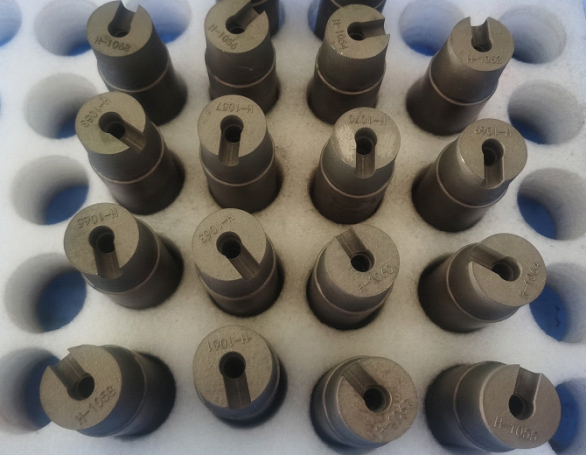
A 3D printed conformal cooling insert is a mold component — typically a core, cavity block, or slide — manufactured by laser powder bed fusion (LPBF) from tool-grade metal powder. Unlike conventionally machined inserts that are limited to gun-drilled straight cooling holes, 3D printed inserts contain internal cooling channels that conform to the shape of the part cavity.
The key advantages of conformal cooling geometry over conventional straight-drilled circuits include:
- Uniform wall-to-channel distance: Channels maintain a consistent 8–15 mm distance from the cavity surface, eliminating hot spots that cause differential shrinkage and warpage.
- Reduced thermal gradient: Surface temperature variation drops from 15–30 °C (conventional) to 3–8 °C (conformal), resulting in more uniform part quality.
- Higher cooling efficiency: Helical, spiral, and branching channel geometries increase turbulent flow and heat transfer coefficients by 40–60% compared to straight channels.
- Elimination of dead zones: Deep ribs, boss features, and thin-to-thick transitions that conventional drilling cannot reach are fully cooled.
The insert is designed to be a drop-in replacement for an existing conventional insert within a standard mold base. No changes to the mold frame, clamping system, or ejector layout are required.
2. The LPBF Manufacturing Process for Inserts
Laser Powder Bed Fusion (LPBF) — also called Selective Laser Melting (SLM) or Direct Metal Laser Sintering (DMLS) — is the additive manufacturing process used to produce conformal cooling inserts. Here is how the process works for mold inserts specifically:
The customer's STEP file is reviewed for printability. Channel diameters, wall thicknesses, overhangs, and support requirements are analyzed. The insert is oriented on the build plate to minimize support structures inside cooling channels and to optimize surface quality on critical mold faces. Build simulation software predicts residual stress and distortion, allowing compensation in the CAD model.
Metal powder (typically 15–45 μm particle size distribution) is loaded into the machine hopper. The build plate is leveled and the inert gas atmosphere (argon or nitrogen) is established to maintain oxygen levels below 0.1%. Layer thickness is set — typically 40 μm for MS1 maraging steel and 30 μm for CuCrZr copper alloy to ensure full density in high-conductivity materials.
A recoater blade spreads a thin layer of powder across the build plate. A high-power fiber laser (200–700 W depending on material and machine) selectively melts the powder according to the sliced cross-section data. The build platform lowers by one layer thickness, and the process repeats. A typical 120 mm tall insert requires 3,000 layers at 40 μm layer thickness, taking 18–36 hours of print time depending on cross-sectional area.
After printing, the build plate with attached inserts is removed from the machine. Unused powder is sieved (63 μm mesh) and returned to the hopper for reuse. The as-printed inserts remain attached to the build plate for stress relief heat treatment.
The LPBF process achieves material densities above 99.5%, producing fully dense metal parts with mechanical properties equivalent to or exceeding wrought material after appropriate heat treatment. For a deeper comparison of SLM vs DMLS processes, see our dedicated guide.
3. Material Options: MS1, 420SS, and CuCrZr
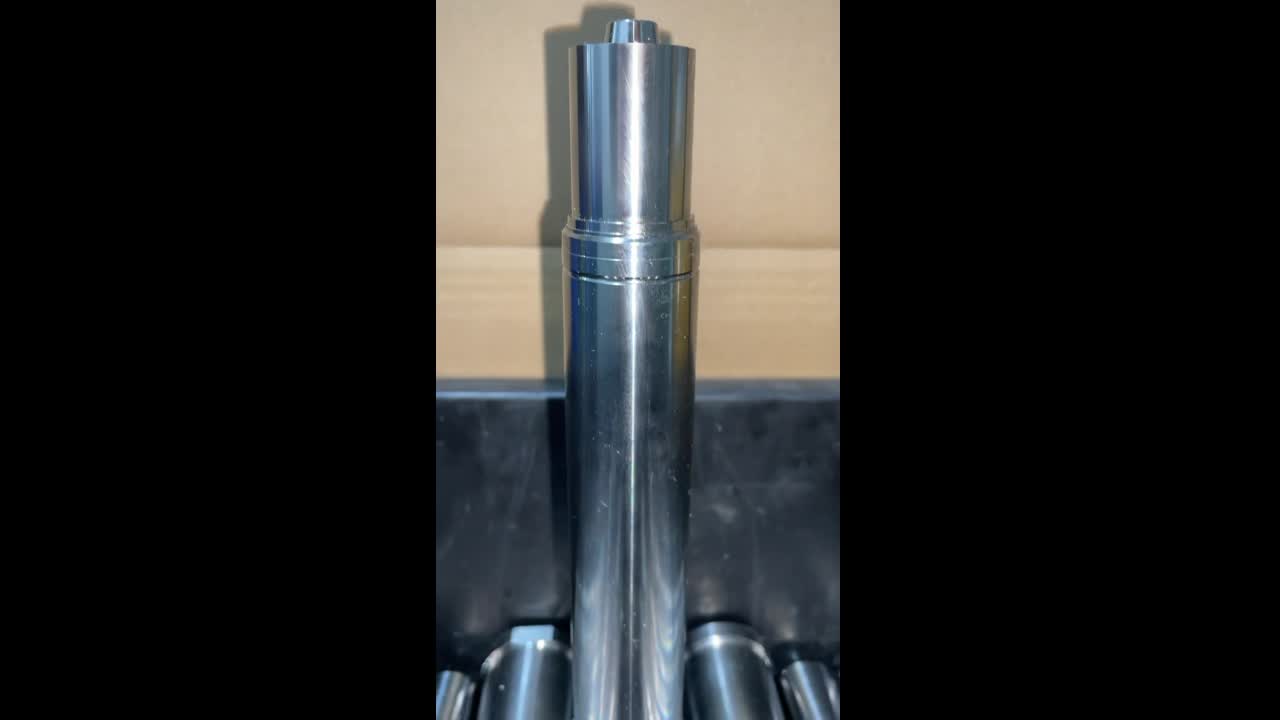
Material selection for 3D printed conformal cooling inserts depends on three factors: required hardness, corrosion resistance, and thermal conductivity. The table below compares the three primary material options:
| Property | MS1 / 18Ni300 Maraging Steel | 420 Stainless Steel | CuCrZr Copper Alloy |
|---|---|---|---|
| Hardness (aged/treated) | 50–54 HRC | 48–52 HRC | 25–30 HRB |
| Thermal conductivity | 20 W/m·K | 24 W/m·K | 320 W/m·K |
| Corrosion resistance | Moderate | Excellent | Low (requires coating) |
| Weldability | Excellent | Good | Fair |
| Polishability | SPI A-2 achievable | SPI A-2 achievable | SPI B-1 typical |
| Typical applications | General-purpose inserts, automotive, consumer goods | PVC, flame-retardant resins, medical | Hot-spot elimination, thin cores, high-cycle packaging |
| Relative cost | 1.0x (baseline) | 1.15x | 1.5x |
| Share of insert orders | ~80% | ~10% | ~10% |
When to choose MS1 (Maraging Steel 18Ni300)
MS1 is the default choice for 80% of 3D printed conformal cooling inserts. After age hardening at 490 °C for 6 hours, it reaches 50–54 HRC — comparable to H13 tool steel. It welds cleanly to P20 and H13 mold bases, machines well with carbide tooling, and accepts EDM texturing. Its 20 W/m·K thermal conductivity is adequate for most applications when combined with conformal channel geometry that compensates through proximity to the cavity surface.
When to choose 420 Stainless Steel
Choose 420SS when processing corrosive resins (PVC, flame-retardant grades, halogenated materials) or when the mold will operate in high-humidity environments without regular maintenance. The chromium content provides passive corrosion resistance that MS1 lacks. It is also preferred for medical device molding where stainless steel is specified in the tooling standard.
When to choose CuCrZr Copper Alloy
CuCrZr delivers 16x the thermal conductivity of MS1. Use it for extreme hot-spot applications: thin core pins, deep-rib areas, and high-speed packaging molds where every fraction of a second matters. The tradeoff is lower hardness (25–30 HRB) and limited corrosion resistance. CuCrZr inserts are typically used as localized thermal management components within a larger MS1 or H13 mold assembly, not as full cavity blocks.
4. Post-Processing Steps
A 3D printed conformal cooling insert is not ready for production directly off the printer. Five post-processing operations transform the as-printed part into a production-ready mold component:
As-printed inserts contain residual thermal stresses from the rapid melting and solidification cycles during LPBF. Stress relief is performed at 490 °C for 6 hours (MS1) before removing the insert from the build plate. This step also serves as the age hardening treatment for maraging steel, achieving the target 50–54 HRC hardness. For 420SS, a separate hardening and tempering cycle is required at 1,040 °C with oil quench and 200 °C temper.
The insert is separated from the build plate by wire EDM, which simultaneously establishes the primary datum surface (the insert base). This datum face is ground flat to within 0.005 mm to ensure proper seating in the mold pocket. Wire EDM is also used to cut precision features such as split-line interfaces, interlock profiles, and narrow slots that cannot be reached by milling cutters.
All surfaces that interface with the mold base, slides, lifters, or other inserts are CNC-machined to final tolerances of ±0.01 mm. This includes locating shoulders, seal faces, O-ring grooves, ejector pin holes, and coolant port threads. The cavity surface may also be finish-machined if tighter tolerance than as-printed is required.
Depending on the part requirements, the cavity surface is finished by bead blasting (SPI D-1 to D-3 matte texture), stone polishing (SPI B-1 to B-3 semi-gloss), or diamond polishing (SPI A-1 to A-3 mirror finish). EDM texturing (VDI 12–45) is also available for grain finishes. As-printed surfaces have an Ra of 6–12 μm; after machining and polishing, Ra 0.4–0.8 μm is standard.
Coolant fittings (G1/8, G1/4, or NPT threads) are machined and tapped into the insert. O-ring grooves are cut to standard sizes. The insert is test-fitted into the mold base to verify all interfaces, and shim adjustments are made if necessary. Coolant connections are pressure-tested at 1.5x operating pressure to verify leak-free sealing.
5. Dimensional Tolerances and Surface Roughness
Understanding the difference between as-printed and post-processed tolerances is critical for specifying 3D printed conformal cooling inserts correctly:
| Feature Type | As-Printed Tolerance | After Post-Processing | Notes |
|---|---|---|---|
| External dimensions | ±0.05 mm | ±0.01 mm | CNC machined to final size |
| Internal channel diameter | ±0.1 mm | ±0.1 mm (not post-machined) | Adequate for coolant flow |
| Channel position relative to cavity | ±0.1 mm | ±0.05 mm (referenced to machined datum) | Verified by CT scan |
| Flatness of sealing faces | 0.05 mm | 0.005 mm | Ground after stress relief |
| Surface roughness — cavity face | Ra 6–12 μm | Ra 0.4–0.8 μm | Polished or EDM-textured |
| Surface roughness — internal channels | Ra 8–15 μm | Ra 8–15 μm (as-printed) | Internal roughness aids turbulent flow |
| Hole position (ejector/pin holes) | N/A (drilled post-print) | ±0.01 mm | CNC drilled and reamed |
The internal surface roughness of as-printed channels (Ra 8–15 μm) is intentionally left unpolished. Research shows that this roughness promotes turbulent flow at lower Reynolds numbers, increasing the heat transfer coefficient by 15–25% compared to smooth-bore channels of the same diameter.
6. Insert Sizing Constraints by Machine
The maximum insert size is determined by the build volume of the LPBF machine. Here are the effective build envelopes for the three most common platforms used for conformal cooling insert production:
| Machine | Build Volume (X × Y × Z) | Max Insert Footprint | Laser Configuration | Best Suited For |
|---|---|---|---|---|
| EOS M290 | 250 × 250 × 325 mm | 240 × 240 mm | Single 400 W | Small to medium inserts; highest installed base globally |
| SLM 280 2.0 | 280 × 280 × 365 mm | 270 × 270 mm | Twin 700 W | Medium to large inserts; dual-laser reduces print time 30–40% |
| Renishaw AM400 | 250 × 250 × 300 mm | 240 × 240 mm | Single 400 W | High-precision inserts; reduced atmosphere system for reactive powders |
| EOS M400-4 | 400 × 400 × 400 mm | 390 × 390 mm | Quad 400 W | Large inserts and multi-insert builds; highest productivity |
For inserts exceeding the build envelope of available machines, a segmented build approach is used: the insert is split into two or more sections, each printed separately, then joined by vacuum brazing or laser welding. Joints are designed along non-critical planes away from the cavity surface and cooling channels. Properly executed vacuum-brazed joints achieve 95–100% of parent material strength.
7. Integration into Existing Mold Bases
One of the most common questions from tooling engineers evaluating conformal cooling 3D printed inserts for the first time is whether the mold base needs to be modified. In the vast majority of cases, the answer is no.
The 3D printed insert is designed as a drop-in replacement for the existing conventional insert. The integration process follows these principles:
- Pocket geometry is preserved: The insert's external dimensions match the existing pocket within ±0.01 mm. Locating features (dowel holes, interlocks, shoulder fits) are CNC-machined to the same specifications as the original insert.
- Coolant connections are standardized: Inlet and outlet ports use the same fitting type and position as the original insert. If the original used G1/4 BSP fittings on the non-operator side, the conformal insert uses the same. No replumbing of manifolds or hoses is needed.
- Ejector pin positions are unchanged: Ejector holes are drilled and reamed in the conformal insert at the same coordinates as the original. Cooling channels are routed around ejector pins with a minimum 3 mm clearance.
- Parting line interfaces remain identical: The insert's parting surface and shut-off faces are ground and machined to match the existing mold half.
Because 3D printed conformal cooling inserts are designed as exact drop-in replacements, the mold base stays in the tool room during the 7–10 day insert manufacturing period. When the new insert arrives, swap-in takes 2–4 hours — the same as replacing any conventional insert. Production resumes on the same shift.
8. Cost Breakdown by Insert Size
The cost of a 3D printed conformal cooling insert depends primarily on three factors: material volume consumed, print time (machine hours), and post-processing complexity. The table below breaks down typical costs by insert size category for MS1 maraging steel:
| Insert Size Category | Typical Dimensions | Print Time | Material Cost | Post-Processing | Total Cost |
|---|---|---|---|---|---|
| Small | <50 × 50 × 60 mm | 6–12 hrs | $120–$250 | $400–$700 | $800–$1,500 |
| Medium | 50–150 × 50–150 × 60–120 mm | 18–48 hrs | $300–$800 | $800–$1,800 | $1,500–$3,500 |
| Large | 150–250 × 150–250 × 100–200 mm | 48–96 hrs | $700–$1,800 | $1,500–$2,800 | $3,000–$5,500 |
| Extra Large | >250 mm in any axis | 96–180 hrs | $1,800–$4,000 | $2,500–$4,500 | $5,500–$9,500 |
Material premiums: 420SS adds approximately 15% to the total cost. CuCrZr adds 40–60% due to higher powder cost ($180–$220/kg vs $80–$100/kg for MS1) and slower print speeds required for full density.
Volume discounts: Orders of 4+ identical inserts (common for multi-cavity molds) receive 15–20% price reduction because inserts are nested on a single build plate, sharing machine setup time and reducing per-unit print time through efficient packing.
Insert dimensions: 45 × 45 × 70 mm (small category). Material: MS1. Quantity: 4 identical core inserts.
Single insert price: $1,200. Four-insert bundle price: $4,100 ($1,025 each, 14% discount). All four inserts printed on one build plate in a single 24-hour run.
Total investment: $4,100 for 4 conformal cooling core inserts, delivered in 8 days.
9. Lead Time Breakdown
The 7–10 day lead time from STEP file to delivered insert breaks down as follows:
| Phase | Duration | Activities |
|---|---|---|
| Day 1–2 | 1–2 days | Design review, channel optimization, build orientation, support design, distortion compensation, customer approval |
| Day 2–4 | 1–3 days | LPBF printing (duration depends on insert size; small inserts print in <12 hrs, large inserts up to 96 hrs) |
| Day 4–5 | 1–2 days | Stress relief / age hardening heat treatment, build plate separation by wire EDM |
| Day 5–8 | 2–3 days | CNC machining of mating surfaces, ejector holes, coolant port threading, surface finishing |
| Day 8–9 | 1 day | Quality verification: CT scanning, flow testing, pressure testing, dimensional CMM inspection |
| Day 9–10 | 1 day | Packing and shipping (DHL/FedEx international express; domestic delivery same-day in China) |
Rush service: For small inserts (<50 mm), expedited delivery in 5–7 days is available by overlapping design review and build preparation, and by prioritizing machine scheduling. Contact us via WhatsApp for rush quotes.
10. Quality Verification: CT Scan, Flow Test, Pressure Test
Every 3D printed conformal cooling insert undergoes three verification steps before shipment. These are included in the standard price — they are not optional add-ons.
CT Scanning (Industrial Computed Tomography)
A full-volume CT scan at 150–225 kV reveals the internal channel geometry, verifying that channels are free of powder blockages, that wall thicknesses between channels and the cavity surface meet minimum specifications (typically ≥2.5 mm), and that no internal porosity exceeds 0.3 mm diameter. The CT scan data is compared against the original CAD model to generate a color-mapped deviation report.
Flow Testing
Coolant flow rate is measured at standardized inlet pressure (3 bar) and compared against the CFD-predicted flow rate from the design phase. Acceptable variance is ±10%. Flow testing confirms that all channels are clear, that no cross-channel leaks exist between independent cooling circuits, and that the pressure drop is within the range that standard mold temperature controllers can handle (typically <4 bar at 8 L/min).
Pressure Testing
The insert is pressurized to 1.5x the maximum operating pressure (typically 12 bar test pressure for 8 bar operating pressure) and held for 15 minutes. Zero pressure decay is the acceptance criterion. This verifies seal integrity at all coolant ports, O-ring grooves, and internal channel junctions. Inserts are also tested for external leak-tightness at the parting line and insert-to-mold-base interfaces.
Dimensional CMM Inspection
A coordinate measuring machine (CMM) verifies all critical external dimensions, including pocket fit dimensions, locating feature positions, ejector hole coordinates, and parting surface flatness. A full inspection report with measured vs. nominal values is provided with every insert.
11. Five Case Studies with Cycle Time Data
The following five production cases demonstrate the range of applications and results achievable with 3D printed conformal cooling inserts. All data is from actual production runs, not simulation predictions. For additional examples, see our full case study library.
Part: Two-piece charger housing, 62 × 38 × 14 mm, wall thickness 1.2–1.8 mm.
Problem: Sink marks on cosmetic surface opposite boss features. Conventional cycle time 18.5 seconds. Scrap rate 6.2% due to sink and warpage.
Insert: MS1 cavity insert, 85 × 65 × 50 mm, with spiral conformal channels at 10 mm from cavity surface. 4 mm channel diameter.
Result: Cycle time reduced to 12.8 seconds. Sink marks eliminated. Scrap rate reduced to 0.8%.
31% cycle time reduction | 87% scrap reduction | Payback: 12 days at 500k shots/year
Part: Under-hood HVAC connector, 95 × 72 × 45 mm, variable wall thickness 2.0–4.5 mm with deep ribs.
Problem: Deep-rib hot spots causing 22-second cycle time. Warpage out of spec on 4.8% of parts. Mold temperature controller at maximum capacity.
Insert: MS1 core insert, 120 × 90 × 80 mm, with bifurcating conformal channels following rib geometry. 5 mm channel diameter, 12 mm wall-to-channel distance.
Result: Cycle time reduced to 15.2 seconds. Warpage within spec on 99.4% of parts. Mold surface temperature variation reduced from 24 °C to 5 °C.
31% cycle time reduction | Warpage scrap 4.8% → 0.6% | Payback: 8 days at 800k shots/year
Part: Round container lid, diameter 110 mm, wall thickness 0.6 mm, snap-fit ring feature.
Problem: Cycle time of 5.8 seconds on 8-cavity mold. Cavity-to-cavity variation in cooling causing dimensional inconsistency across cavities. Target cycle time: under 4.5 seconds.
Insert: CuCrZr core inserts (8 pieces), 40 × 40 × 55 mm each, with concentric conformal channels at 6 mm from core surface. 3.5 mm channel diameter.
Result: Cycle time reduced to 3.9 seconds. Cavity-to-cavity dimensional variation reduced by 65%. Snap-fit ring concentricity improved from ±0.08 mm to ±0.03 mm.
33% cycle time reduction | 65% dimensional variation reduction | Payback: 4 days at 12M shots/year
Part: Syringe barrel, length 65 mm, outer diameter 12.5 mm, wall thickness 0.9 mm. ISO 13485 production environment.
Problem: COC requires very uniform cooling to prevent stress cracking. Conventional straight-drilled core pin cooling was insufficient — cycle time 14.2 seconds with 3.1% stress-crack reject rate during QC inspection.
Insert: 420SS core pin with helical conformal channel, pin diameter 11.5 mm, channel diameter 2.5 mm, pitch 8 mm. 16-cavity mold.
Result: Cycle time reduced to 9.8 seconds. Stress-crack reject rate reduced to 0.3%. Dimensional Cpk improved from 1.15 to 1.52.
31% cycle time reduction | Stress-crack rejects 3.1% → 0.3% | Cpk 1.15 → 1.52
Part: Transparent water tank, 180 × 120 × 140 mm, wall thickness 2.0 mm, optical clarity requirement.
Problem: SAN requires slow, uniform cooling to maintain optical clarity. Conventional cycle time was 42 seconds with visible flow lines and haze on 7.5% of parts.
Insert: MS1 cavity insert (2 halves), each 200 × 140 × 160 mm, with multi-zone conformal cooling. Zone 1 (gate area): 6 mm channels at 10 mm spacing. Zone 2 (fill end): 5 mm channels at 15 mm spacing. Independent temperature control per zone.
Result: Cycle time reduced to 28 seconds. Optical clarity rejects reduced to 1.2%. Flow-line defects eliminated through improved melt front uniformity from balanced cooling.
33% cycle time reduction | Optical clarity rejects 7.5% → 1.2% | Payback: 18 days at 300k shots/year
Summary of Case Study Results
| Case | Industry | Material | Insert Alloy | Cycle Before | Cycle After | Reduction |
|---|---|---|---|---|---|---|
| 1 | Consumer Electronics | ABS/PC | MS1 | 18.5 s | 12.8 s | 31% |
| 2 | Automotive | PA66-GF30 | MS1 | 22.0 s | 15.2 s | 31% |
| 3 | Packaging | PP | CuCrZr | 5.8 s | 3.9 s | 33% |
| 4 | Medical | COC | 420SS | 14.2 s | 9.8 s | 31% |
| 5 | Household Appliance | SAN | MS1 | 42.0 s | 28.0 s | 33% |
12. Frequently Asked Questions
The complete process from receiving a STEP file to delivering a production-ready 3D printed conformal cooling insert typically takes 7 to 10 business days. This includes design review, LPBF printing, heat treatment, CNC post-processing, and quality verification. Rush delivery in 5 to 7 days is available for smaller inserts under 100 mm.
The three primary materials are maraging steel MS1 (18Ni300) for general-purpose inserts requiring 50 to 54 HRC hardness (80% of orders), 420 stainless steel for corrosive resin environments, and CuCrZr copper alloy for maximum thermal conductivity in hot-spot elimination. Material selection depends on required hardness, corrosion resistance, and thermal performance.
As-printed LPBF inserts achieve tolerances of plus or minus 0.05 mm. After post-processing with wire EDM and CNC machining, final tolerances of plus or minus 0.01 mm are standard on mating surfaces and sealing faces. Internal channel dimensions hold plus or minus 0.1 mm, which is sufficient for coolant flow performance.
Costs range from $800 to $5,500 depending on size, material, and complexity. Small inserts under 50 mm cost $800 to $1,500 in MS1. Medium inserts of 50 to 150 mm range from $1,500 to $3,500. Large inserts cost $3,000 to $5,500. CuCrZr copper inserts carry a 40 to 60 percent premium. Multi-insert orders receive 15 to 20 percent volume discounts.
Yes. The inserts are designed as drop-in replacements for existing conventional inserts. All interfaces — locating features, sealing faces, coolant ports, and ejector holes — are CNC-machined to match the existing pocket geometry within plus or minus 0.01 mm. No mold base modifications are required in most cases. Swap-in takes 2 to 4 hours.
Related Pages
- Conformal Cooling Inserts — Design Principles, Applications, and Performance Data
- Conformal Cooling Materials — MS1, H13, Stainless Steel, and Copper Alloys Compared
- Conformal Cooling Cost — Complete Pricing Guide with ROI Calculator
- Conformal Cooling 3D Printing — LPBF Process, Parameters, and Quality Standards
- Conformal Cooling Cycle Time Reduction — Data from 30+ Production Programs
- SLM vs DMLS for Conformal Cooling — Process Comparison Guide
- Conformal Cooling Vacuum Brazing — Joining Oversized Inserts
- Conformal Cooling Inserts — Service Details & Specifications
- 3D Printed Mold Inserts — Service Page
- Case Studies — Full Production Data from Real Programs