A conformal cooling insert is the highest-leverage upgrade in injection molding. A single well-designed insert in a deep core or hot spot can cut cycle time by 30–55%, eliminate hot-side warpage, and pay back its premium cost in under 90 days at production volume. But only if the channel geometry, material selection, and hydraulic design are right. This guide covers every parameter decision that separates a high-performance insert from a $3,000 mistake.
1. What Is a Conformal Cooling Insert?
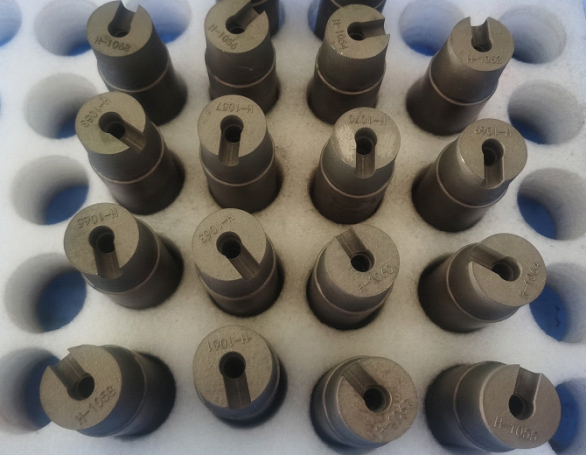
A conformal cooling insert is a discrete mold component — most often a core pin, cavity insert, slider, or lifter — that contains internal cooling channels whose path follows (conforms to) the contour of the part cavity wall, maintaining a near-constant distance from the surface throughout the channel's length.
The critical distinction from conventional cooling is not the channel shape itself, but the uniform thermal distance. Conventional straight-drilled channels average 20–30 mm from the cavity surface in complex geometry because the drill bit must travel in a straight line. Conformal channels hold 6–12 mm distance regardless of how the part geometry curves, bends, or narrows. That halved distance roughly quadruples the local heat extraction rate per unit area.
Conformal cooling inserts are manufactured almost exclusively via metal additive manufacturing — specifically Laser Powder Bed Fusion (LPBF/SLM/DMLS) — because no subtractive or casting process can create the internal channel geometry required. The insert is printed in tool steel or copper alloy, then post-processed (stress relief, HIP, heat treatment, CNC finishing) before being fitted into the mold base.
When to Use an Insert vs. a Full Conformal Mold
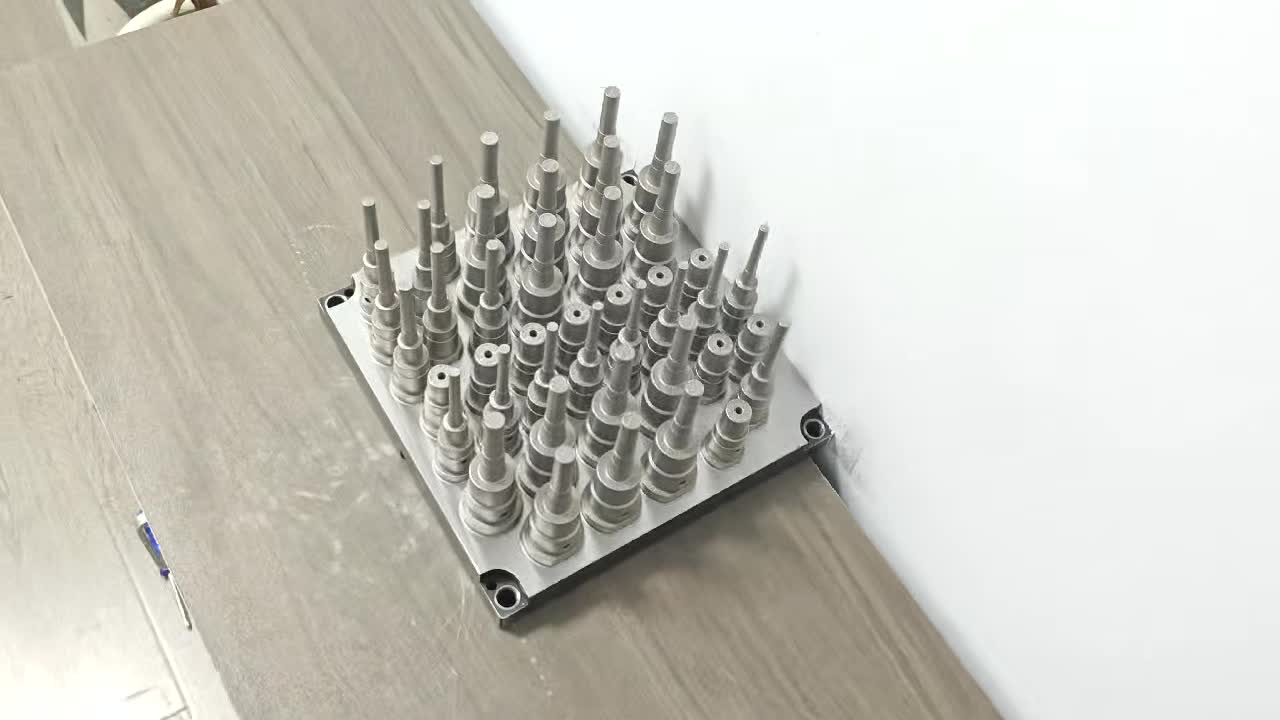
Inserts are the right choice when one or two geometry zones drive the cooling problem, but the surrounding mold structure is conventional. A full conformal mold is warranted only when the entire cavity has complex geometry. In practice, 70–80% of conformal cooling projects are insert-only retrofits or new inserts within a conventional mold base — because inserting one conformal core can solve 80% of the cycle time problem at 20–30% of the cost of a full conformal mold.
2. Channel Geometry Design Rules
Channel geometry is the primary determinant of cooling performance. Four parameters govern the design:
| Parameter | Symbol | Recommended Range | Engineering Rationale |
|---|---|---|---|
| Channel diameter | D | 6–12 mm | Below 6 mm: high pressure drop, scaling risk. Above 12 mm: structural weakening of insert walls. |
| Channel-to-cavity wall distance | W | 1.0–1.5 × D | Closer than 1.0×D risks cracking under thermal cycling. Beyond 1.5×D, heat transfer drops exponentially. |
| Channel pitch (center-to-center) | P | 2.0–3.0 × D | Below 2×D: wall between channels too thin, structural failure. Above 3×D: hot spots between channels. |
| Bend radius | R | ≥ 1.5 × D | Tight bends create stress concentrations and turbulence-induced erosion at the outer wall. |
A typical 8 mm diameter insert design would therefore target: W = 8–12 mm wall distance, P = 16–24 mm center-to-center spacing, R ≥ 12 mm at all bends.
Channel Geometry Types
One inlet, one outlet, continuous path
Best for uniform geometry with predictable flow path. Simple pressure calculation. Risk: temperature rise along flow path creates ΔT of 3–8°C inlet-to-outlet on long inserts.
Coiled around core or cavity
Ideal for cylindrical or dome-shaped cores. Provides excellent circumferential uniformity. Standard for packaging caps, closures, and medical device housings. ΔT typically 2–4°C.
Multiple parallel loops from manifold
Equalizes temperature across large flat surfaces. Requires balanced pressure distribution. Suitable for flat panels and automotive B-pillar sections. ΔT can be held under 2°C.
Triply Periodic Minimal Surface
Maximum surface area per volume. Captures highest heat flux. Best for materials with severe warpage risk (PC, PA66-GF30). Complex to validate; requires CT scan confirmation post-print.
Printability Constraints
Channel geometry must be designed for printability in LPBF, which imposes constraints beyond thermal performance:
- Overhang angle: Channels must be self-supporting. Circular cross-sections are preferred over square channels because the arch naturally supports above the 45° limit for most LPBF systems. Channels wider than 10 mm may require design modification to teardrop or diamond cross-section to avoid sagging of the upper wall during build.
- Powder evacuation: Every closed channel loop must have an access port for trapped powder removal after printing. Blind pockets are a print-kill defect that is undetectable without CT scan.
- Build orientation: Orient inserts so critical cavity surfaces face upward in the build chamber, maximizing surface quality on the tool-side faces. Channel inlets and outlets should be positioned at the base of the build for easy connection to the mold base.
- Support structure clearance: Internal support structures within channels are unremovable. Design all channels above the 45° self-support limit or increase diameter to accommodate the slight sag (<0.3 mm at D ≤ 10 mm) without affecting flow.
3. Material Selection Guide
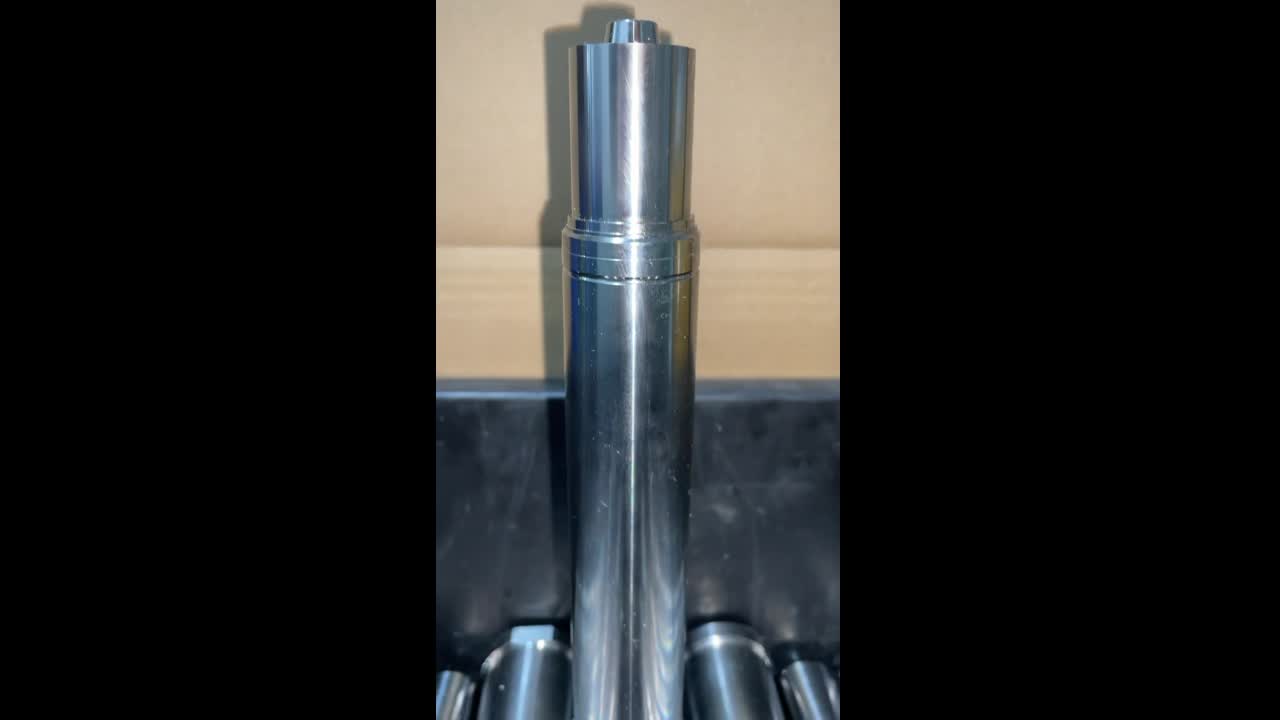
Three materials cover 95% of conformal cooling insert applications. Material choice is a balance between thermal conductivity (how fast heat moves through the steel), hardness (how long the insert survives against wear and thermal cycling), and printability (how well the powder sinters in LPBF).
| Material | Thermal Conductivity | Hardness (post-HT) | Yield Strength | Best For | Cost Premium vs. H13 |
|---|---|---|---|---|---|
| 420 Stainless Steel | 24 W/m·K | 50–52 HRC | 1,400 MPa | Commodity production, high-volume PA/PP/ABS | Baseline |
| 18Ni300 Maraging Steel | 20 W/m·K | 52–54 HRC | 1,900 MPa | Precision parts, medical, optical, tight tolerance | +30–40% |
| CuCrZr Copper Alloy | 320 W/m·K | 35–40 HRC | 480 MPa | Extreme hot spots, thin ribs, weld lines | +60–80% |
| H13 Tool Steel (conventional) | 28 W/m·K | 48–52 HRC | 1,500 MPa | Reference: conventionally machined molds | — |
Key insight on CuCrZr: Its thermal conductivity is 13× higher than steel, which sounds transformative — but the bottleneck in heat extraction is usually the coolant-side convective resistance, not conduction through steel. In well-designed inserts with turbulent flow (Re > 10,000), the steel conductivity is rarely the limiting factor. CuCrZr is only clearly superior when the wall between channel and cavity is unusually thick (>2.5×D) or when peak surface temperatures are sustained above 180°C. For most applications, 420 SS or 18Ni300 provide 90–95% of the thermal performance at much lower cost and better durability.
Material-Application Decision Guide
| Application | Part Material | Recommended Insert Material | Reason |
|---|---|---|---|
| High-volume consumer packaging | PP, HDPE | 420 SS | Volume >1M shots; hardness matters more than conductivity |
| Automotive structural parts | PA66-GF30, POM | 420 SS or 18Ni300 | High injection pressure demands high yield strength |
| Medical device housings | PC, PC/ABS | 18Ni300 | Sub-±0.05 mm tolerance; highest dimensional stability |
| Thin-wall electronics | ABS, PC/ABS | 18Ni300 | Complex geometry; precision surface finish required |
| Hot spot / weld line inserts | Any | CuCrZr | Isolated heat extraction; insert is small and replaced more often |
| PEEK / high-temp engineering | PEEK, PEI, PSU | 18Ni300 | Mold temperature 140–180°C; thermal stability at elevated temperature |
4. Coolant Flow Engineering
Conformal cooling channels only deliver their rated performance when coolant flows in the turbulent regime. Laminar flow (Re < 2,300) provides roughly the same heat transfer as a static water column. The goal is turbulent flow with Re > 10,000 throughout the entire channel length — not just at the inlet.
Reynolds Number Calculation
Where:
ρ = coolant density (kg/m³) — water at 20°C ≈ 998 kg/m³
v = flow velocity (m/s)
D = hydraulic diameter (m) — use actual channel diameter
μ = dynamic viscosity (Pa·s) — water at 20°C ≈ 0.001 Pa·s
Target: Re > 10,000 → fully turbulent; Nusselt number 14–55× laminar value
For a 10 mm channel in water at 20°C, achieving Re = 10,000 requires a minimum flow velocity of ~1.0 m/s, which corresponds to approximately 4.7 L/min. Most mold cooling circuits run at 5–10 L/min — adequate for 8–12 mm channels but marginal for 6 mm channels, where velocity must increase to compensate for the smaller diameter.
| Channel Diameter (mm) | Min. Flow Rate for Re=10,000 | Recommended Flow Rate | Max Pressure Drop (per meter) |
|---|---|---|---|
| 6 | 2.8 L/min | 3.5–5 L/min | 4.2 bar/m |
| 8 | 3.7 L/min | 5–7 L/min | 2.1 bar/m |
| 10 | 4.7 L/min | 6–9 L/min | 1.1 bar/m |
| 12 | 5.6 L/min | 7–11 L/min | 0.6 bar/m |
Coolant Specification Requirements
Conformal cooling inserts have smaller channel diameters and more complex geometry than conventional circuits — making them far more vulnerable to scale, biofilm, and corrosion buildup. Treat the coolant specification as critically as the channel design:
| Parameter | Required Value | Why It Matters |
|---|---|---|
| Water hardness | < 100 ppm CaCO₃ | Above 200 ppm, scale deposits reduce heat transfer 15–40% within 6 months |
| pH | 7.0–8.5 | Below 7.0: corrosion of steel channels. Above 9.5: coolant additive breakdown |
| Chloride content | < 50 ppm | Chlorides cause pitting corrosion in 420 SS channels |
| Inhibitor concentration | 3–5% glycol-based inhibitor | Prevents steel oxidation and biofouling in conformal geometry |
| Filter mesh | ≤ 100 μm inline filter | Particles above 100 μm lodge in TPMS geometry, causing irreversible blockage |
5. Insert Cost and ROI Breakeven
The cost premium of a conformal cooling insert over a conventionally machined insert varies by size and channel complexity. Below are typical MouldNova pricing tiers for 420 SS inserts with spiral or series channels:
| Insert Size | Conformal Insert (420 SS) | Conventional Machined Insert | Premium | Typical Lead Time |
|---|---|---|---|---|
| Small (<50×50×50 mm) | $800–1,800 | $200–600 | 3–4× | 7–10 days |
| Medium (50–100 mm) | $2,000–5,000 | $600–1,800 | 2.5–3× | 10–14 days |
| Large (>100 mm) | $6,000–15,000 | $2,000–6,000 | 2–3× | 14–21 days |
Breakeven Analysis: Medium Insert Example
Scenario: Medium core insert, PA66-GF30 automotive bracket
Breakeven by Production Volume
At low volumes, the premium cannot be recovered. The breakeven volume depends on cycle time reduction, machine rate, and insert cost. As a general rule:
| Annual Volume | Insert Size | Cycle Time Reduction | Payback Period | Decision |
|---|---|---|---|---|
| < 50,000 shots | Any | Any | >18 months | Not recommended |
| 50,000–200,000 | Small only | >30% | 6–18 months | Marginal — evaluate case by case |
| 200,000–500,000 | Small / Medium | >25% | 2–6 months | Recommended |
| > 500,000 shots | Any size | >20% | <2 months | Strongly recommended |
6. The 7-Step Insert Production Process
Thermal Simulation (Moldflow / Moldex3D)
Identify cavity wall temperature distribution and hot spots. Define target temperature and maximum allowable ΔT across the part surface. Output: channel routing map and target W/P/D parameters. Duration: 1–2 days.
Channel Design & Structural Validation
Design channels in CAD; run FEA for thermal stress and structural integrity under clamping load. Check minimum wall thickness, bend radii, and printability (overhang, powder evacuation). Duration: 1–2 days.
LPBF / SLM Printing
Print in 420 SS, 18Ni300, or CuCrZr. Layer thickness 30–50 μm. Total build time varies from 6–48 hours depending on insert size and machine capacity. Duration: 1–3 days.
Stress Relief & Heat Treatment
Stress relief at 450–600°C to remove residual build stresses. Age hardening (for 18Ni300: 490°C × 6h) to achieve target hardness. HIP (Hot Isostatic Pressing) optional for medical/aerospace applications. Duration: 2–3 days.
CNC Finish Machining
Machine all mating surfaces, cooling ports, and ejector pin holes to ±0.01 mm. EDM wire cut parting line features if required. Surface finish Ra 0.4–0.8 μm on cavity surfaces. Duration: 1–2 days.
Pressure Testing & Inspection
Hydraulic pressure test at 200 bar for 30 minutes minimum. Dimensional CMM check on all critical features. CT scan recommended for complex TPMS geometry to confirm channel integrity and no powder trapping. Duration: 1 day.
Mold Integration & Commissioning
Fit insert into mold base; confirm O-ring seals on cooling ports. Run flow test at operating pressure. Verify Reynolds number by measuring flow rate with inline meter. First article inspection after 50 shots. Duration: 0.5–1 day.
7. Failure Modes and How to Prevent Them
Four failure modes account for over 90% of conformal cooling insert failures. All are preventable at the design and commissioning stage:
Coolant Leaks
Cause: Wall thickness below 1.5 mm between channel and cavity surface, or channel-to-channel spacing below 2.5 mm. Thermal cycling stress cracks the thin wall within 50,000–200,000 shots.
Prevention: Enforce minimum wall thickness ≥ 2.0 mm in FEA review. Pressure test at 200 bar before deployment. Inspect O-ring seats at each preventive maintenance interval.
Fatigue Cracking at Bends
Cause: Sharp channel bends (R < 1.0×D) create stress concentrations. Repeated thermal cycling from 20°C to 180°C and back accumulates fatigue damage. Typical onset at 300,000–600,000 shots.
Prevention: Mandate R ≥ 1.5×D in all channel designs. Use stress-relief heat treatment post-print to minimize residual build stresses before thermal cycling begins.
Corrosion Fouling / Blockage
Cause: Untreated water with hardness >200 ppm deposits calcium carbonate scale, reducing flow cross-section. Bacterial biofilm in TPMS geometry can block channels completely within 3–6 months.
Prevention: Water treatment to <100 ppm hardness, pH 7–8.5, with glycol-based inhibitor at 3–5%. Clean with 2% citric acid solution quarterly. Install 100 μm inline filter.
Residual Porosity / Cavity Deformation
Cause: LPBF print defects (keyhole porosity, lack-of-fusion) create micro-voids in the insert body. Under sustained clamping force (800–2,000 kN), voids compress and deform the cavity surface.
Prevention: Specify minimum 99.5% relative density from supplier. Request CT scan report for any insert above $5,000 value. Consider HIP for critical insert applications.
Pre-Deployment Inspection Checklist
- Dimensional CMM report confirming all cavity surfaces within ±0.02 mm
- Hydraulic pressure test: 200 bar for ≥ 30 minutes, zero leakage
- Flow rate verification: minimum flow rate for Re > 10,000 confirmed with inline meter
- Surface roughness report: cavity surfaces Ra ≤ 0.8 μm, channel interior Ra ≤ 3.2 μm
- Hardness test certificate: 3-point Rockwell measurement post-heat treatment
- Relative density report: ≥ 99.5% confirmed by Archimedes method or CT scan
- Powder evacuation confirmed: visual inspection of all channel ports, no powder residue
- Channel routing verification: cross-section CT scan or borescope for TPMS geometry
- Insert fit check: zero-clearance fit in mold pocket confirmed, no rocking
- O-ring specification confirmation: temperature rating ≥ mold operating temperature + 20°C safety margin
8. Real Performance Data: Three Insert Types
PA66-GF30 Door Handle Core
Insert: 420 SS, spiral channel, D=8 mm, W=10 mm
Cycle time: 34s → 21s (−38%)
Warpage: 0.8 mm → 0.2 mm
Volume: 900,000 shots/year
Payback: 11 days
PC Syringe Barrel Insert
Insert: 18Ni300, series channel, D=6 mm, W=8 mm
Cycle time: 22s → 14s (−36%)
Dimensional deviation: ±0.08 mm → ±0.03 mm
Volume: 2,400,000 shots/year
Payback: 4 days
ABS Laptop Housing Cavity
Insert: 18Ni300, branched parallel, D=8 mm, W=10 mm
Cycle time: 45s → 28s (−38%)
Sink marks: Eliminated
Volume: 400,000 shots/year
Payback: 28 days
9. Frequently Asked Questions
What is a conformal cooling insert?
A conformal cooling insert is a metal mold component — typically a core pin, cavity insert, or lifter — that contains internal cooling channels shaped to follow the contour of the part cavity. Unlike straight-drilled conventional channels, conformal channels maintain uniform distance from the cavity wall (typically 6–15 mm), enabling 20–55% cycle time reduction and improved temperature uniformity across the part surface.
What material is best for conformal cooling inserts?
For most high-volume production applications, 420 Stainless Steel provides the optimal combination of hardness (50–52 HRC), thermal conductivity (24 W/m·K), and cost. For precision parts requiring tighter dimensional tolerances, 18Ni300 Maraging Steel offers higher yield strength and post-age hardness at +30–40% cost. CuCrZr is reserved for extreme hot spots where maximum heat extraction is critical and tool life is secondary.
How much does a conformal cooling insert cost?
Small inserts (under 50×50×50 mm): $800–1,800. Medium inserts (50–100 mm): $2,000–5,000. Large inserts (over 100 mm): $6,000–15,000+. The premium over conventional inserts is 2–4×, recovered within days to months at production volumes above 200,000 shots/year.
How long do conformal cooling inserts last?
In 420 SS or 18Ni300 with correct design and coolant management: 500,000–1,500,000 shots before maintenance. CuCrZr inserts typically need replacement at 200,000–500,000 shots due to lower hardness. The primary life-limiting factors are thermal fatigue at channel bends (design issue) and corrosion fouling from untreated water (maintenance issue).
What are the most common failure modes?
Four main failure modes account for >90% of insert failures: (1) Coolant leaks from wall-thickness below 1.5 mm, (2) Fatigue cracking at sharp channel bends (R < 1.0×D), (3) Corrosion fouling from untreated water above 200 ppm hardness, (4) Cavity deformation from residual LPBF porosity. All are preventable with correct design rules, heat treatment, and commissioning inspection.
Get a Conformal Cooling Insert Quote
Upload your core or cavity model. Our engineering team will review channel routing, material selection, and provide a detailed quote within 24 hours.
Request Engineering Review →