1. Why Material Choice Matters for Conformal Cooling
The material you choose for a conformal cooling insert determines three things that directly affect mold performance: how fast heat moves out of the part (thermal conductivity), how long the insert lasts (hardness and fatigue strength), and how much you pay (powder cost and post-processing complexity).
In conventional mold making, material selection is relatively straightforward — P20 or H13 tool steel for most jobs, upgraded to S136 for corrosive resins. But conformal cooling inserts are manufactured by SLM or DMLS 3D printing, which limits the available material palette to powders that have been qualified for additive manufacturing. The three dominant materials in the industry today are:
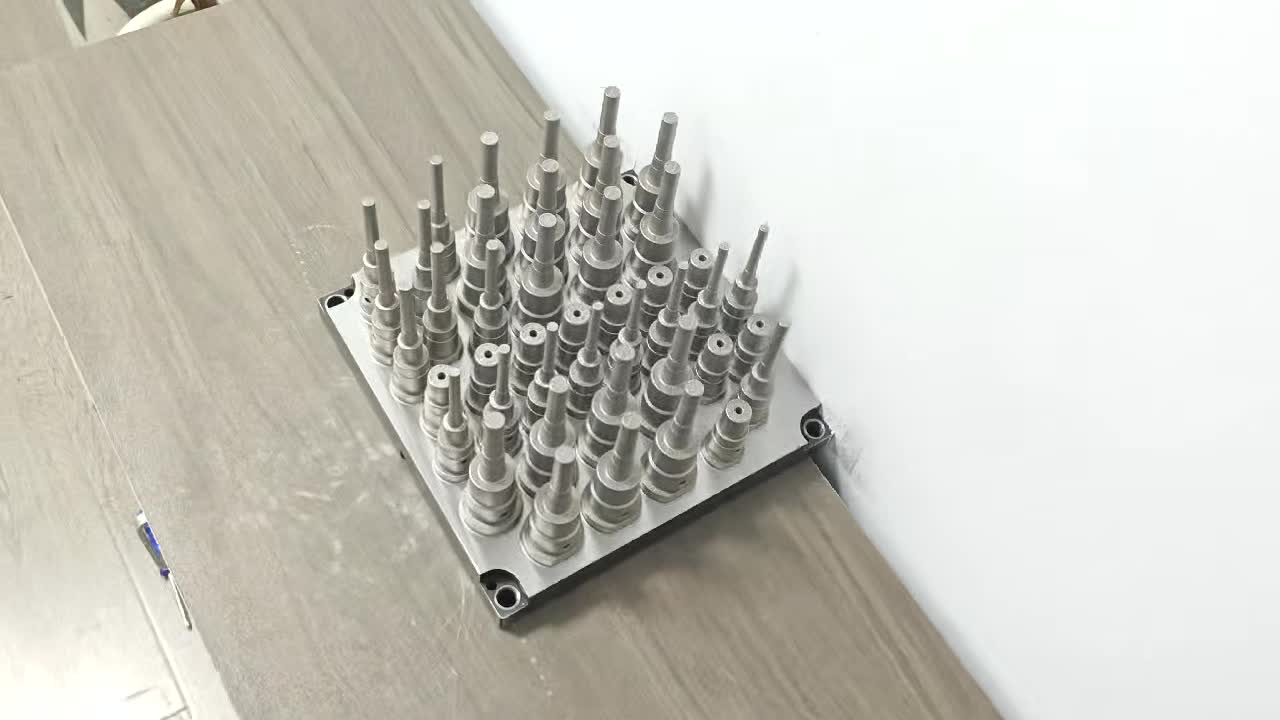
- 420 Stainless Steel (420SS) — martensitic stainless steel, the most widely used conformal cooling material globally
- 18Ni300 Maraging Steel (1.2709) — a precipitation-hardening nickel steel with superior mechanical properties
- CuCrZr Copper Alloy (CW106C) — a high-conductivity copper alloy for thermal-critical applications
Each material occupies a distinct position in the performance-cost trade-off. Choosing the wrong material means either paying too much for properties you do not need, or under-specifying and facing premature insert failure. This guide gives you the data and the decision framework to choose correctly for your specific application.
Rule of thumb: 70% of conformal cooling inserts worldwide are made from 420SS. 18Ni300 and CuCrZr serve the remaining 30% — but in those applications, they are not optional; they are necessary.
2. 420 Stainless Steel (420SS) — The General-Purpose Workhorse
Type: Martensitic stainless steel
Hardness (heat-treated): 50–52 HRC
Thermal conductivity: 20–25 W/mK
Density: 7.74 g/cm³
Corrosion resistance: Good — inherent chromium content (12–14%)
Typical insert cost: $800–$2,500
Why 420SS Dominates the Market
420 Stainless Steel is the default material for conformal cooling inserts for three reasons. First, it offers a good balance between hardness and machinability: at 50–52 HRC after heat treatment, it resists wear from most unfilled and lightly filled thermoplastics while remaining machinable for post-print finishing to ±0.02 mm tolerances. Second, its chromium content (12–14%) provides inherent corrosion resistance — critical because conformal cooling channels carry water or water-glycol mixtures that would corrode unprotected carbon steel within months. Third, the powder is widely available and relatively inexpensive ($40–$60/kg), keeping insert costs low.
Mechanical Properties After Heat Treatment
As-printed 420SS parts from SLM typically measure 30–35 HRC. Heat treatment (austenitize at 1,030°C, oil quench, temper at 200–300°C) brings hardness to the working range of 50–52 HRC. Tensile strength reaches 1,500–1,700 MPa. The as-printed microstructure contains some residual porosity (typically 0.3–0.8% by volume after optimized SLM parameters), but this does not meaningfully affect cooling channel performance or fatigue life for most injection molding applications.
Best Applications for 420SS
- General-purpose injection molding with unfilled PP, PE, ABS, PS, POM
- Production runs up to 500,000–1,000,000 shots
- Consumer electronics housings, packaging, medical device enclosures
- Molds running water-based coolants where corrosion resistance is important
- Projects where budget is a primary constraint and thermal performance of steel is sufficient
Limitations
420SS is not the best choice when: (1) the mold runs abrasive glass-filled or mineral-filled resins at high volumes (above 500k shots) where accelerated wear is expected; (2) injection pressures exceed 150 MPa and fatigue life is critical; or (3) the part geometry has persistent hot spots that steel-grade thermal conductivity (20–25 W/mK) cannot resolve even with conformal channels directly following the part surface. For these cases, 18Ni300 or CuCrZr are the better choices.
3. 18Ni300 Maraging Steel — Maximum Hardness and Fatigue Life
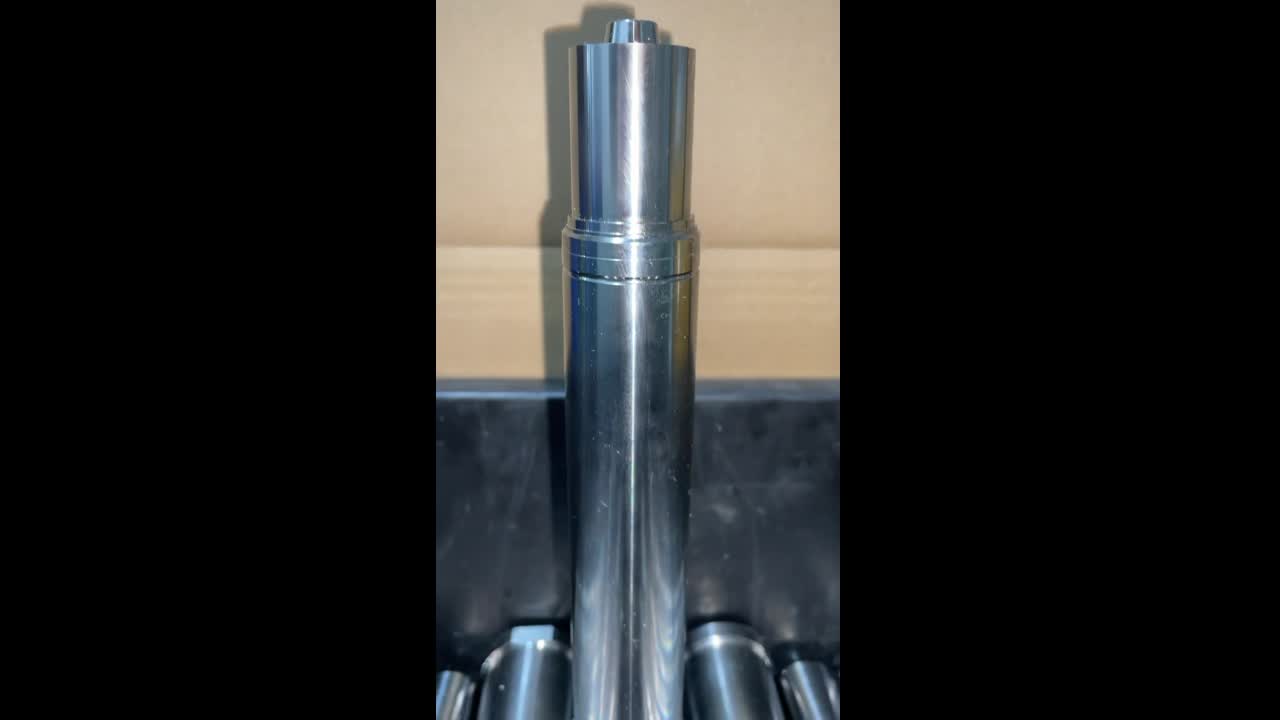
Type: Precipitation-hardening nickel-cobalt-molybdenum steel
Hardness (aged): 52–54 HRC
Thermal conductivity: 18–22 W/mK
Density: 8.05 g/cm³
Corrosion resistance: Poor — no chromium; requires surface treatment or coating
Typical insert cost: $1,200–$4,000
Why 18Ni300 Exists in the Conformal Cooling Material Palette
18Ni300 Maraging Steel was developed for high-stress tooling applications where 420SS is not hard enough or does not have sufficient fatigue strength. Its 52–54 HRC hardness after aging (490°C for 6 hours) exceeds 420SS by 2–4 HRC points — a meaningful difference when running glass-filled PA66 or PPS at injection pressures above 120 MPa for millions of cycles. Its tensile strength reaches 1,900–2,100 MPa (vs. 1,500–1,700 MPa for 420SS), and its fatigue endurance limit is approximately 30% higher.
The Aging Heat Treatment Advantage
Unlike 420SS which requires quenching (with associated distortion risk), 18Ni300 hardens through a simple aging process: hold at 490°C for 6 hours, then air cool. There is virtually no dimensional change during aging — volumetric change is less than 0.08%. This makes 18Ni300 attractive for large or geometrically complex inserts where quench distortion would require additional corrective machining. Some shops machine 18Ni300 inserts to final tolerance in the as-printed state (33–37 HRC, very machinable), then age-harden as the final step — achieving 52–54 HRC without dimensional correction.
Best Applications for 18Ni300
- High-volume automotive molds: bumpers, dashboard components, under-hood parts
- Glass-filled or mineral-filled engineering resins (PA66-GF30, PPS-GF40, PBT-GF30)
- Production runs exceeding 1,000,000 shots where wear life is critical
- High injection pressure applications (>120 MPa) requiring fatigue endurance
- Large inserts where quench distortion of 420SS would be problematic
Limitations
The major limitation of 18Ni300 is corrosion. It contains no chromium and will rust in contact with untreated water. Every 18Ni300 conformal cooling insert requires either: (1) a corrosion-resistant coating on channel surfaces (electroless nickel plating, DLC, or TiN), (2) use of inhibited coolant (water-glycol with corrosion inhibitors at pH 8.5–9.5), or (3) both. This adds $200–600 per insert to the total cost and introduces a maintenance requirement — coolant chemistry must be monitored. Additionally, 18Ni300 powder costs $55–$85/kg, approximately 40–60% more than 420SS powder.
If your mold runs unfilled PP at 300,000 shots/year, 18Ni300 is over-specified and more expensive than necessary. Save it for the jobs that actually need it: abrasive resins, high pressures, and multi-million shot programs.
4. CuCrZr Copper Alloy — Thermal Conductivity Champion
Type: Precipitation-hardened copper-chromium-zirconium alloy
Hardness (aged): 28–35 HRC
Thermal conductivity: 310 W/mK
Density: 8.89 g/cm³
Corrosion resistance: Moderate — good in clean water, susceptible to aggressive coolants
Typical insert cost: $1,800–$5,500
The Physics Case for Copper
Thermal conductivity is the single property that separates CuCrZr from every steel option. At 310 W/mK, CuCrZr conducts heat approximately 12–15 times faster than 420SS (20–25 W/mK) or 18Ni300 (18–22 W/mK). In practical terms, this means a CuCrZr insert placed at a hot spot extracts heat so rapidly that the local cooling time can be cut by 40–60% — even beyond what a steel conformal insert achieves at the same location.
This matters most where part geometry creates thermal bottlenecks that channel geometry alone cannot solve. Deep core pins, thick boss sections, gate areas with high shear heating, and thin-wall features surrounded by thicker sections — these are zones where even a perfectly designed conformal channel in steel may leave a 10–15°C temperature differential. A CuCrZr insert at the same location can reduce that differential to 2–5°C.
SLM Processing Challenges
Copper alloys are more difficult to process by SLM than steels. Copper's high reflectivity at the 1,064 nm wavelength used by most fiber lasers means that a significant portion of laser energy is reflected rather than absorbed. Modern SLM systems with green lasers (515 nm) or high-power fiber lasers (500W+) have largely solved this problem, but not all service bureaus have the equipment. Build parameters must be carefully optimized to achieve >99.5% density — otherwise residual porosity in cooling channels can create nucleation sites for corrosion or blockage.
Post-print machining of CuCrZr is straightforward — copper alloys machine easily — but the as-printed surface finish inside channels (Ra 8–15 μm) is rougher than steel (Ra 5–10 μm) and may benefit from abrasive flow machining or chemical polishing for optimal coolant flow.
Best Applications for CuCrZr
- Hot-spot elimination in deep cores, boss areas, and gate regions
- Thin-wall parts (0.5–1.2 mm) where cooling uniformity directly controls warpage
- Multi-material or overmolding applications with differential cooling requirements
- Blow mold tooling where rapid, uniform heat extraction determines surface finish quality
- Hybrid mold designs: CuCrZr at thermal bottlenecks, steel everywhere else
Limitations
CuCrZr's hardness of 28–35 HRC is significantly lower than either steel option. It is not suitable as the primary cavity or core surface in contact with abrasive resins or at high injection pressures. In most applications, CuCrZr inserts are placed behind or beneath a steel wear surface, or used in low-wear zones where the mold surface does not contact the resin flow front. The powder cost is high ($90–$140/kg), and not all SLM service providers offer copper alloy printing. Lead times can be 2–5 days longer than steel due to specialized processing.
5. Head-to-Head Comparison Table
The table below compares all critical properties side by side. Use this as your reference when evaluating materials for a specific project.
| Property | 420SS | 18Ni300 | CuCrZr |
|---|---|---|---|
| Hardness (working) | 50–52 HRC | 52–54 HRC | 28–35 HRC |
| Tensile strength | 1,500–1,700 MPa | 1,900–2,100 MPa | 380–450 MPa |
| Thermal conductivity | 20–25 W/mK | 18–22 W/mK | 310 W/mK |
| Density | 7.74 g/cm³ | 8.05 g/cm³ | 8.89 g/cm³ |
| Corrosion resistance | Good (12–14% Cr) | Poor (no Cr) | Moderate |
| Heat treatment | Quench + temper | Age harden (low distortion) | Age harden |
| Dimensional change on hardening | 0.1–0.3% (quench risk) | <0.08% | <0.05% |
| SLM powder cost | $40–$60/kg | $55–$85/kg | $90–$140/kg |
| Typical insert cost | $800–$2,500 | $1,200–$4,000 | $1,800–$5,500 |
| Lead time (SLM + post-machining) | 7–10 days | 8–12 days | 10–14 days |
| Mold life (unfilled resin) | 500k–1M+ shots | 1M–3M+ shots | 200k–500k shots |
| Mold life (glass-filled resin) | 200k–500k shots | 500k–1.5M shots | Not recommended |
| Best for | General purpose | High-volume, abrasive resins | Hot-spot elimination |
The most common mistake is selecting CuCrZr because "copper cools faster" without verifying that the application has a thermal bottleneck that steel cannot solve. A well-designed conformal channel in 420SS at a cost of $1,200 often outperforms a poorly placed CuCrZr insert at $3,500. Always run thermal simulation first, then select material based on the simulation results.
6. Material Selection Decision Guide
Use the decision matrix below to match your application requirements to the correct material. Start with the leftmost column (your application type), read across to the recommended material, and check the rationale.
| Application Type | Resin | Volume (shots/yr) | Recommended Material | Rationale |
|---|---|---|---|---|
| Consumer electronics housing | ABS, PC/ABS | <500k | 420SS | Sufficient hardness, good corrosion resistance, lowest cost |
| Packaging closure/cap | PP, HDPE | >1M | 420SS | Unfilled soft resin; corrosion resistance needed for water coolant |
| Automotive bumper/fascia | PP-TD20 | >500k | 18Ni300 | Talc filler is mildly abrasive; high-volume demands fatigue life |
| Automotive connector | PA66-GF30 | >500k | 18Ni300 | Glass fibers are highly abrasive; 52–54 HRC minimum needed |
| Under-hood bracket | PPS-GF40 | >300k | 18Ni300 | Most abrasive common resin; maximum hardness required |
| Thin-wall container (0.4–0.8 mm) | PP | >500k | CuCrZr | Cooling uniformity controls warpage; copper resolves thin-wall hot spots |
| Deep core pin (>5:1 L/D) | Any | Any | CuCrZr | Steel channels cannot extract heat fast enough from deep cores |
| Gate area with shear heating | Any | Any | CuCrZr | Localized thermal spike requires maximum thermal conductivity |
| Medical device (FDA-contact) | PC, PEEK | <200k | 420SS | Corrosion resistance critical; stainless steel validated for medical tooling |
| Hybrid mold (mixed zones) | Any | Any | 420SS + CuCrZr | Steel for general zones, copper at thermal bottlenecks; best cost-performance balance |
The 3-Question Decision Framework
If the table above does not directly match your application, use these three questions to arrive at the correct material:
- Is the resin glass-filled or mineral-filled at >15% loading, AND production volume exceeds 500,000 shots? If yes, use 18Ni300. If no, proceed to question 2.
- Does thermal simulation show a hot spot with >10°C temperature differential that a steel conformal channel cannot resolve? If yes, use CuCrZr at that location. If no, proceed to question 3.
- Default answer: Use 420SS. It covers the broadest range of applications at the lowest cost, with the best corrosion resistance of the three options.
When in doubt, start with 420SS. You can always upgrade a single insert position to CuCrZr later if thermal data from production trials shows a persistent hot spot. Over-specifying material across the entire mold is the most expensive mistake in conformal cooling projects.
Hybrid Mold Strategy: The Best of Both Worlds
The most cost-effective approach for complex molds is a hybrid material strategy: use 420SS (or 18Ni300 for abrasive resins) for the majority of the mold, and place CuCrZr inserts only at identified thermal bottlenecks. This approach typically adds 20–35% to total insert cost compared to an all-steel design, but delivers 30–50% better cooling uniformity where it matters most.
MouldNova designs hybrid molds routinely. Our Moldflow thermal simulation identifies the exact locations where CuCrZr provides a meaningful improvement over steel — and equally important, identifies the locations where steel is sufficient and copper would be a wasted investment.
7. FAQ
There is no single best material. 420SS is the best general-purpose choice: 50–52 HRC, good corrosion resistance, lowest cost ($800–$2,500). 18Ni300 is best for high-volume automotive and abrasive glass-filled resins requiring 52–54 HRC. CuCrZr is best for hot-spot elimination where its 310 W/mK thermal conductivity (12x higher than steel) resolves thermal bottlenecks. Start with 420SS and upgrade only when the application demands it.
CuCrZr has a thermal conductivity of approximately 310 W/mK, compared to 20–25 W/mK for 420SS and 18–22 W/mK for 18Ni300. This 12–15x advantage means CuCrZr inserts at hot spots can reduce local cooling time by 40–60%, even when the rest of the mold uses steel. The trade-off is lower hardness (28–35 HRC) and higher cost ($1,800–$5,500 per insert).
Yes. 420SS at 50–52 HRC is suitable for 500,000–1,000,000+ shots with unfilled or lightly filled resins (PP, PE, ABS, PS). For glass-filled resins above 500k shots, 18Ni300 at 52–54 HRC is the better choice. For unfilled resins at moderate injection pressures, 420SS inserts routinely exceed 1 million shots with no measurable channel wear.
From a China-based SLM manufacturer: 420SS costs $800–$2,500 per insert. 18Ni300 costs $1,200–$4,000 (40–60% more due to higher powder cost and longer heat treatment). CuCrZr costs $1,800–$5,500 (premium reflects $90–$140/kg copper powder vs. $40–$60/kg for steel, plus specialized SLM parameters). All prices include post-machining to ±0.02 mm.
Use a hybrid approach when thermal simulation shows localized hot spots that steel alone cannot resolve. Common scenarios: gate areas with shear heating, deep core pins, and thin-wall sections surrounded by thicker geometry. CuCrZr handles the thermal bottleneck; steel provides hardness and wear resistance everywhere else. Hybrid molds typically cost 20–35% more than all-steel designs but deliver 30–50% better cooling uniformity.
Related Pages
- Conformal Cooling Inserts — Design Rules, Material Comparison & ROI
- Conformal Cooling Tooling — Specifications, Cost & Lead Times
- Conformal Cooling Cost — Pricing Guide with 3-Year TCO Model
- Conformal Cooling Cores — Deep Pins & Core Inserts
- Conformal Cooling Inserts — Service Details & Specifications