Conformal Cooling in Injection Molding: Cycle Time, Cost & Real Factory Data
- Why cooling is the single biggest cycle time bottleneck in injection molding
- How conformal cooling channels work — and why drilled channels can't match them
- Real factory data: actual cycle time reductions across 13 production projects
- Design rules for conformal cooling channels (diameter, pitch, wall distance)
- ROI analysis: when does the upfront cost pay back — and when it doesn't
Table of Contents
- Why Cooling Dominates Injection Molding Cycle Time
- How Conformal Cooling Channels Work
- Real Cycle Time Data: What the Numbers Actually Show
- Conventional vs. Conformal: Head-to-Head Comparison
- 3 Real Projects — Before & After
- Design Rules for Conformal Cooling Channels
- Materials for Conformal Cooling Mold Inserts
- ROI Analysis: When Does It Pay Off?
- FAQ
Why Cooling Dominates Injection Molding Cycle Time
If you want to reduce injection molding cycle time, the first question is: where is the time actually going?
A typical injection molding cycle breaks down like this:
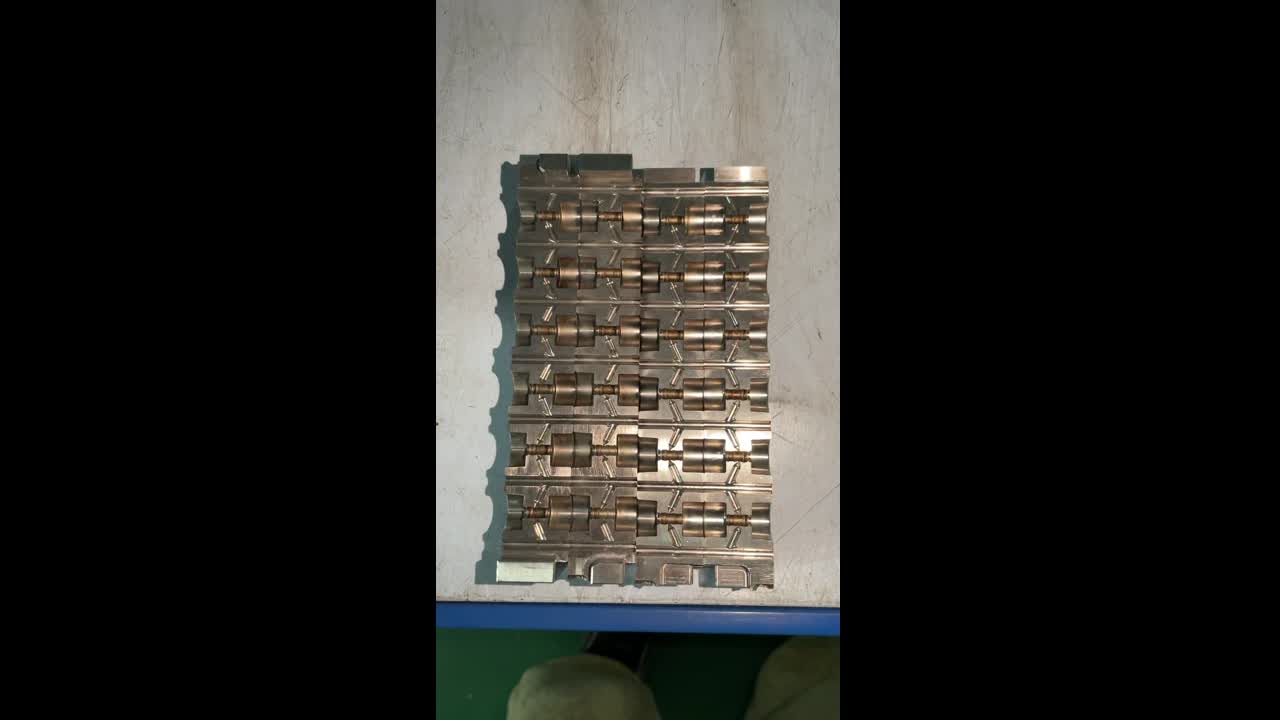
| Cycle Phase | Typical Duration | % of Cycle | Controllable? |
|---|---|---|---|
| Injection (fill) | 1–5 seconds | 5–15% | Limited |
| Pack & hold | 3–8 seconds | 10–20% | Moderate |
| Cooling | 15–45 seconds | 50–70% | High |
| Mold open & eject | 2–5 seconds | 5–15% | Moderate |
Cooling is not just the longest phase — it's the most compressible. Injection speed is limited by material flow properties. Pack time is determined by gate freeze-off. But cooling time is directly controlled by how efficiently the mold removes heat.
With conventional straight-drilled cooling channels, engineers hit a physical ceiling early: the drills can't reach inside complex geometries, can't follow curved surfaces, and leave hot zones in deep cores and thin ribs that force longer cooling times to avoid premature ejection and warpage.
Conformal cooling channels — manufactured via metal 3D printing — break through that ceiling by following the mold surface at a constant offset distance, regardless of geometry complexity.
How Conformal Cooling Channels Work
In a conventionally cooled mold, cooling channels are drilled in straight lines through the mold block. The geometry is limited by what a drill bit can do: straight lines, intersections using plugs, and baffle inserts for cores. Channels cannot be closer than ~25–30mm to the mold surface due to structural constraints, and deep cores are often cooled only peripherally.
Conformal cooling channels are different in three ways:
Path follows part geometry
Channels are designed in CAD to follow the contour of the cavity/core at a constant offset — typically 8–15mm from the mold surface — regardless of how curved or complex the geometry is.
Manufactured via SLM metal 3D printing
The mold insert is printed layer by layer using Selective Laser Melting. The internal channel geometry is created during printing — no post-machining can create these shapes. After printing: stress relief, CNC finishing of mating surfaces, heat treatment to 50–54 HRC, and polishing.
Uniform heat extraction across the entire surface
Because channel distance from the mold surface is constant everywhere, heat is extracted uniformly. Temperature variation across the mold surface drops from ±5–7°C (conventional) to ±2°C (conformal) — directly reducing both cycle time and thermally-induced defects.
Real Cycle Time Data: What the Numbers Actually Show
Published claims about conformal cooling range from "10% reduction" to "70% reduction." That spread exists because the benefit depends heavily on part geometry, material, and the quality of the baseline conventional mold being replaced.
Here is what we observe across our production data from 13 projects processed in our Yuyao, Ningbo facility:
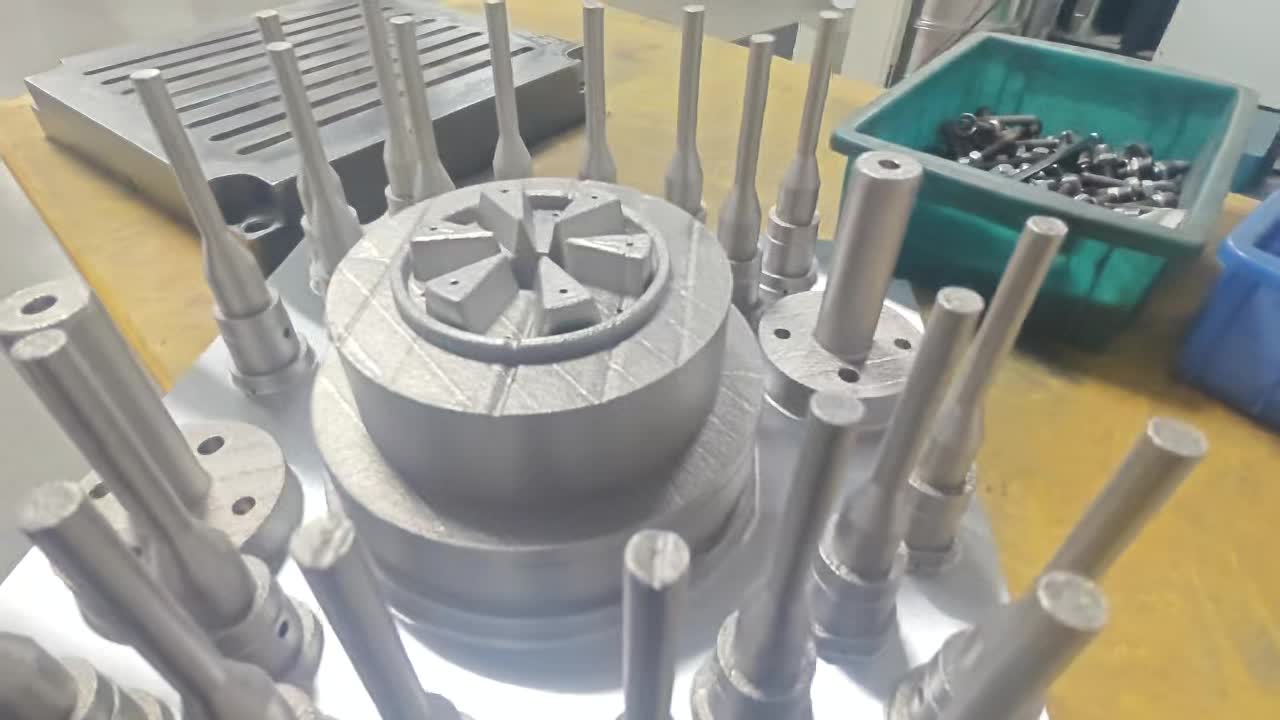
For detailed project-by-project data, see our cycle time reduction analysis. The highest reductions (60–72%) occur in parts with:
- Deep cores (>40mm depth) where conventional channels cannot reach core tip
- Thick sections or non-uniform wall thickness creating localized hot spots
- High-temperature engineering plastics (PC, PA66-GF30, POM) requiring longer cooling in conventional setups
- Multi-cavity molds where cavity-to-cavity temperature variation with conventional cooling was causing balance issues
The lower reductions (20–35%) typically occur in:
- Flat, thin-wall parts (<2mm) where conventional cooling was already adequate
- Parts with very short conventional cycle times (<15 seconds total) where cooling was already a small fraction
- Molds where the existing conventional cooling was already well-engineered (rare)
Wondering what cycle time reduction your specific part could achieve?
Send us your STEP file. We'll run a thermal analysis and give you a projected cycle time comparison — free, no commitment.
Conventional vs. Conformal: Head-to-Head Comparison
| Parameter | Conventional Cooling | Conformal Cooling |
|---|---|---|
| Channel path geometry | Straight lines (drilled) | Any geometry (3D printed) |
| Min. distance to mold surface | 25–30mm (structural limit) | 8–15mm (design-controlled) |
| Deep core cooling | ✗ Limited — bubbler inserts only | ✓ Full conformal wrap possible |
| Surface temp uniformity | ±5–7°C variation | ±2°C variation |
| Cycle time | Baseline (100%) | 58–70% of baseline |
| Warpage risk | Higher — uneven cooling | Lower — uniform cooling |
| Burn mark risk | Higher in hot zones | Significantly reduced |
| Insert cost | Lower (machined) | Higher (SLM + post-process) |
| Lead time (insert only) | 8–12 days | 10–16 days |
| ROI positive at (typical) | — | 50,000–100,000 shots |
| Best suited for | Simple geometry, low volume, short cycle | Complex geometry, high volume, defect-sensitive parts |
3 Real Projects — Before & After
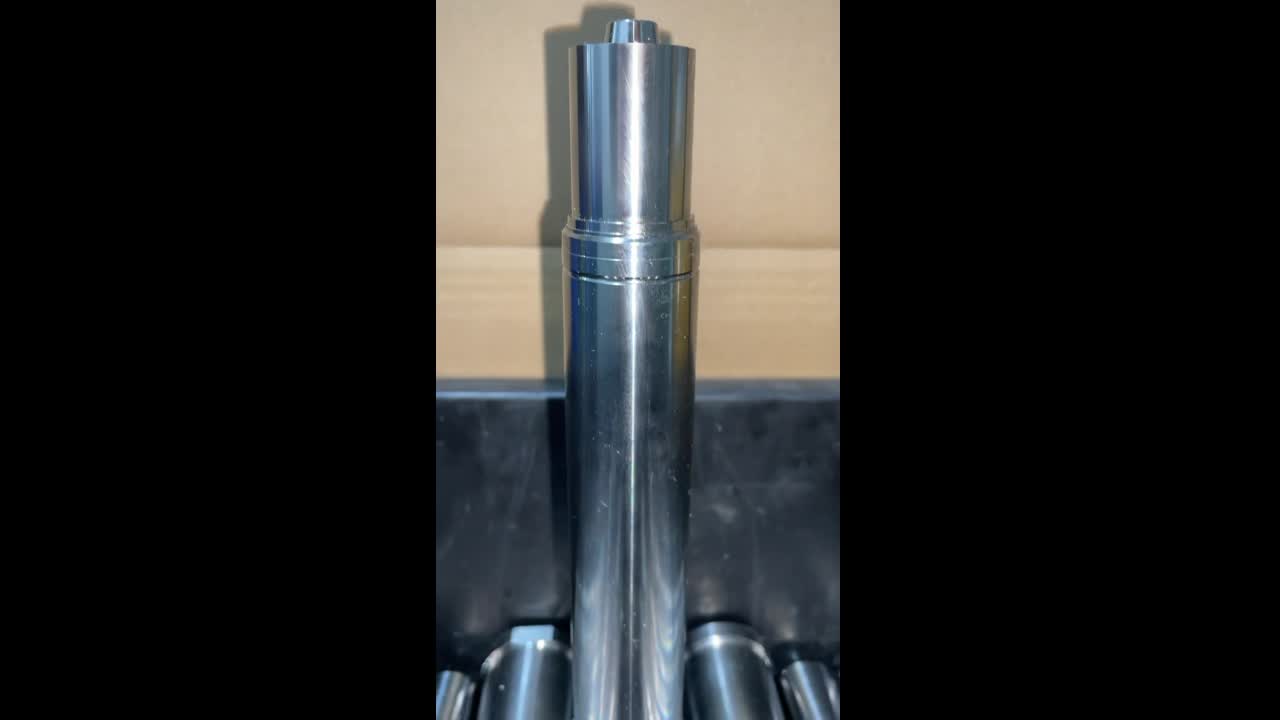
All data below is from MouldNova production records. Part names and customer names are not disclosed per NDA; industry and material are provided.
Glass-filled PA66 (GF30) — multi-cavity door clip bracket
8-cavity mold, 3.5mm nominal wall, deep core (52mm depth). Conventional cooling had severe cavity-to-cavity temperature imbalance (±11°C) causing weight variation between cavities and 18% reject rate from warpage. Core tip was effectively uncooled with conventional setup.
Intervention: Full conformal insert on core side. Channel diameter 8mm, wall distance 10mm, pitch 18mm. CuCrZr material for maximum thermal conductivity at core tip.
ABS — smart home device top housing, class-A surface
Single-cavity mold, complex curved surface, 1.8mm wall, large flat areas prone to sink marks. Client had failed 3 T-trials from a conventional mold — sink marks on the flat face and weld line visibility on a class-A surface. Root cause: hotspot at ribs causing premature freeze, followed by insufficient pack pressure compensation.
Intervention: Cavity-side conformal insert. 420 stainless steel, 6mm channels, 8mm wall distance. Uniform surface temperature eliminated sink marks in T1 trial after conformal upgrade.
PC (Polycarbonate) — transparent optical panel
PC requires strict temperature control: mold too hot = burn marks, mold too cold = internal stress/birefringence. With conventional cooling, the client was running very conservative (long) cycle times to ensure quality, with a hotspot temperature 21°C above average at the flow end.
Intervention: Full conformal wrap on both cavity and core. 18Ni300 maraging steel, 8mm channels at 10mm offset, surface polished to Ra 0.02μm (mirror). Temperature uniformity allowed cycle time to be safely reduced.
Design Rules for Conformal Cooling Channels
The performance of conformal cooling depends more on channel design than on materials. A poorly designed conformal channel network can actually perform worse than a well-designed conventional system. Here are the governing design parameters:
| Parameter | Standard Value | Notes |
|---|---|---|
| Channel diameter (D) | 6–12mm (8mm typical) | Larger D = better flow but less layout flexibility; 8mm balances both |
| Wall distance (channel center to mold surface) | 1.0–1.5 × D | 8mm channel → 8–12mm from surface. Closer = more effective, but watch structural integrity |
| Pitch between channels | 2–3 × D | 8mm channel → 16–24mm pitch. Tighter = more uniform, higher printing cost |
| Minimum bend radius | 1.5 × D | 8mm channel → 12mm min bend. Tighter bends cause flow dead zones |
| Inlet/outlet connection | BSP or NPT fitting standard | Match customer's chiller connection standard to avoid adapter losses |
| Internal surface roughness | Ra 3.2–6.3 μm (as-printed) | Promotes turbulent flow (Re >10,000) — do NOT polish inside channels |
| Target Reynolds number | >10,000 (turbulent) | Turbulent flow gives 3–5× better heat transfer vs. laminar flow |
| Flow rate (per circuit) | 8–15 L/min | Size circuit length to keep ΔT of coolant <5°C inlet to outlet |
Channel routing strategies
Two main routing approaches exist, each with different tradeoffs:
- Series routing: One continuous channel from inlet to outlet, following the part perimeter. Simple to connect, but coolant heats up progressively — outlet area sees warmer coolant. Good for simple geometries.
- Parallel routing: Multiple shorter circuits fed from a manifold. Each circuit sees cool inlet water. Better temperature uniformity, more complex connections. Required for large or multi-zone molds.
Materials for Conformal Cooling Mold Inserts
| Material | Hardness (HRC) | Thermal Conductivity | Best For | Relative Cost |
|---|---|---|---|---|
| 420 Stainless Steel | 50–52 HRC | ~24 W/m·K | General purpose, corrosive plastics (PVC, flame-retardant ABS) | $ |
| 18Ni300 Maraging Steel (MS1) | 50–54 HRC | ~25 W/m·K | High-cavitation molds, high-pressure, maximum strength requirement | $$ |
| CuCrZr Copper Alloy | ~30 HRC (softer) | ~320 W/m·K | Hot-runner areas, deep cores, areas needing maximum heat extraction | $$$ |
Which to choose: For most injection mold applications, 420 SS or 18Ni300 are the correct choice. CuCrZr has 13x higher thermal conductivity than steel, but its lower hardness (30 HRC vs 50+ HRC) means it wears faster in high-abrasion applications (glass-filled materials, high-cavitation). It is best used for targeted inserts in the highest-heat zones, not for entire mold blocks. Read the full breakdown in our conformal cooling benefits overview.
ROI Analysis: When Does Conformal Cooling Pay Off?
Conformal cooling inserts cost more than conventionally machined inserts. For a full price breakdown, see our conformal cooling cost guide. The question is how quickly the cycle time savings offset that premium. Here are two representative scenarios:
Scenario A: High-volume automotive part (PA66-GF30, 8-cavity)
Scenario B: Medium-volume consumer product (ABS, single-cavity, 50,000 shots/year)
When conformal cooling is NOT the right answer
- Very low volumes (<10,000 shots/year) — insufficient cycle time savings to recover premium cost
- Very short cycle times (<10 seconds total) — cooling is already a small fraction of a fast cycle
- Simple flat parts with uniform wall thickness — conventional cooling already works well; minimal gain
- Prototype molds (aluminum or resin) — short-run tooling doesn't justify SLM insert cost
Ready to Reduce Your Cycle Time?
Send your part file or describe your mold challenge. Our engineers will assess whether conformal cooling makes sense for your application — and give you a projected ROI before you commit to anything.