Home › Blog › Conformal Cooling Retrofit
You have a mold that runs. It produces acceptable parts. But cooling is the bottleneck — cycle times are longer than they should be, hot spots cause warpage rejects, and your thermal camera tells a story of uneven temperature distribution across the cavity surface. The conventional wisdom says you need a new mold. That is often wrong.
A conformal cooling retrofit lets you keep your existing mold base — the frame, ejector system, runner system, and all the infrastructure you have already paid for — and replace only the specific core or cavity inserts that have cooling problems. The new inserts are 3D-printed with conformal cooling channels that follow part geometry instead of running in straight lines. The result is dramatically better thermal performance at a fraction of the cost of building a new mold.
This guide covers everything you need to evaluate a retrofit project: the step-by-step process, design constraints, cost comparison, ROI math, real case studies, and the situations where retrofit is not the right answer.
1. What Is a Conformal Cooling Retrofit?
A conformal cooling retrofit is the process of removing one or more conventional cooling inserts from an existing injection mold and replacing them with 3D-printed inserts that contain optimized conformal cooling channels. The fundamental principle is simple: you keep everything that works and upgrade only the components that limit performance.
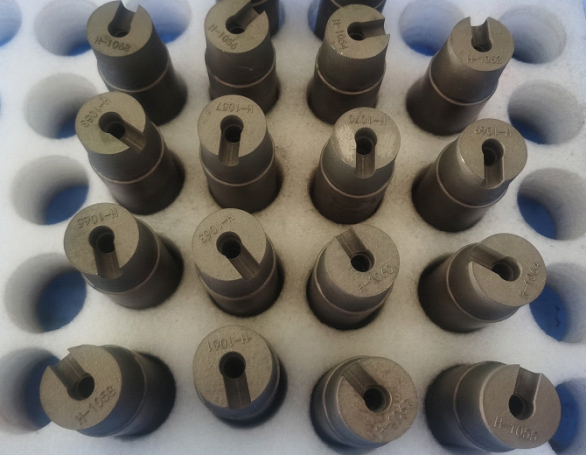
In a conventional mold, cooling channels are drilled in straight lines because that is all a drill bit can do. These straight channels cannot follow complex part contours, leaving hot spots in deep ribs, bosses, and thick-to-thin transitions. A retrofit insert, manufactured via selective laser melting (SLM) from maraging steel or MS1, contains channels that curve, spiral, and branch to maintain uniform distance from the mold surface — typically 3–5 mm from the cavity wall.
The mold base (frame, guide pins, ejector plates, clamp slots) stays on the machine. The hot runner or cold runner stays. The waterline manifold connections stay. Only the specific insert — the piece of steel directly behind the problem area — gets swapped for a conformal version. This is why retrofit costs 90–97% less than a new mold.
What Gets Replaced vs. What Stays
| Component | Retrofit Status | Notes |
|---|---|---|
| Mold base / frame | Stays | No modifications needed |
| Ejector system | Stays | Pin positions unchanged |
| Hot runner / cold runner | Stays | Gate location unchanged |
| Guide pins & bushings | Stays | Alignment preserved |
| Cooling manifold | Stays (usually) | May need adapter fittings |
| Core / cavity insert (problem area) | Replaced | New 3D-printed conformal insert |
| O-ring seals | Replaced | New seals for new insert |
2. When Does Retrofit Make Sense vs. Building a New Mold?
Not every cooling problem requires a retrofit, and not every mold is a good candidate. Retrofit makes the most economic sense when specific conditions align.
Retrofit Is the Right Choice When:
- The mold base is in good condition — no cracking, minimal wear on guide surfaces, parting line still seals properly
- The cooling problem is localized — one or two inserts cause 80% of the thermal issues (hot spots visible on thermal camera or predicted by Moldflow simulation)
- The mold uses removable inserts — bolted, keyed, or press-fit inserts that can be extracted without damaging the mold base
- Production volume justifies the investment — typically 100,000+ shots/year remaining tool life
- The part design is not changing — no upcoming engineering changes that would require a new mold anyway
- Cycle time or quality is the bottleneck — the mold is otherwise capable but cooling limits throughput or causes scrap
Build a New Mold Instead When:
- The mold base has structural damage (cracks, excessive wear, water damage)
- The part design is being revised significantly
- The mold uses integrated cooling (channels drilled directly into the mold base, no separate inserts)
- Multiple systems need upgrading simultaneously (gating, venting, ejection, and cooling)
- The tool has fewer than 50,000 shots of remaining life
3. The 5-Step Retrofit Process
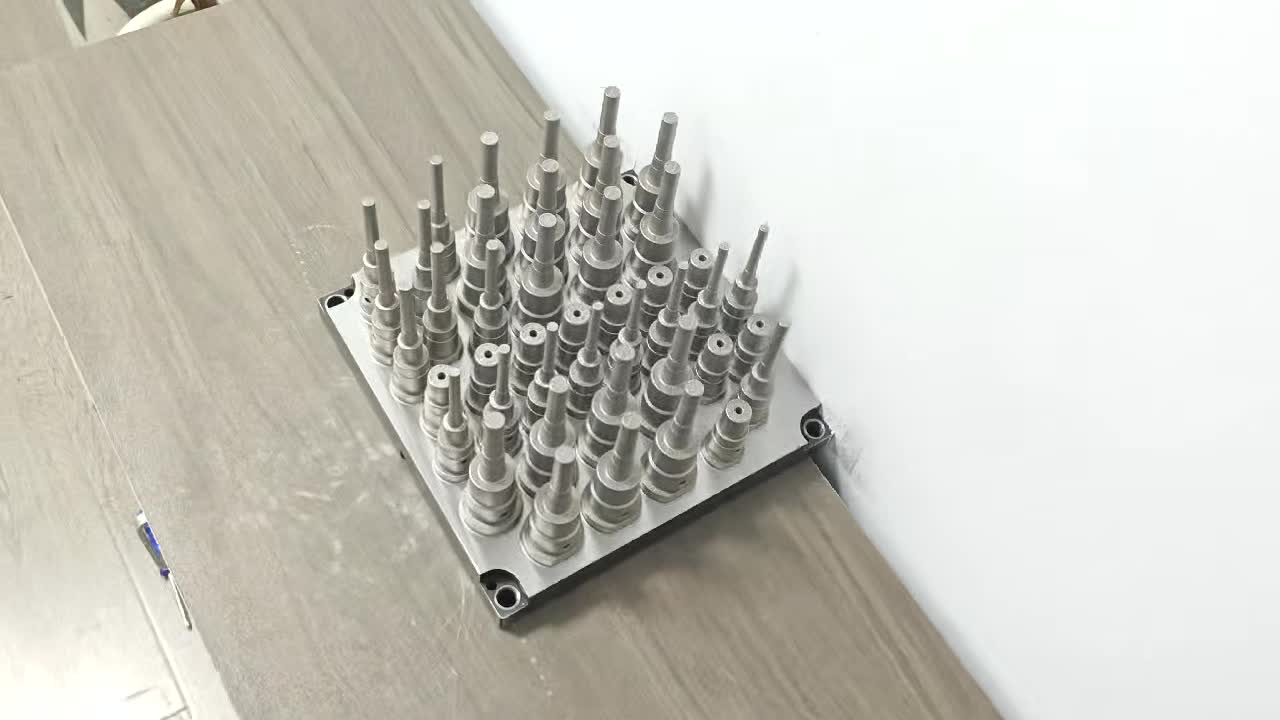
A conformal cooling retrofit follows a structured process. Each step builds on the previous one, and skipping steps creates risk. Here is how a typical retrofit project works from initial assessment to validated production.
The retrofit starts with understanding exactly where cooling is failing. There are two primary diagnostic methods:
Thermal camera imaging: Run the mold for 20–30 cycles to reach thermal steady state, then capture infrared images of the part immediately after ejection and of the mold surface with the mold open. Hot spots show up as bright zones — areas where the mold surface temperature exceeds the target by 10°C or more.
Moldflow simulation: Run a cooling analysis in Moldex3D, Moldflow, or equivalent software using the existing channel layout. The simulation predicts surface temperature distribution, cooling time per zone, and warpage due to differential cooling. This is especially valuable when the mold is still in production and you cannot stop it for thermal imaging.
The output of this step is a thermal map that identifies which inserts are responsible for the hot spots and quantifies the temperature differential that the retrofit needs to eliminate.
This is the most technically demanding step. The new insert must match the existing pocket dimensions exactly — same outer envelope, same mounting features, same locating surfaces. The conformal channel layout is designed within these constraints.
Critical design inputs:
- Existing insert drawings or 3D scan of the pocket
- Water inlet/outlet positions on the mold base
- Ejector pin locations (channels must route around them)
- Minimum wall thickness between channel and cavity surface (typically 3 mm for maraging steel)
- Channel diameter (typically 4–8 mm depending on insert size)
- Target mold surface temperature and uniformity requirement
The designer uses Moldflow or Moldex3D to validate the conformal layout before printing. The simulation must show that the new design eliminates the identified hot spots and achieves the target temperature uniformity of +/-3°C across the cavity surface.
The validated design is manufactured using selective laser melting (SLM) from maraging steel (1.2709 / MS1). This is the same material used in conventional tool steel inserts, with comparable hardness (50–54 HRC after aging) and thermal conductivity.
Print parameters: Layer thickness 30–50 µm, laser power 200–400W, build time 8–36 hours depending on insert volume. Density exceeds 99.5%. The insert is printed with 0.3–0.5 mm machining allowance on all critical surfaces.
After printing: stress relief heat treatment (6 hrs at 490°C), wire EDM to remove from build plate, CNC machining of mounting surfaces, sealing faces, and cavity surfaces to final tolerance (+/-0.01 mm on critical dimensions).
The conformal insert's water inlet and outlet ports must align with the existing cooling circuit in the mold base. This step involves:
- Verifying port positions match existing water line locations (+/-0.1 mm)
- Installing O-ring grooves on the insert to match the mold base seal faces
- Pressure testing the insert standalone (minimum 1.0 MPa / 145 psi for 10 minutes with zero leakage)
- Flow testing to confirm the conformal channels achieve the target flow rate (typically 4–8 L/min)
If the existing water line positions cannot be matched exactly, adapter plates or custom fittings can bridge the gap — but this adds cost and complexity. The best retrofit candidates have standard port locations that the new insert can match directly.
Installation follows the same procedure as any insert swap: remove the old insert, clean the pocket, install the new conformal insert, torque mounting bolts to specification, and connect water lines.
Validation protocol:
- Leak test — run coolant at operating pressure for 30 minutes, inspect all seals
- Dimensional check — mold a short run (50–100 shots), measure critical dimensions on CMM
- Thermal validation — capture thermal images at steady state, compare to baseline data from Step 1
- Process optimization — adjust cooling time, packing pressure, and mold temperature setpoints to take advantage of the improved cooling performance
- Production trial — run 500–1,000 shots at the optimized process, measure Cpk on critical dimensions
Most retrofit installations are validated and running production within one shift. The process optimization phase (reducing cooling time to match the insert's improved performance) typically takes 2–4 hours of process engineering time.
4. Design Constraints for Retrofit Inserts
Designing a conformal insert for a retrofit application is more constrained than designing for a new mold. The insert must fit into an existing pocket, connect to existing water lines, and maintain the existing parting line. These constraints are non-negotiable.
| Constraint | Requirement | Consequence if Violated |
|---|---|---|
| Pocket dimensions | Insert outer envelope must match existing pocket within +/-0.02 mm | Insert won't seat properly; flash or misalignment |
| Water line connections | Inlet/outlet ports must align with existing mold base channels | Leakage or need for adapter plates (added cost) |
| Parting line | Cavity surface at parting line must match existing steel to +/-0.01 mm | Flash at parting line |
| Ejector pin clearance | Conformal channels must maintain minimum 2.5 mm clearance from ejector pin bores | Leakage into ejector pin bore; pin seizure |
| Minimum wall thickness | 3.0 mm between channel and cavity surface (maraging steel) | Deflection under injection pressure; surface cracking |
| Channel diameter | 4–8 mm (limited by insert volume available after pocket constraints) | Insufficient flow rate if too small; structural weakness if too large |
| Mounting features | Bolt holes, keyways, locating pins must match existing pocket features | Cannot install insert; requires pocket modification |
"The number one cause of retrofit failure is not getting the pocket dimensions right. Always 3D scan the existing pocket rather than relying on original drawings — molds drift over time."
5. Typical Retrofit Timeline
A standard conformal cooling retrofit takes 7–12 business days from project kickoff to validated production. Here is the typical breakdown:
| Phase | Duration | Key Activities |
|---|---|---|
| Thermal analysis & assessment | 1–2 days | Review thermal data, identify target inserts, assess feasibility |
| Conformal channel design | 2–3 days | CAD modeling, Moldflow simulation, design review |
| SLM printing | 2–4 days | Build preparation, printing (8–36 hrs), heat treatment |
| Post-machining & finishing | 1–2 days | CNC milling, wire EDM, surface finishing, dimensional inspection |
| Installation & validation | 1 day | Insert swap, leak test, trial run, process optimization |
| Total | 7–12 days |
Rush projects: For production-critical molds, the timeline can be compressed to 5 business days by running design and analysis in parallel, using priority scheduling on the SLM machine, and machining overnight. Rush service typically adds a 20–30% surcharge.
Compare this to a new mold: Building a new injection mold takes 8–16 weeks depending on complexity. A retrofit delivers results 5–10x faster.
6. Cost Comparison: Retrofit vs. New Mold
The cost advantage of retrofit over new mold construction is dramatic. You are paying only for the insert — not the mold base, ejector system, hot runner, or any of the other components that account for 60–80% of a new mold's cost.
| Factor | Conformal Retrofit | New Mold |
|---|---|---|
| Total cost | $2,000–$8,000 | $30,000–$150,000+ |
| Lead time | 7–12 days | 8–16 weeks |
| Production downtime | 4–8 hours (insert swap) | 0 (new tool runs in parallel) or 8–16 weeks |
| Process revalidation | Minimal — same mold base | Full revalidation required |
| Customer requalification | Usually not required | Often required (new tool number) |
| Risk | Low — reversible if needed | Low but expensive |
A typical $5,000 retrofit breaks down as: thermal analysis and design ($800–$1,200), SLM printing and material ($1,500–$3,000), post-machining and finishing ($800–$1,500), O-rings and fittings ($50–$100), dimensional inspection and documentation ($200–$400). The mold base, ejector system, hot runner, and cooling manifold — which represent $25,000–$120,000 in a new mold — cost zero because you already own them.
7. ROI Analysis
Conformal cooling retrofits deliver some of the highest returns of any capital investment in injection molding operations. The math is straightforward: low upfront cost combined with significant per-shot savings across high production volumes. For a detailed methodology, see our Conformal Cooling ROI Calculator guide.
Current state: 32-second cycle, 500,000 shots/year, $80/hr machine rate, 4.5% scrap rate from warpage
After retrofit: 22-second cycle (-31%), 1.2% scrap rate
Retrofit cost: $5,200 (one cavity insert)
Throughput savings: 500,000 × 10 sec ÷ 3600 × $80 = $111,111/year
Quality savings: 500,000 × (4.5% - 1.2%) × $1.80 part cost = $29,700/year
Total annual savings: $140,811
ROI Sensitivity by Production Volume
| Annual Volume | Cycle Reduction | Annual Savings | Payback (on $5k retrofit) |
|---|---|---|---|
| 100,000 shots | 25% | $16,700 | 16 weeks |
| 250,000 shots | 25% | $41,700 | 6 weeks |
| 500,000 shots | 30% | $111,100 | 13 days |
| 1,000,000 shots | 30% | $222,200 | 6 days |
| 2,000,000 shots | 35% | $518,500 | 3 days |
Even at the lowest production volume (100,000 shots/year), the retrofit pays for itself within one quarter. At volumes above 500,000 shots/year, payback is measured in days rather than weeks. For a deeper analysis of conformal cooling costs, see our dedicated cost guide.
8. Retrofit Case Studies
Problem: A 2-cavity mold producing ABS door handles had a persistent hot spot at the grip area where a deep rib met a curved surface. Conventional cooling could not reach within 18 mm of the hot zone. Cycle time was 38 seconds with a 6.2% warpage reject rate.
Retrofit scope: Two core inserts replaced with conformal versions. Existing mold base, hot runner, and cavity side remained unchanged. Conformal channels routed within 4 mm of the rib base.
Timeline: 9 business days from thermal analysis to validated production.
Cost: $6,400 for both inserts (compared to $85,000 estimated for a new mold).
| Metric | Before Retrofit | After Retrofit | Change |
|---|---|---|---|
| Cycle time | 38 sec | 26 sec | -32% |
| Max surface temp delta | 22°C | 6°C | -73% |
| Warpage scrap rate | 6.2% | 0.8% | -87% |
| Daily output (2 shifts) | 1,516 parts | 2,215 parts | +46% |
Problem: A 4-cavity mold producing PP caps for medical device packaging had uneven cooling across cavities. Cavities 1 and 4 (furthest from the water inlet) ran 8°C hotter than cavities 2 and 3, causing dimensional variation that pushed Cpk below 1.33 on a critical diameter.
Retrofit scope: Four cavity inserts replaced with conformal versions featuring individually optimized channel layouts for each cavity position. Water circuit redesigned from series to parallel within each insert.
Timeline: 11 business days.
Cost: $4,800 for all four inserts (smaller inserts, simpler geometry).
| Metric | Before Retrofit | After Retrofit | Change |
|---|---|---|---|
| Cycle time | 18 sec | 13.5 sec | -25% |
| Cavity-to-cavity temp variation | 8°C | 1.5°C | -81% |
| Cpk on critical diameter | 1.18 | 1.89 | +60% |
| Daily output (3 shifts) | 19,200 parts | 25,600 parts | +33% |
Problem: A high-volume 8-cavity mold producing HDPE lids had a cooling bottleneck around the sprue bushing area. The sprue area remained hot, causing stringing and gate vestige issues. Cycle time was locked at 12 seconds because cooling time could not be reduced without gate quality problems.
Retrofit scope: Sprue bushing replaced with a conformal-cooled sprue bushing. No other mold components changed.
Timeline: 7 business days.
Cost: $2,200 for one conformal sprue bushing.
| Metric | Before Retrofit | After Retrofit | Change |
|---|---|---|---|
| Cycle time | 12.0 sec | 9.2 sec | -23% |
| Gate vestige height | 0.8 mm | 0.3 mm | -63% |
| Stringing rate | 3.1% | 0.2% | -94% |
| Annual output increase | +1.4 million parts | ||
9. Risks and Limitations
Conformal cooling retrofits have a high success rate, but they are not risk-free. Understanding the potential failure modes helps you mitigate them during the design and installation phases.
Pocket Tolerance Mismatch
If the existing mold pocket has worn or shifted over years of production, the original drawings may not reflect the actual dimensions. A new insert machined to print dimensions will not fit a worn pocket. Mitigation: Always 3D scan the actual pocket rather than relying on original tooling drawings. Design the new insert to match the scanned geometry.
Seal Integrity
Water leakage at the interface between the new conformal insert and the existing mold base is the most common retrofit failure mode. The seal faces on the mold base may be corroded, pitted, or worn from years of coolant exposure. Mitigation: Inspect seal faces before committing to retrofit. If corrosion depth exceeds 0.1 mm, machine the seal face flat before installing the new insert. Always use new O-rings rated for the operating temperature.
Thermal Expansion Mismatch
If the new insert material has a different coefficient of thermal expansion than the surrounding mold base steel, the interface fit can change at operating temperature. Mitigation: Use maraging steel (1.2709) for the conformal insert when the mold base is P20 or H13 — the thermal expansion coefficients are sufficiently close (11.0–11.5 × 10⁻⁶ /°C) to avoid interference at typical mold operating temperatures (40–80°C).
Flow Rate Limitations
Conformal channels are smaller and more tortuous than straight-drilled channels, which creates higher pressure drop. If your cooling system operates at low pressure (below 0.3 MPa), the flow rate through the conformal insert may be insufficient. Mitigation: Specify minimum 0.5 MPa supply pressure. Design channels with a minimum diameter of 5 mm for retrofits. Test flow rate before installing — target minimum 4 L/min per circuit.
Limited Channel Routing Space
In retrofit applications, the insert volume is fixed by the existing pocket. Small inserts with many ejector pins and tight geometries may not have enough internal volume to route effective conformal channels. Mitigation: Run a feasibility assessment before committing. If the minimum wall thickness between channels and cavity surface cannot be maintained, the insert is not a candidate for retrofit.
10. When NOT to Retrofit
Retrofit is powerful, but it is not always the right answer. Here are the situations where you should invest in a new mold instead.
If the mold's cooling channels are drilled directly into the mold base (no separate inserts), there is nothing to swap out. Converting an integrated-cooling mold to insert-based cooling requires extensive mold base modifications that often cost more than building a new mold from scratch.
If the mold base has cracks in the pocket area, water damage in the cooling manifold, or excessive wear on guide surfaces (more than 0.05 mm clearance on leader pins), a new conformal insert will not fix the underlying structural problems. The new insert will fit poorly in a damaged pocket, creating flash, leakage, and alignment issues.
If the part is being redesigned within the next 6–12 months, the retrofit insert will become obsolete. Wait for the design to finalize, then build a new mold with conformal cooling designed in from the start. This avoids paying for a retrofit that will be scrapped when the new mold is built.
If the mold has fewer than 50,000 shots of remaining life (due to cavity wear, core erosion, or parting line damage), the retrofit will not generate enough savings to justify the investment. A $5,000 retrofit at 50,000 remaining shots and $0.10/shot savings returns only $5,000 — breakeven at best. Build a new mold with conformal cooling included.
If the mold needs a new hot runner, new ejection system, new venting, AND new cooling, the cumulative cost of upgrading each system separately approaches the cost of a new mold — but without the benefits of a clean-sheet design. When more than two major systems need upgrading, a new mold is almost always more cost-effective.
11. Frequently Asked Questions
Yes. In fact, single-insert retrofits are the most common. If thermal analysis shows that one specific cavity position has the worst hot spot, you can retrofit that insert alone and leave the others unchanged. This is the lowest-cost entry point for evaluating conformal cooling performance on your specific application.
In most cases, no. A retrofit is an insert replacement within the same mold — the mold number, cavity layout, gating, and part geometry are unchanged. Most customers treat it the same as any insert maintenance or replacement. However, for medical and automotive programs with formal change control (IATF 16949, ISO 13485), you should notify the customer and may need to submit updated capability data (Cpk study) showing the process remains in control.
A retrofit is reversible. If the conformal insert does not deliver the expected improvement, you can reinstall the original insert and return to your previous process. This is one of the key advantages of retrofit versus a new mold — your downside risk is limited to the cost of the insert and a few hours of mold technician time. In practice, failures are rare when proper thermal analysis is performed in Step 1.
Maraging steel conformal inserts have the same wear characteristics as conventional tool steel inserts. Expected life is 500,000–2,000,000+ shots depending on the resin (glass-filled materials cause more wear). The 3D-printed microstructure, after proper heat treatment, achieves 50–54 HRC hardness — comparable to conventional H13 tool steel. For more on material durability, see our materials guide.
Yes, but it requires more attention than straight-drilled channels. Conformal channels cannot be mechanically rodded out due to their curved paths. Use chemical cleaning (descaling solution circulated at elevated temperature) or ultrasonic cleaning. Preventive maintenance — using filtered, treated coolant and flushing the circuit quarterly — is the best approach. See our guide on cleaning conformal cooling lines.
Send us your insert drawing or thermal images. We will assess retrofit feasibility, estimate cost, and provide a Moldflow simulation showing predicted cycle time improvement — all within 48 hours.
Related Pages
- Conformal Cooling Solutions — Complete Service Overview
- Conformal Cooling Design — Engineering Guidelines & Best Practices
- Conformal Cooling Cost — Pricing Factors & Budget Planning
- Conformal Cooling ROI — Payback Period, Annual Savings & NPV Calculator
- Conformal Cooling Benefits — Five Benefit Categories with a 3-Year Factory Model
- Conformal vs. Conventional Cooling — Side-by-Side Comparison
- Conformal Cooling Inserts — Service Details & Specifications
- Case Studies — Full Production Data from Real Programs