A conformal cooling insert is a precision component that can deliver 25–40% cycle time reductions and dramatic warpage improvements — but only when the internal channels remain clean, the coolant chemistry is controlled, and the structural integrity of the insert is monitored over time. Unlike conventional straight-drilled cooling circuits, conformal channels have smaller diameters and complex three-dimensional geometries that make them significantly more sensitive to scale buildup, corrosion, and flow restriction.
This guide provides a complete maintenance framework for conformal cooling inserts: a structured inspection and cleaning schedule, detailed methods for each cleaning technique, coolant chemistry targets, corrosion prevention strategies, flow rate trending methodology, thermal imaging protocols, and a clear decision framework for replace-versus-repair decisions. Section 10 presents three real-world case studies documenting the cost consequences of inadequate maintenance programs.
1. Why Conformal Inserts Need More Attention Than Conventional Channels
The same geometric properties that make conformal cooling effective — small channel diameters, complex curved paths that follow the part surface — also make the channels more demanding to maintain than conventional straight-drilled circuits. Understanding why this is the case helps maintenance teams prioritize the right actions.
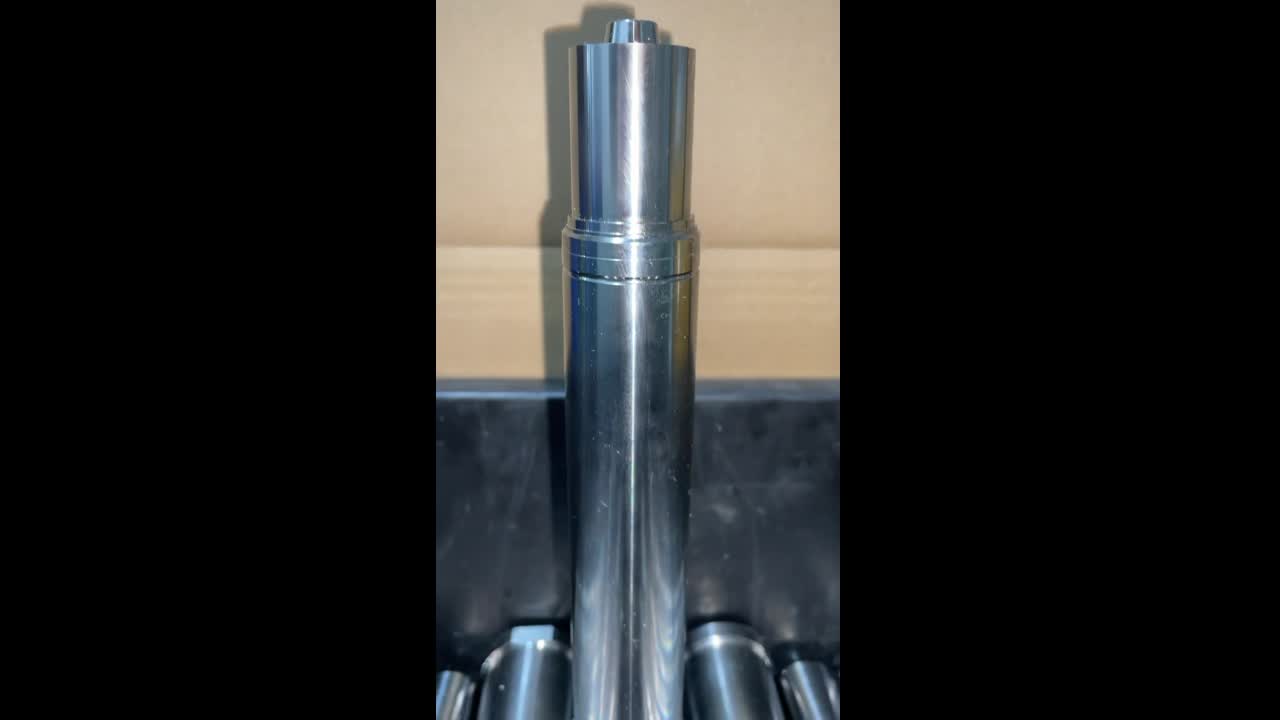
Smaller Bore Diameter Amplifies Deposit Sensitivity
Conventional cooling circuits are typically drilled at 10–16 mm diameter. Conformal channels produced by SLM (selective laser melting) range from 3 mm to 8 mm in diameter, with 4–6 mm being the most common for injection mold inserts. This smaller bore diameter has a critical consequence for deposit sensitivity.
For a circular channel, the flow cross-section area scales with the square of the radius. A 0.3 mm scale deposit on the wall of a 16 mm conventional channel reduces the cross-sectional area by approximately 7.4% — a manageable impact on flow rate. The same 0.3 mm deposit in a 5 mm conformal channel reduces the cross-sectional area by approximately 21.4% — nearly three times the proportional effect. The associated pressure drop increases even more steeply, roughly with the inverse fourth power of the effective radius under laminar conditions.
In practical terms: a scale buildup that causes negligible performance degradation in a conventional circuit will reduce flow by 30–40% in a conformal channel, increasing cooling time by 12–18% and partially negating the cycle time gains that justified the conformal insert investment.
Complex Channel Paths Create Accumulation Zones
The three-dimensional serpentine or spiral geometry of conformal channels creates hydraulic dead zones where coolant velocity drops below the threshold for self-cleaning (approximately 0.5 m/s). In straight circuits, any sediment that enters the system tends to be flushed through by the flow. In conformal channels, particularly at bends, reversals, and bifurcations, sediment, biofilm, and corrosion products preferentially accumulate.
These accumulation zones are also the most thermally critical locations — they are typically placed at the areas of highest heat flux near the part surface. Deposit accumulation at these locations causes localized overheating, which manifests as hot spots in thermal imaging, increased warpage in molded parts, and ultimately, thermal fatigue cracking in the channel walls.
SLM Surface Texture Provides Nucleation Sites
Conformal channels produced by SLM have an internal surface roughness of Ra 10–25 μm as-built, compared to Ra 1.6–3.2 μm for drilled and reamed conventional channels. This rougher surface provides more nucleation sites for scale crystal growth and biofilm attachment. Without active coolant management, SLM channel surfaces accumulate deposits significantly faster than machined surfaces at equivalent coolant quality.
Post-processing — electrochemical polishing or abrasive flow machining — can reduce internal roughness to Ra 3–6 μm, which meaningfully reduces deposit accumulation rate. MouldNova performs abrasive flow polishing on all production conformal inserts for this reason. Even with polished channels, however, coolant quality management remains essential.
A conformal insert is 3 to 4 times more sensitive to coolant quality than a conventional drilled circuit. The maintenance investment required is modest — typically $800–$1,500 per year per tool — but the consequence of neglect is a premature failure that can cost $18,000–$45,000 in replacement parts and downtime.
2. Maintenance Schedule: Daily, Weekly, Monthly, Quarterly
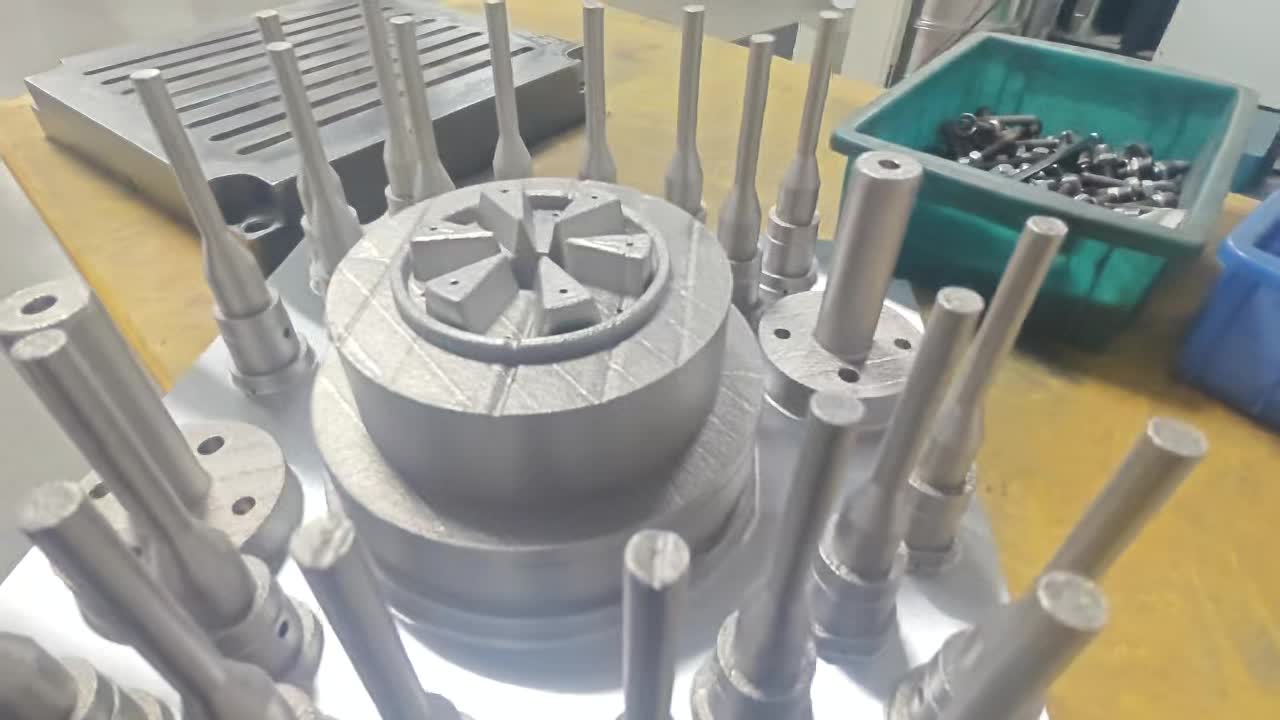
A structured preventive maintenance program for conformal cooling inserts requires four tiers of activity at different time intervals. The daily and weekly tasks are primarily monitoring — they take 5–15 minutes and generate the data needed to catch degradation early. The monthly and quarterly tasks involve hands-on cleaning and inspection during planned maintenance windows.
| Frequency | Task | Method | Target / Pass Criterion | Time Required |
|---|---|---|---|---|
| Daily | Flow rate check (inlet/outlet) | In-line flow meters or timed volume measurement | Within 10% of baseline established at commissioning | 5 min |
| Daily | Inlet/outlet temperature differential | Thermocouple on supply and return lines | Delta-T within 2°C of baseline | 2 min |
| Daily | Coolant pressure drop check | Differential pressure gauge across insert | Pressure drop within 15% of baseline | 3 min |
| Weekly | Coolant pH test | Digital pH meter or test strip | pH 8.5–9.5 (maraging steel); 7.5–8.5 (tool steel) | 10 min |
| Weekly | Coolant hardness test | Titration kit or test strip | <150 ppm as CaCO₃; target <80 ppm | 10 min |
| Weekly | Biocide level check | Test strip or supplier test kit | Active biocide present per supplier specification | 5 min |
| Weekly | Visual inspection — fittings and hoses | Visual and hand check | No leaks, no corrosion at fittings, no kinks | 10 min |
| Monthly | Thermal image of mold face (during production) | IR camera, ≥320×240 resolution | Surface delta-T ≤ baseline +3°C; no new hot spots | 30 min |
| Monthly | Chloride concentration test | Ion chromatography or field test kit | <50 ppm Cl− | 15 min |
| Monthly | Chemical flush with descaling agent | Mild acidic or chelating flush, 2–4 hr circulation | If hardness >150 ppm or flow drop >15% | 4–6 hr |
| Quarterly | Full insert removal and visual channel inspection | Borescope camera through inlet port | No visible scale, no pitting, no biological fouling | 2–4 hr |
| Quarterly | Ultrasonic cleaning (if indicated) | Ultrasonic bath with appropriate solution | Flow rate restored to within 5% of baseline | 4–8 hr |
| Quarterly | Pressure leak test | Pneumatic leak test at 1.5× operating pressure | Zero pressure loss over 10 minutes | 2 hr |
| Annually | CMM dimensional inspection of cavity face | Coordinate measuring machine | Within original tolerance (typically +/-0.02 mm) | 4 hr |
| Annually | Full metallurgical assessment (high-volume tools) | Dye penetrant + hardness testing | No cracks; hardness within 3 HRC of specification | 8 hr |
3. Cleaning Methods: Ultrasonic, Chemical Flush, Mechanical & High-Pressure Water
Four primary cleaning methods are used for conformal cooling inserts. Each has different effectiveness for specific deposit types and different requirements for insert removal. Selecting the right method depends on the nature of the fouling and the severity of the performance degradation.
Ultrasonic cleaning is the gold standard for conformal channel cleaning because cavitation bubbles reach into every geometry of the channel interior, including the dead zones at bends and bifurcations that other methods cannot access. The insert is submerged in a heated ultrasonic bath (40–60°C) with an appropriate cleaning solution — alkaline detergent for organic fouling and biofilm, mild citric or phosphoric acid solution for mineral scale, or a combined sequence.
Typical cycle: 30–60 minutes in alkaline solution followed by 30–60 minutes in descaling solution, with a thorough rinse between steps and a final deionized water rinse. Post-ultrasonic, flush with a passivating solution appropriate to the insert material (see Section 5) before returning to service.
Effectiveness: Excellent for mineral scale, biofilm, and light corrosion products. Not suitable for heavy corrosion pitting or mechanical damage.
Limitations: Requires insert removal. Takes 4–8 hours including handling time. Requires appropriate tank size for large inserts.
Recommended frequency: Every 6–12 months as part of scheduled tool rebuild, or on condition when flow drops more than 25% from baseline.
Chemical flushing circulates a cleaning solution through the channels while the insert remains in the mold base. This allows maintenance during scheduled production downtime without a full tool disassembly. Connect the insert circuit to a portable flush unit (a small reservoir, pump, and flow meter) and circulate the cleaning solution for 2–4 hours at the maximum flow rate the circuit allows.
For mineral scale: use a 3–5% solution of citric acid or EDTA chelating agent at 40–50°C. Circulate until the pH of the return solution stabilizes, indicating the descaling reaction is complete. For biological fouling: use an alkaline detergent with oxidizing biocide at 50–60°C for 2 hours. Follow all chemical flushes with a thorough water rinse and a passivating treatment (sodium nitrite solution or inhibitor additive at recommended concentration).
Effectiveness: Good for early-stage scale and biofilm. Less effective than ultrasonic for advanced fouling.
Limitations: Cannot reach dead zones as effectively as ultrasonic. Requires chemical handling procedures and waste disposal.
Recommended frequency: Monthly for hard-water conditions (>150 ppm), quarterly for well-controlled systems.
High-pressure water flushing at 50–150 bar is effective for dislodging loose scale, sediment, and soft biological deposits. It is most useful as a first step before chemical cleaning and as a thorough rinse after chemical treatment. The high velocity flow (2–5 m/s through the channel) physically scours the channel walls and carries debris out through the outlet port.
Use deionized water or softened water for the flush to avoid re-depositing minerals. Cap all ports except the inlet being flushed and direct the outlet into a collection container so you can inspect what is removed — large scale flakes or dark corrosion products indicate serious fouling that may require ultrasonic treatment. Alternate flushing direction — inlet to outlet, then outlet to inlet — to dislodge deposits from both sides of accumulated layers.
Effectiveness: Excellent for loose sediment and soft fouling. Poor for adherent scale or pitting corrosion products.
Limitations: Requires insert removal for best results. High-pressure equipment needed.
Recommended frequency: Use as part of quarterly maintenance procedure and before ultrasonic cleaning.
Mechanical cleaning with brushes, flexible rods, or abrasive pigs is the standard approach for conventional straight-drilled circuits. For conformal channels, mechanical access is severely limited by the three-dimensional geometry — a flexible brush that follows a 90-degree bend in one plane cannot navigate the compound curves typical of conformal designs. Mechanical cleaning should only be attempted on conformal inserts with port access that allows a direct line of sight into the channel, and only with non-abrasive nylon brushes to avoid damaging the channel wall surface.
Abrasive flow machining (AFM) is a specialized form of mechanical cleaning where an abrasive-laden polymer medium is pumped through the channels under pressure. AFM is more effective than manual brushing for conformal geometries and simultaneously reduces surface roughness — but it is a factory-level process, not a field maintenance technique. Consider AFM as part of a full insert refurbishment rather than a periodic maintenance procedure.
Effectiveness: Limited for complex conformal geometry. High risk of incomplete cleaning.
Recommended use: Only for accessible straight sections. Prefer chemical or ultrasonic for complex paths.
4. Coolant Quality Management: pH, Hardness, Biocide & Filtration
Coolant quality management is the most cost-effective maintenance action for conformal cooling inserts. A well-formulated and regularly monitored coolant prevents the deposit formation that necessitates expensive cleaning procedures and protects the insert material from corrosion. Four parameters require active management.
pH Control
pH is the most critical single parameter for maraging steel (1.2709/MS1) conformal inserts, which are the most common material for SLM-produced inserts. Maraging steel corrodes rapidly at pH below 7.0 and slowly even at neutral pH. The target range is pH 8.5–9.5, which creates a mildly alkaline environment that passivates the steel surface and inhibits corrosion. Check pH weekly and adjust with pH buffer additives as specified by your coolant supplier. Never allow pH to fall below 7.5 in a maraging steel system — if it drops below this level, drain and recharge the coolant before returning to production.
For H13 tool steel inserts and stainless steel components in the cooling circuit, the target pH range is 7.5–9.0. The maximum acceptable pH for most cooling system materials is 10.5 — above this level, aluminum fittings and gasket materials begin to degrade.
Total Hardness Control
Water hardness (dissolved calcium and magnesium ions) is the primary cause of mineral scale in cooling channels. Hard water (above 200 ppm as CaCO₃) can deposit a 0.1 mm scale layer in as few as 6–8 weeks at operating temperatures above 40°C. The target for conformal cooling systems is below 150 ppm, with an ideal target below 80 ppm. Use softened water, deionized water, or reverse osmosis permeate as the coolant base if local tap water hardness exceeds 200 ppm. Add scale inhibitor additives (phosphonate or polyacrylate based) at the concentration recommended by your coolant supplier to suppress scale formation in the remaining hardness range.
Biocide Management
Biological fouling (biofilm) forms when bacteria colonize channel surfaces and produce a protective polysaccharide matrix. Biofilm has a thermal conductivity of approximately 0.6 W/m·K — roughly similar to water — but even a thin biofilm layer (0.05–0.1 mm) significantly increases the hydraulic roughness of the channel and can insulate the wall from the coolant by up to 30% in severe cases. Biocide must be maintained at an active concentration at all times; checking that it is present (not zero) is as important as the specific concentration. Rotate between different biocide chemistries (oxidizing biocide — sodium hypochlorite or hydrogen peroxide — alternating with non-oxidizing biocide — quaternary ammonium or glutaraldehyde based) every 3–6 months to prevent resistant biofilm development.
Filtration
Install a 50–100 micron filter on the coolant supply line serving conformal cooling inserts. This filter catches suspended solids — rust flakes from upstream iron pipe, sediment from the cooling tower, and scale fragments dislodged during temperature cycling — before they can enter and block conformal channels. Inspect and clean or replace the filter cartridge monthly. If the filter is consistently heavily loaded, this indicates an upstream problem (corrosion in the supply piping, inadequate system flushing, or excessive biological fouling) that must be addressed at the source rather than only at the filter.
| Coolant Parameter | Target Range | Action Level | Corrective Action | Test Frequency |
|---|---|---|---|---|
| pH | 8.5–9.5 | <7.5 or >10.0 | Add buffer; if <7.0 drain and recharge | Weekly |
| Total hardness (as CaCO₃) | <150 ppm | >200 ppm | Bleed-and-feed with softened water; add scale inhibitor | Weekly |
| Chloride (Cl−) | <50 ppm | >75 ppm | Partial drain and dilution with low-chloride water | Monthly |
| Biocide | Active per supplier spec | Zero detectable biocide | Shock dose; shock with oxidizing biocide if biofilm suspected | Weekly |
| Corrosion inhibitor | Per supplier concentration | <50% of target | Top up inhibitor to target concentration | Monthly |
| Suspended solids | <10 ppm | >25 ppm | Clean filter; investigate upstream corrosion source | Monthly (filter check) |
5. Corrosion Prevention: Passivation, Additives & Material Coatings
Corrosion is the primary structural threat to conformal cooling inserts. Unlike scale, which degrades performance but is reversible through cleaning, corrosion causes permanent material loss that reduces channel wall thickness, increases the risk of coolant leakage into the mold cavity, and can initiate fatigue cracking at the corroded zone. A three-layer prevention strategy is most effective.
Passivation of New and Refurbished Inserts
All new conformal inserts should be passivated before first use. For maraging steel (1.2709) inserts, the standard passivation procedure involves circulating a 5–10% sodium nitrite solution at 40–60°C for 4 hours, then flushing with deionized water and filling the channels with a 2% sodium nitrite solution before connecting to the cooling circuit. This procedure forms a protective oxide layer on the channel wall surface that significantly slows corrosion initiation.
Re-passivate any insert that has been exposed to low-pH coolant (below 7.0), that has been cleaned with an acidic descaling solution, or that has been stored dry for more than 30 days. Dry storage without passivation allows atmospheric corrosion to initiate on the internal channel surfaces, which then accelerates in-service corrosion once the channels are returned to service with coolant.
Coolant Corrosion Inhibitors
Corrosion inhibitor additives form a protective molecular layer on metal surfaces in contact with the coolant. For steel inserts, phosphonate-based inhibitors at 200–500 ppm are effective and compatible with most coolant biocides. Molybdate-based inhibitors provide excellent corrosion protection but are more expensive and require compatibility checking with the biocide chemistry used in the system. Avoid nitrite-based inhibitors in systems that also use amine-based additives, as the combination can form nitrosamines — a health hazard — under some conditions.
Test corrosion inhibitor concentration monthly using the supplier's recommended test kit. Inhibitor concentration degrades over time due to metal surface adsorption and thermal decomposition, so topping up the concentration is a routine maintenance action, not an indication of a problem.
Protective Coatings for Aggressive Environments
For applications where coolant chemistry is difficult to control (high mineral content water in remote locations, aggressive resins that contaminate the cooling circuit through parting line flash), physical coatings on the channel interior surface provide an additional corrosion barrier. Electroless nickel plating to 15–25 μm thickness provides excellent corrosion resistance against neutral to mildly acidic coolants and withstands the mechanical stress of thermal cycling. Electroless nickel is compatible with all standard conformal channel cleaning methods including ultrasonic cleaning and chemical flush.
Chromium nitride (CrN) PVD coating applied to the cavity face of the insert also reduces corrosive attack from glass-fiber-filled resins that can erode the uncoated maraging steel surface in high-volume production. Note that PVD coatings cannot be applied to internal channel surfaces through typical conformal geometries; they protect the external surfaces only.
6. Flow Rate Monitoring and Trend Analysis
Flow rate monitoring is the most sensitive and practical continuous indicator of conformal channel condition. A declining flow rate — measured against a baseline established at commissioning — provides early warning of scale accumulation, biofouling, or partial blockage before performance degradation becomes severe.
Establishing the Baseline
Within the first week of operation, record the following baseline values at the standard operating conditions (coolant temperature, pump setting, and mold temperature):
- Volumetric flow rate (L/min) — at both inlet and outlet to confirm no internal leakage
- Pressure drop across the insert at that flow rate (differential pressure in bar or psi)
- Inlet coolant temperature and outlet coolant temperature
- Heat removal rate calculated from flow rate and temperature differential (Q = ṁ × Cp × ΔT)
These four values form the baseline fingerprint for the insert. Record them in a dedicated maintenance log and repeat the measurement under identical conditions at every subsequent maintenance check.
Interpreting Flow Rate Trends
5–10% reduction from baseline: Normal range; monitor. No action required if coolant parameters are within spec.
10–20% reduction: Elevated. Increase coolant testing frequency to twice weekly. Schedule chemical flush within 30 days.
20–30% reduction: Action required. Perform chemical flush within 7 days. Investigate coolant quality if not already addressed.
>30% reduction: Critical. Remove insert and perform ultrasonic cleaning. Do not return to production until flow is restored to within 10% of baseline. Inspect channels with borescope before reinstalling.
Equally important as the absolute flow rate is the rate of decline. A flow rate that has been stable for 6 months and then drops 15% in 3 weeks indicates an acute problem — a contamination event, a coolant chemistry excursion, or a developing blockage — that requires immediate investigation. A flow rate that declines slowly at a consistent 2% per month indicates normal scale accumulation that can be managed with the scheduled chemical flush program.
Using Differential Pressure as a Redundant Indicator
At constant pump settings, differential pressure across the insert is mathematically related to flow rate through the channel hydraulics. If flow rate drops but differential pressure drops proportionally, the pump output is reducing — investigate the pump and circuit, not the insert. If flow rate drops while differential pressure increases (more pressure required to push less flow), the insert channels are restricting — this is the signature of scale buildup or partial blockage and requires cleaning action.
7. Thermal Imaging for Performance Tracking
Thermal (infrared) imaging of the mold cavity surface during production is the most direct way to assess whether conformal channels are delivering the intended cooling performance. It detects hot spots caused by channel blockage, deposits, or coolant flow maldistribution before they manifest as part quality problems.
Imaging Protocol
Use an IR camera with a minimum resolution of 320×240 pixels and thermal sensitivity of 0.05°C or better. Image the open mold face at a consistent point in the molding cycle — ideally 2–3 seconds after mold open, before the part is ejected — which captures the mold surface temperature while still carrying the thermal signature of the previous shot. Maintain a consistent camera position and focus distance between measurements to allow direct pixel-level comparison between images taken weeks or months apart.
Capture a baseline thermal image set within the first week of production with a new or newly cleaned insert, at a stable process state after 15–30 minutes of production. Label each image with date, cycle number (total shots on the insert), coolant temperature, and ambient temperature. Store these images with the insert maintenance records.
Interpreting Thermal Images
Compare subsequent thermal images to the baseline using image overlay or direct temperature comparison at marked reference points. Look for:
- New hot spots: Localized areas (typically >5°C above surrounding surface) that were not present in the baseline image. These indicate blocked or fouled channel sections, or areas where channel coverage has been lost due to a developing blockage.
- Expanding hot zones: Areas that were slightly warm in the baseline image and have grown warmer and larger over time. These indicate progressive fouling or a slowly developing blockage.
- Increased overall surface temperature: Uniform temperature elevation across the entire cavity face, with the normal hot/cold pattern preserved. This indicates reduced total flow rate due to scale accumulation throughout the circuit, rather than a localized blockage.
- Asymmetric temperature patterns: In multi-circuit inserts or family tools, one circuit running 5–8°C hotter than the other indicates a flow balance problem — one circuit may be partially blocked while the other carries most of the flow.
A 5°C surface temperature increase above baseline in a conformal cooling insert typically corresponds to a 15–20% reduction in heat removal rate. If this degradation progresses to 10°C above baseline, expect warpage to increase by 30–50% relative to the initial conformal cooling performance, and cycle time to increase by 8–15%. Act before reaching the 10°C threshold.
8. When to Replace vs Repair — Decision Framework
When an insert shows significant performance degradation or visible damage, the decision between replacement and repair involves comparing the cost and feasibility of each option against the remaining service potential of the insert. The following framework applies to maraging steel SLM conformal inserts in injection mold applications.
Repair — Viable Conditions
- Scale blockage without corrosion: If the flow reduction is caused by scale and the channel walls are intact under borescope inspection, ultrasonic cleaning restores the insert to full performance. This is a repair, not a replacement, and is cost-effective even for severe blockage.
- Minor surface wear on cavity face: Wear up to 0.1–0.2 mm on the cavity face can be corrected by EDM machining or grinding with dimensional re-verification, followed by surface coating. This is viable if the channel wall thickness in the sub-surface region remains above 1.5 mm.
- Isolated pitting corrosion: Pitting confined to less than 5% of the channel surface area and not penetrating more than 0.5 mm into the wall can be stabilized by passivation and continued service with tighter coolant monitoring. Consider this conditional repair — if pitting progresses, replacement is required.
- Damaged threaded port fitting: Helicoil repair of damaged inlet/outlet port threads is straightforward and does not affect cooling performance.
Replace — Required Conditions
- Through-wall corrosion or cracking: Any coolant leak through the channel wall into the mold cavity is a replacement trigger. The metal loss in the channel wall is irreversible, and the risk of contaminating the part with coolant is unacceptable in production.
- Thermal fatigue cracking at channel bends: Cracks that propagate from the channel wall toward the cavity face require replacement. Repair welding of SLM maraging steel is technically possible but risks distortion and residual stress that can accelerate further cracking.
- Cavity face dimensional loss >0.3 mm: Excessive wear or erosion of the cavity face exceeding the re-machining allowance built into the insert design.
- Flow rate not restored after ultrasonic cleaning: If flow remains more than 25% below baseline after thorough ultrasonic cleaning, the blockage is either a hard mineral deposit requiring further treatment or a permanent channel deformation. Attempt a second ultrasonic cycle with a stronger descaling concentration; if flow is still not restored, replace the insert.
- Accumulated shot count beyond design life: When the insert has exceeded the design life for its material and application (see Section 9), replacement is proactive maintenance — waiting for a catastrophic failure is significantly more expensive than planned replacement.
9. Expected Insert Lifespan by Material and Application
Conformal insert lifespan is a function of material selection, resin type, operating temperature, cavity pressure, and maintenance quality. The data below represents typical lifespans under well-maintained conditions; neglected maintenance can reduce these figures by 50–70%.
| Insert Material | Typical Hardness (HRC) | Application | Expected Life (Shots) — Well Maintained | Refurbishment Interval |
|---|---|---|---|---|
| Maraging steel 1.2709 / MS1 (SLM, aged) | 50–54 | Non-abrasive resins (ABS, PP, PC) | 1,500,000 – 3,000,000 | Every 1,000,000 shots (clean + inspect) |
| Maraging steel 1.2709 / MS1 (SLM, aged) | 50–54 | Glass-filled resins (PA-GF30, PBT-GF) | 500,000 – 1,200,000 | Every 300,000 shots (inspect cavity face) |
| H13 tool steel (SLM or sintered) | 48–52 | Non-abrasive, high-temperature resins | 1,000,000 – 2,500,000 | Every 800,000 shots |
| H13 tool steel | 48–52 | Glass-filled / mineral-filled resins | 400,000 – 900,000 | Every 250,000 shots |
| Copper alloy (CuCrZr) | HB 120–140 | High-conductivity applications (thin wall) | 300,000 – 700,000 | Every 200,000 shots (soft material wears faster) |
| 316L stainless steel (SLM) | 25–30 | Medical / corrosion-critical applications | 800,000 – 2,000,000 | Every 500,000 shots |
Factors That Accelerate Wear and Reduce Lifespan
- Glass fiber content above 30%: Each 10% increase in glass fiber content above 30% reduces cavity face life by approximately 25%.
- Mold temperatures above 120°C: Thermal cycling at elevated temperatures accelerates fatigue crack initiation at stress concentration points (channel corners, entry ports).
- High injection pressures above 150 MPa: Repeated high-pressure cycles fatigue the channel walls, particularly in thin-wall insert designs with channel-to-surface distance below 2 mm.
- Poor coolant pH control: A system that regularly operates below pH 7.5 can reduce maraging steel insert life by 40–60% compared to a well-controlled system, primarily through corrosion-assisted fatigue crack propagation.
- Rapid thermal cycling: Aggressive water cooling on a hot insert (delta-T above 60°C between the insert surface and coolant temperature) generates tensile stresses in the channel walls that accelerate fatigue cracking at the channel bends.
10. Cost of Neglecting Maintenance: Case Examples of Premature Failure
The following three cases are drawn from toolroom investigations of conformal cooling insert failures where inadequate maintenance was identified as the primary root cause. In each case, the cost of the failure significantly exceeded the cumulative cost of a proper maintenance program.
Situation: A 4-cavity automotive connector tool with conformal inserts was commissioned with local tap water at 320 ppm hardness. No scale inhibitor was added, coolant was not monitored, and no chemical flush was performed during 18 months of production. The first sign of a problem was warpage increasing from 0.08 mm to 0.31 mm over a 3-month period.
Investigation: Insert removed and borescoped. Channels found to be 60–75% occluded with hard calcium carbonate scale. Flow rate had dropped to 28% of baseline. The reduced flow caused peak mold surface temperatures to rise 22°C above initial values, creating a thermal gradient that initiated fatigue cracks at two channel bends.
Outcome: Both inserts replaced ($6,200 each). Unplanned downtime: 6 days ($12,960 at $90/hr, 24-hour operation). New tooling qualification and customer notification: $4,800. Total failure cost: $30,160. A proper maintenance program (water softener + scale inhibitor + monthly pH/hardness testing + quarterly chemical flush) would have cost approximately $1,200/year — totaling $1,800 over 18 months.
Situation: A precision housing tool for a consumer electronics application used deionized water with no biocide treatment, assuming that the absence of minerals would prevent fouling. Deionized water without biocide is actually more prone to biological fouling than mineral water because it lacks the mineral ions that inhibit some bacterial growth pathways.
Investigation: After 14 months, cycle time had increased from 18.2 seconds to 21.6 seconds (a 19% increase), and cosmetic scrap from surface sink marks had risen from 0.4% to 3.1%. Flow rate monitoring (which was not in place) would have shown a 35% reduction. Borescope inspection revealed extensive dark biofilm coating approximately 70% of the channel interior, with the film thickness averaging 0.4–0.6 mm. Thermal imaging showed two 18°C hot zones corresponding to areas of heaviest biofilm coverage.
Outcome: Both inserts required ultrasonic cleaning with biocidal treatment (4-hour process per insert) and re-passivation before returning to service — insert integrity was not compromised, so replacement was not required. Cost: $3,400 for cleaning service, toolroom labor, and downtime. Scrap during the 14-month degradation period (3.1% minus 0.4% baseline = 2.7% excess scrap on 2.1 million parts at $1.20/part): $68,040 in lost product value.
Situation: A medical device housing tool experienced a coolant system failure — a dosing pump for pH buffer failed undetected for approximately 3 weeks. During this period the coolant pH dropped from 9.0 to 5.8 due to dissolved carbon dioxide from the cooling tower water. No pH monitoring was in place to detect the excursion.
Investigation: At 820,000 shots total (approximately 3 weeks into the excursion), the operator noticed coolant contamination in molded parts during a quality inspection. One insert had developed a through-wall pinhole at a corrosion pit location. Borescope inspection confirmed extensive corrosion pitting throughout the channel interior. Both inserts had to be replaced.
Outcome: Emergency insert replacement at priority lead time ($9,800 per insert, 2.3× standard price). Unplanned downtime: 8 days. Parts scrapped due to coolant contamination: 4,200 parts at $6.40 each ($26,880). Regulatory notification to medical device customer and quality hold: $8,200 in quality investigation costs. Total: $71,680. Weekly pH monitoring with a $120 pH meter would have caught the excursion within 7 days of the pump failure.
11. FAQ — Conformal Cooling Insert Maintenance
Conformal cooling channels produced by SLM have smaller internal diameters (3–8 mm vs. 10–16 mm for conventional circuits) and complex three-dimensional paths. The smaller bore means a thin scale deposit reduces flow cross-section by 3 to 4 times the proportional effect seen in larger conventional channels. Complex channel paths also create low-velocity dead zones where biofilm and sediment preferentially accumulate. These geometric factors make conformal inserts roughly 3 to 4 times more sensitive to coolant quality and deposit accumulation than conventional straight-drilled circuits.
Cleaning frequency depends on coolant quality and production volume. For well-controlled coolant (pH 8.5–9.5, hardness below 100 ppm, regular biocide treatment), a full chemical flush every 3 months and ultrasonic cleaning during scheduled tool rebuilds every 500,000 to 1,000,000 shots is sufficient. For operations with hard water above 200 ppm hardness, monthly chemical descaling and quarterly ultrasonic cleaning is necessary. Daily flow rate monitoring is the most important continuous maintenance action regardless of cleaning schedule.
Four coolant parameters have the greatest impact on insert lifespan: pH (maintain 8.5–9.5 for maraging steel inserts; never allow below 7.0), total hardness (keep below 150 ppm as CaCO₃ to prevent scale; ideal is below 80 ppm), biocide level (maintain active biocide to prevent biofilm that can reduce heat transfer by up to 30%), and chloride concentration (keep below 50 ppm to prevent pitting corrosion). Test pH and hardness weekly when the system is new and at minimum monthly once parameters are stable.
Insert lifespan depends on material, application, and maintenance quality. Maraging steel 1.2709 inserts in well-maintained systems running non-abrasive resins typically last 1.5 to 3 million shots before replacement is needed, with cleaning and inspection refurbishments every 1 million shots. The same inserts running glass-filled resins last 500,000 to 1.2 million shots between refurbishments. The most common failure modes are channel wall corrosion pitting (low pH or high chloride coolant), scale blockage (hard water), thermal fatigue cracking at channel bends (excessive delta-T cycling), and cavity face wear (abrasive resins). Well-maintained inserts regularly exceed 2 million shots with no dimensional change.
Neglecting maintenance creates compounding cost escalation. The first effect is gradual — a 20% flow rate reduction from scale buildup increases cooling time by approximately 15%, eroding cycle time gains and increasing warpage. Quality then degrades with scrap rates rising back toward pre-conformal levels. The final stage is premature failure: a blocked or corroded insert requires emergency replacement at $3,000 to $8,000 per insert, plus unplanned downtime typically averaging 3 to 8 days. For a high-volume tool at $90/hr, 6 days of downtime costs $12,960 in machine time alone. The three case studies in this article show total failure costs of $30,000 to $72,000 — versus maintenance programs costing $800 to $1,500 per year.
Related Pages
- Conformal Cooling Channel Design — Diameter, Pitch, Wall Thickness & Geometry Guidelines
- Conformal Cooling Insert Materials — Maraging Steel, H13, CuCrZr Compared
- Conformal Cooling Troubleshooting — Flow Problems, Hot Spots & Warpage After Installation
- Conformal Cooling Benefits — Five Benefit Categories with a 3-Year Factory Model
- Conformal Cooling Inserts — Service Details & Specifications
- Case Studies — Full Production Data from Real Programs