Home › Blog › Conformal Cooling with H13 Tool Steel
H13 (DIN 1.2344 / AISI H13) is the most widely used hot-work tool steel in injection molding and die casting worldwide. Mold shops have decades of experience machining it, heat treating it, and running it in production. So when the conversation turns to conformal cooling channels built by metal 3D printing, the first question from many tooling engineers is straightforward: can we print H13?
The answer is yes — but with significant caveats. Unlike maraging steel (MS1 / 18Ni300), which prints easily on standard LPBF machines, H13 demands specialized equipment, carefully optimized parameters, and a controlled heat treatment sequence. This guide covers everything a mold maker needs to know before specifying H13 for a conformally cooled insert.
1. Why Mold Makers Want H13 for Conformal Cooling
H13 is not just a familiar material — it is the foundation of the entire injection mold and die casting ecosystem. There are compelling technical and practical reasons why tooling engineers prefer it over alternative alloys:
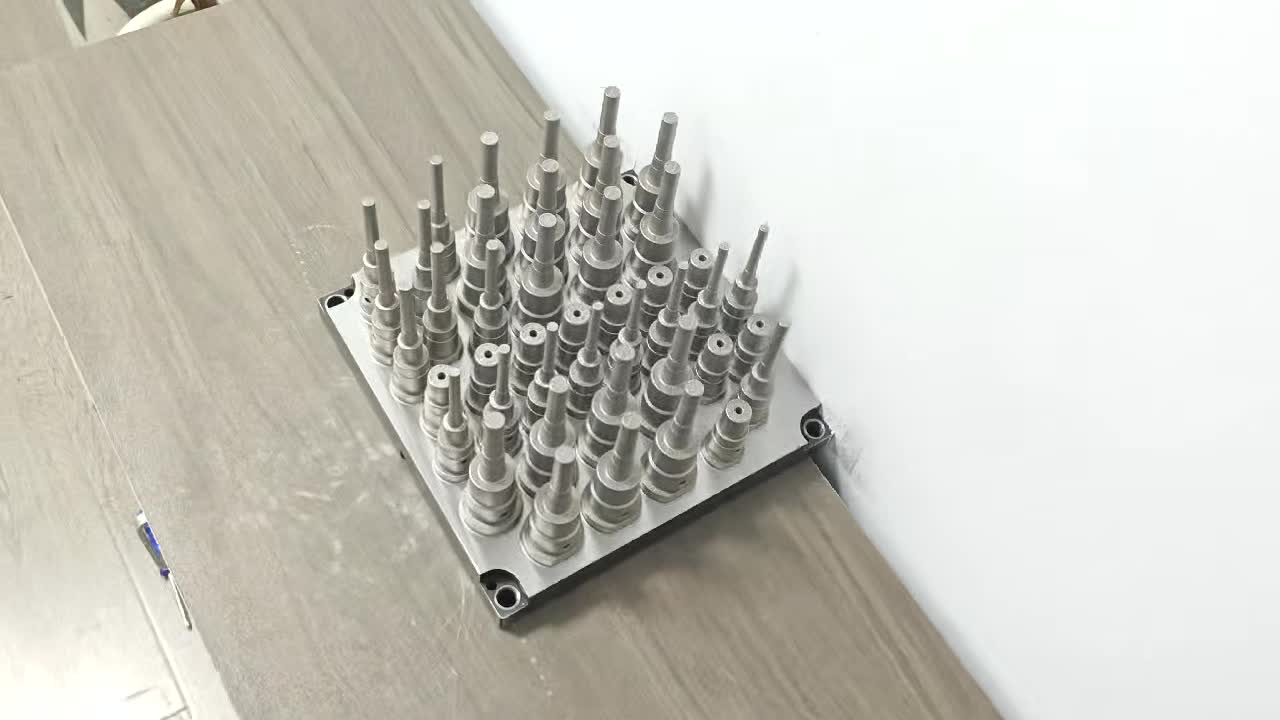
- Proven track record: H13 has been the standard hot-work tool steel for injection molds and die casting dies for over 50 years. Every heat treater, every polisher, and every mold shop in the world knows how to work with it.
- Superior hot hardness: H13 retains working hardness above 600°C, far exceeding maraging steel which begins to soften above 400°C. This is critical for die casting and high-temperature polymer processing.
- Thermal fatigue resistance: The chromium-molybdenum-vanadium composition gives H13 exceptional resistance to heat checking — the network of surface cracks caused by repeated thermal cycling in die casting.
- Metallurgical compatibility: When a conformal cooling insert must be installed in an existing H13 mold base, using the same steel grade eliminates differential thermal expansion issues and allows welding or brazing without dissimilar-metal problems.
- Established supply chain: H13 powder is available from multiple suppliers (Sandvik Osprey, Carpenter Additive, Bohler, Oerlikon), ensuring competitive pricing and supply security.
- Thermal conductivity: H13 offers thermal conductivity of approximately 24–25 W/m·K, comparable to maraging steel at 20–25 W/m·K. Both are suitable for conformal cooling applications.
For shops running hundreds of H13 mold bases, specifying the same steel for conformal inserts means no changes to heat treatment vendors, polishing procedures, or weld repair protocols. The insert drops into the existing workflow.
2. Challenges of Printing H13 via LPBF
Despite its desirability, H13 is one of the more difficult tool steels to process by Laser Powder Bed Fusion (LPBF). The root cause is its chemical composition — specifically, its carbon content and high hardenability.
Carbon Content and Cracking
H13 contains approximately 0.40% carbon along with 5.0% Cr, 1.3% Mo, and 1.0% V. This gives H13 a carbon equivalent (CE) well above 0.5, making it highly susceptible to cold cracking during rapid solidification. During LPBF without adequate preheating, cooling rates reach 106 °C/s — fast enough to transform the melt pool directly into untempered martensite with hardness exceeding 60 HRC and near-zero ductility.
Residual Stress and Delamination
The layer-by-layer thermal cycling in LPBF creates steep thermal gradients. In H13, these gradients generate residual stresses that can exceed the material's fracture toughness, causing:
- Delamination between layers (the most common failure mode)
- Macro-cracks propagating through the build
- Warpage severe enough to crash the recoater blade
- Micro-cracking along prior austenite grain boundaries
Preheating as the Primary Solution
The cracking problem is solved by preheating the build plate to 500°C or higher — above the martensite start (Ms) temperature of H13 (approximately 300–340°C). This keeps the as-built material in a ductile bainitic state rather than brittle martensite, dramatically reducing residual stress and eliminating cracking. However, this preheating requirement means H13 cannot be printed on standard LPBF machines that only offer 200°C preheat capability.
3. H13 Print Parameter Optimization
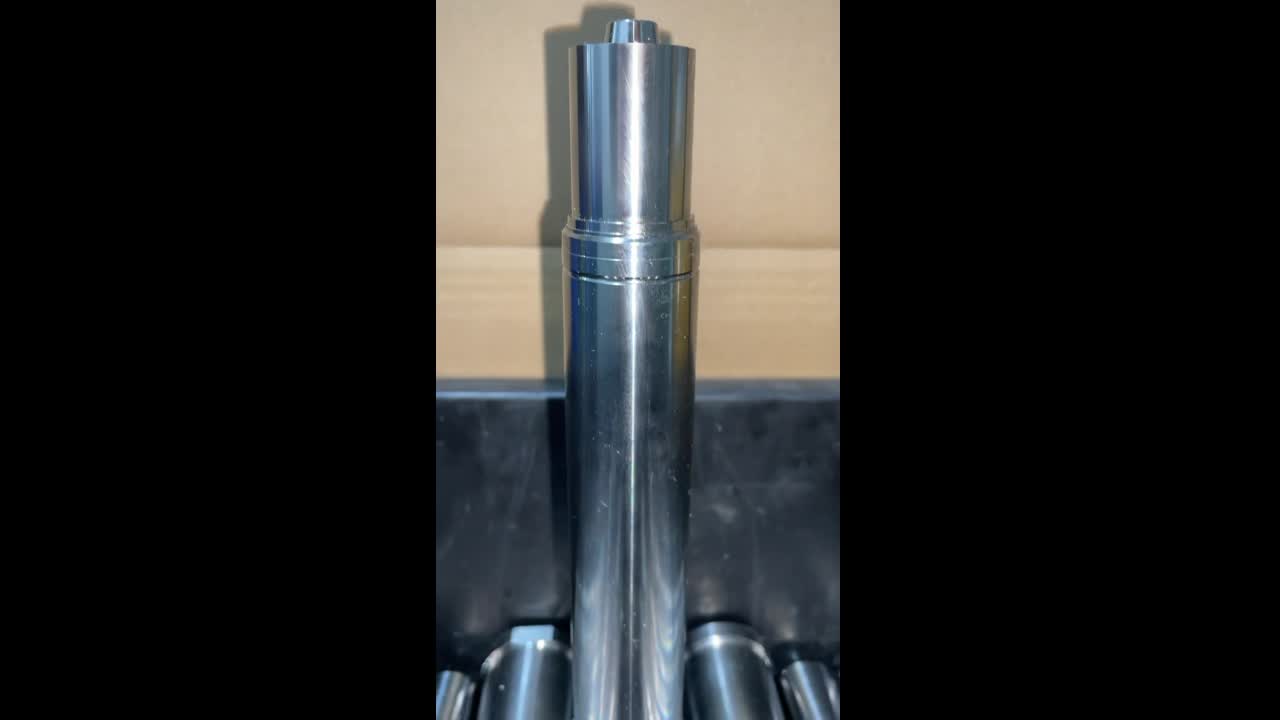
Achieving crack-free, fully dense H13 builds requires careful optimization of both thermal management and laser parameters. The following table summarizes validated parameter sets from published research and production experience:
| Parameter | Recommended Range | Notes |
|---|---|---|
| Build plate preheat | 500–600°C | Critical — must exceed Ms temperature |
| Laser power | 280–370 W | Higher power for thicker layers |
| Scan speed | 600–1000 mm/s | Slower speeds improve density |
| Layer thickness | 30–50 μm | 30 μm for best surface finish and density |
| Hatch spacing | 80–120 μm | Overlap ratio 30–40% |
| Scan strategy | 67° rotation | Stripe or checkerboard with inter-layer rotation |
| Volumetric energy density | 60–90 J/mm³ | E = P / (v × h × t) |
| Atmosphere | Argon or Nitrogen | O2 < 0.1% |
| Powder size distribution | 15–45 μm | Gas-atomized, spherical morphology |
Scan Strategy Considerations
The scan strategy significantly affects residual stress distribution in H13 builds. A 67-degree rotation between layers distributes thermal stress across multiple orientations, preventing stress accumulation along any single direction. Island (checkerboard) scanning with small island sizes (5 mm × 5 mm) further reduces peak residual stress by limiting the length of continuous scan tracks.
For conformal cooling inserts with internal channels, down-skin and up-skin parameters must be separately optimized to maintain channel dimensional accuracy and surface roughness. Overhang angles below 45 degrees require support structures or adjusted parameters to prevent channel collapse.
4. Achievable Properties of Printed H13
When printed with proper preheating and optimized parameters, LPBF H13 achieves mechanical properties that match or approach wrought H13:
| Property | LPBF H13 (Printed + HT) | Wrought H13 (Conventional) |
|---|---|---|
| Density | >99.5% (7.75–7.80 g/cm³) | 7.80 g/cm³ |
| Hardness (heat treated) | 50–54 HRC | 48–54 HRC |
| Ultimate tensile strength | 1800–2050 MPa | 1820–2000 MPa |
| Yield strength | 1400–1650 MPa | 1480–1600 MPa |
| Elongation at break | 3–6% | 5–8% |
| Thermal conductivity | 24–25 W/m·K | 24–25 W/m·K |
| Impact toughness (unnotched) | 12–18 J | 15–22 J |
| Hot hardness at 500°C | 42–46 HRC | 42–47 HRC |
Printed H13 with proper heat treatment achieves hardness and tensile strength equivalent to wrought H13. Ductility is slightly lower due to the fine cellular solidification microstructure, but this is not limiting for injection mold or die casting applications where compressive loads dominate.
5. Heat Treatment Protocol for Printed H13
Unlike maraging steel which requires only a simple aging treatment, H13 demands a multi-step heat treatment cycle to achieve its target properties. The following protocol is validated for LPBF H13 conformal cooling inserts:
Temperature: 650°C for 2 hours, furnace cool to below 100°C
Performed before removal from the build plate to prevent distortion. Relieves residual stress from the LPBF process without significantly altering the microstructure. The part remains on the build plate during this step.
Remove the part from the build plate by wire EDM or bandsaw. Perform rough CNC machining of datum surfaces, mounting features, and waterline connections. Leave 0.3–0.5 mm stock on all precision surfaces for finish machining after hardening.
Temperature: 1020–1040°C for 30–45 minutes (soak time depends on section thickness)
Quench: Gas quench (vacuum furnace preferred) or oil quench
Ramp rate: approximately 10°C/min from room temperature to austenitizing temperature, with intermediate holds at 650°C and 850°C (20 minutes each) to ensure uniform temperature distribution and minimize thermal shock.
First temper: 550–600°C for 2 hours, air cool to room temperature
Second temper: 550–600°C for 2 hours, air cool to room temperature
Double tempering ensures complete transformation of retained austenite and achieves the target hardness of 50–54 HRC. The tempering temperature determines final hardness — use 550°C for 54 HRC or 600°C for 50 HRC. A third temper is sometimes performed for critical die casting applications.
After heat treatment, finish-machine all precision surfaces by hard milling or grinding. Polish cavity surfaces to required finish (SPI A-2 or better for optical parts). Apply surface treatments (nitriding, PVD coating) if required for wear resistance.
| Temper Temperature | Expected Hardness | Typical Application |
|---|---|---|
| 540°C | 54–55 HRC | High-wear applications, glass-filled materials |
| 560°C | 52–54 HRC | General injection molding, most conformal cooling inserts |
| 580°C | 50–52 HRC | Die casting, need for higher toughness |
| 600°C | 48–50 HRC | Maximum toughness, large die casting dies |
6. H13 vs MS1/18Ni300 for Conformal Cooling
The most common alternative to H13 for 3D-printed conformal cooling inserts is MS1 (also known as 18Ni300 or 1.2709 maraging steel). Both steels achieve similar room-temperature hardness, but their processing characteristics and high-temperature performance differ substantially:
| Property | H13 (1.2344) | MS1 / 18Ni300 (1.2709) |
|---|---|---|
| Carbon content | 0.40% | <0.03% |
| Printability (LPBF) | Difficult — requires 500°C+ preheat | Easy — prints on standard machines |
| Required preheat | 500–600°C | 80–200°C (or none) |
| Heat treatment | Complex (austenitize + quench + double temper) | Simple (age harden at 490°C for 6h) |
| Hardness (heat treated) | 50–54 HRC | 50–54 HRC |
| Hot hardness at 500°C | 42–46 HRC | 32–36 HRC |
| Max operating temperature | 600°C+ | 400°C |
| Thermal fatigue resistance | Excellent | Good |
| Weldability to H13 base | Excellent (same material) | Difficult (dissimilar metals) |
| Thermal conductivity | 24–25 W/m·K | 20–25 W/m·K |
| Corrosion resistance | Moderate (5% Cr) | Low (requires coating for corrosive resins) |
| Powder cost (approx.) | $80–120/kg | $70–100/kg |
| Number of capable service bureaus | Limited (~20% of LPBF providers) | Widely available (>80% of providers) |
| Build rate | Slower (higher preheat = longer cooldown) | Standard |
For the majority of injection molding conformal cooling applications — commodity resins at standard mold temperatures — MS1 is the pragmatic choice. It prints faster, on more machines, with simpler heat treatment, and achieves the same room-temperature hardness. Reserve H13 for the specific scenarios described in the next section.
7. When H13 Is the Right Choice
Despite MS1's processing advantages, there are applications where H13 is technically superior or practically necessary:
Die Casting Applications
Aluminum and zinc die casting subjects the tool to molten metal temperatures of 660–700°C (aluminum) or 400–420°C (zinc). H13 is the established die casting tool steel because of its thermal fatigue resistance and hot hardness retention. MS1 would soften and degrade rapidly under these conditions. For conformally cooled die casting inserts, H13 is the only viable choice among printable tool steels.
High-Temperature Resins
Processing resins like PEEK, PEI (Ultem), PPS, and LCP requires mold temperatures of 150–220°C, with melt temperatures exceeding 350°C. While MS1 can technically operate at these temperatures, H13 provides better long-term stability and resistance to heat-related property degradation over hundreds of thousands of cycles.
Existing H13 Mold Bases
When a conformal cooling insert must be retrofitted into an existing H13 mold base, metallurgical compatibility matters. Using an H13 insert in an H13 base ensures:
- Matched thermal expansion coefficients — no differential movement at operating temperature
- Weldability — the insert can be laser-welded or TIG-welded to the base if needed
- Uniform response to nitriding or other surface treatments applied to the assembled mold
- No galvanic corrosion risk from dissimilar metals in the presence of cooling water
Customer Specification Requirements
Some automotive OEMs and Tier 1 suppliers specify H13 (or equivalent P20, S7) in their tooling standards. In these cases, MS1 may not be acceptable regardless of its equivalent mechanical properties, because the customer's tooling specification does not list maraging steel as an approved grade. Using H13 avoids the need for a material deviation request.
8. Machine Requirements for H13 Printing
The 500°C+ preheat requirement limits the field of compatible LPBF systems. Not all metal 3D printers can process H13. The following machines are validated for crack-free H13 production:
| Machine | Max Preheat | Build Volume | Notes |
|---|---|---|---|
| Trumpf TruPrint 2000 | 500°C | ∅200 × 200 mm | Industry reference for H13. Induction preheating for uniform temperature. |
| SLM Solutions SLM 280 2.0 | 500°C | 280 × 280 × 365 mm | Twin-laser option for higher productivity. Preheating module available. |
| EOS M 290 (HT option) | 500°C | 250 × 250 × 325 mm | High-temperature build plate option required. Most widely installed LPBF platform. |
| Concept Laser M2 (GE) | 400°C (500°C with upgrade) | 250 × 250 × 280 mm | Requires preheating upgrade for reliable H13 processing. |
| Trumpf TruPrint 3000 | 500°C | ∅300 × 400 mm | Larger build volume for bigger inserts. Industrial preheating system. |
Standard LPBF machines with only 200°C preheat — including the base EOS M 290, Renishaw AM400, and many Chinese LPBF systems — cannot reliably process H13. Attempting to print H13 on these machines will result in cracking, delamination, and failed builds. Always verify the machine's preheat capability before specifying H13.
Roughly 80% of LPBF service bureaus worldwide can print MS1/18Ni300, but only about 20% have machines capable of H13 processing. When evaluating suppliers for H13 conformal cooling inserts, always ask: what machine and preheat temperature will be used? Request density reports and metallographic cross-sections from previous H13 builds as qualification evidence.
9. Surface Finish and Post-Processing
As-printed LPBF H13 has a surface roughness of Ra 8–15 μm, which is too rough for injection mold cavity surfaces and for internal cooling channel performance. Post-processing is essential:
External Surfaces (Cavity, Core)
- CNC hard milling: After heat treatment to 50–54 HRC, finish-mill cavity and core surfaces using carbide or CBN tooling. Achievable finish: Ra 0.4–0.8 μm.
- Grinding: For flat or cylindrical surfaces, grinding achieves Ra 0.1–0.4 μm.
- EDM: Electrical Discharge Machining for complex geometries, fine details, and texturing. EDM works identically on printed H13 as on wrought H13.
- Polishing: Manual or automated polishing to SPI A-1 (Ra 0.012 μm) or A-2 (Ra 0.025 μm) for optical and cosmetic parts. H13 polishes well due to its homogeneous carbide distribution.
Internal Channel Surfaces
- Abrasive flow machining (AFM): Reduces internal channel roughness from Ra 10–15 μm to Ra 3–5 μm, improving coolant flow and reducing pressure drop.
- Chemical etching: Can reduce internal roughness to Ra 4–6 μm for complex channel geometries where AFM media cannot reach.
- Powder removal: Critical for conformal cooling channels. All unfused powder must be removed before heat treatment. Ultrasonic cleaning, compressed air, and flow testing verify channel cleanliness.
Surface Treatments
After finish machining, printed H13 accepts the same surface treatments as wrought H13:
- Nitriding: Gas or plasma nitriding to 65–70 HRC surface hardness, 0.1–0.2 mm case depth. Excellent for glass-filled and abrasive materials.
- PVD coatings: TiN, TiAlN, CrN for wear and corrosion resistance.
- Chrome plating: Hard chrome for corrosion resistance in PVC and flame-retardant resin processing.
10. Case Studies
Application: Aluminum (A380) structural die casting, thin-wall automotive bracket. Conventional cooling with straight-drilled baffles created a persistent hot spot at a T-junction intersection, causing soldering (aluminum sticking to die surface) and requiring die spray every 3 cycles.
Solution: H13 conformal cooling insert printed on Trumpf TruPrint 2000 at 500°C preheat. Heat treated to 52 HRC. Channels follow the T-junction geometry at 8 mm from cavity surface with 4 mm diameter.
Results:
- Hot spot temperature reduced from 420°C to 310°C
- Die spray interval extended from every 3 cycles to every 12 cycles
- Cycle time reduced from 62s to 48s (23% reduction)
- Soldering defects eliminated — scrap rate dropped from 8.5% to 1.2%
- Insert life exceeded 80,000 shots with no heat checking
Application: PEEK (polyetheretherketone) electrical connector housing for aerospace. Mold temperature 200°C, melt temperature 380°C. Conventional cooling could not maintain uniform temperature across the thin-wall (0.8 mm) connector pins, causing short shots and dimensional variation exceeding +/-0.05 mm tolerance.
Solution: H13 core insert with conformal channels printed on SLM 280 2.0. Channel diameter 3 mm, wall-to-channel distance 5 mm. Heat treated to 50 HRC, then nitrided for wear resistance against the glass-filled PEEK compound (30% GF).
Results:
- Surface temperature uniformity improved from +/-18°C to +/-4°C
- Cycle time reduced from 45s to 33s (27% reduction)
- Dimensional variation reduced to +/-0.02 mm — within specification
- Short-shot defect rate dropped from 4.2% to 0.3%
Application: PC (polycarbonate) automotive tail light lens. Existing H13 mold base running for 5 years with conventional cooling. Persistent sink marks on thick-section light guide features were causing 6% cosmetic reject rate. Customer required H13 material for the replacement insert to match existing mold base.
Solution: Drop-in H13 conformal cooling insert designed as a direct replacement for the existing conventional core. Printed on EOS M 290 with 500°C preheat option. Heat treated to 52 HRC and polished to SPI A-2. Laser-welded into the existing H13 mold base pocket — no base modifications required.
Results:
- Sink mark depth reduced from 0.08 mm to below 0.02 mm (below visible threshold)
- Cosmetic reject rate dropped from 6.0% to 0.8%
- Cycle time reduced from 38s to 29s (24% reduction)
- No differential thermal expansion issues — matched H13 base
- Weld joint integrity confirmed by ultrasonic inspection
11. Frequently Asked Questions
Yes, H13 can be 3D printed via LPBF, but it requires machines with build plate preheating of 500°C or higher to prevent cracking. With proper preheating and optimized laser parameters, printed H13 achieves density above 99.5% and hardness of 50 to 54 HRC after heat treatment, matching wrought H13 performance for injection mold and die casting applications.
3D-printed H13 achieves 50 to 54 HRC after a standard austenitize-quench-double-temper cycle. The exact hardness depends on tempering temperature: 540°C yields 54 to 55 HRC, while 600°C yields 48 to 50 HRC. This matches the hardness range of conventionally manufactured H13.
For most injection molding applications below 300°C mold temperature, MS1 (18Ni300 maraging steel) is the preferred choice because it prints without high-temperature preheating and requires simpler heat treatment. Choose H13 when you need hot hardness above 400°C (die casting, high-temp resins like PEEK), when the insert must fit an existing H13 mold base for metallurgical compatibility, or when customer specifications require H13.
H13 requires LPBF machines with build plate preheating of 500°C or higher. Compatible systems include the Trumpf TruPrint 2000, SLM Solutions SLM 280 2.0 with preheating module, EOS M 290 with high-temperature build plate option, and Trumpf TruPrint 3000. Standard machines with only 200°C preheat cannot reliably process H13.
H13 has approximately 0.40% carbon and high alloy content, giving it strong hardenability. During LPBF without adequate preheating, the rapid cooling rate causes the material to form untempered martensite, which is extremely brittle. Combined with high residual stresses from layer-by-layer thermal cycling, this leads to cold cracking and delamination. Preheating the build plate to 500°C keeps the part above the martensite start temperature, preventing brittle martensite formation during the build.
Related Pages
- Conformal Cooling Materials — MS1, H13, Copper Alloys & Steel Comparison
- Conformal Cooling for Die Casting — H13 Applications & Thermal Fatigue Data
- EOS Conformal Cooling — Machine Capabilities & Material Options
- 3D Printed Conformal Cooling — Complete Technology Guide
- Conformal Cooling Inserts — Design, Manufacturing & Performance
- Case Studies — Full Production Data from Real Programs