Rapid tooling compresses the time from design approval to first injected parts from the conventional 10–20 weeks down to 1–4 weeks. For product development teams racing to market and manufacturers needing bridge production while long-lead steel tools are being built, rapid tooling is often the fastest path to real, production-representative parts.
This guide covers everything you need to know: what rapid tooling is, the main types and manufacturing methods, how rapid prototype tooling differs from rapid production tooling, the role of 3D printing and aluminum in rapid mold manufacturing, complete lead time and cost benchmarks, and a decision framework for choosing between rapid and conventional tooling.
1. What Is Rapid Tooling? Definition and Core Concept
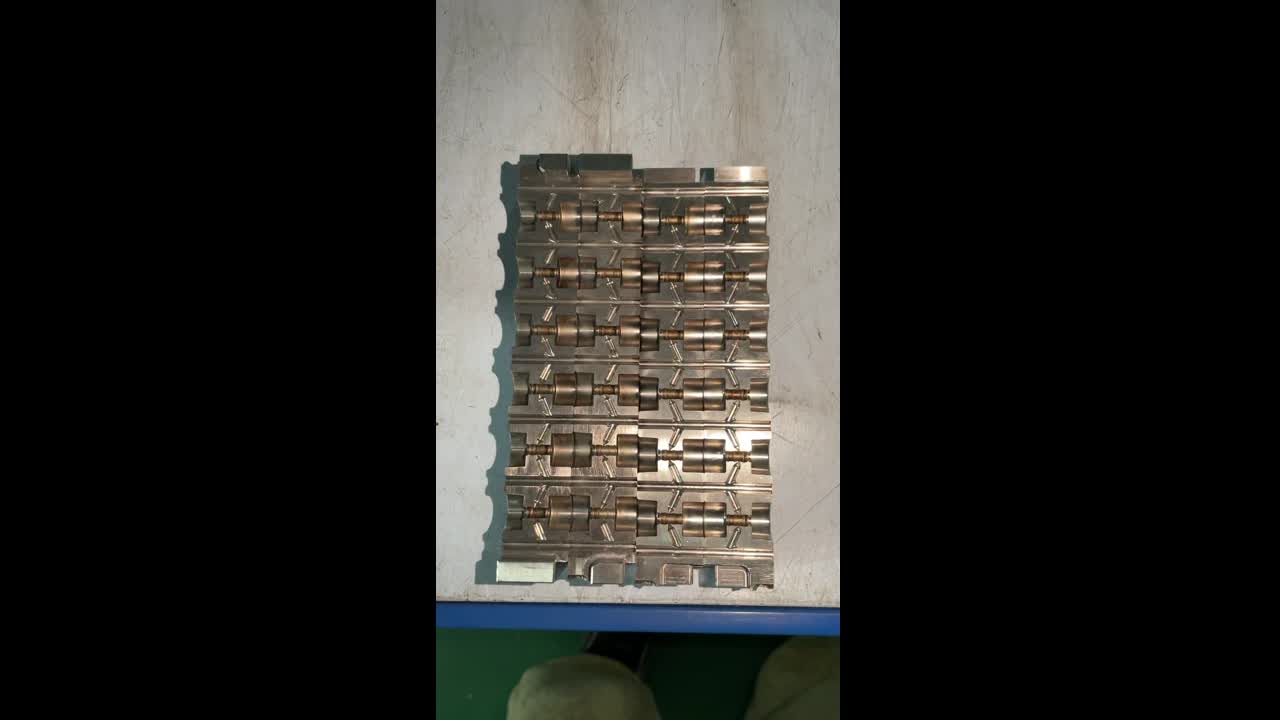
Rapid tooling refers to any method of manufacturing injection molds, forming tools, or mold inserts in significantly shorter timeframes than conventional steel tooling — typically 1 to 4 weeks compared to 10 to 20 weeks for a hardened production mold. The core purpose is to produce functional, production-representative parts faster and at lower upfront cost, either for design validation or for bridge production while the permanent production tool is completed.
The term encompasses a broad family of manufacturing approaches: CNC-machined aluminum molds, metal 3D printed inserts, silicone rubber molds cast from masters, cast metal tooling (kirksite or bismuth-tin alloys), and 3D printed plastic or composite mold inserts used in steel mold bases. What unites all these approaches is the prioritization of speed and cost over maximum shot life.
How Rapid Tooling Differs from Conventional Tooling
Conventional injection mold tooling uses hardened P20, H13, or S7 tool steel machined to final geometry over a period of 10 to 20 weeks. These tools can run 500,000 to 5,000,000+ shots with minimal maintenance. They represent the correct choice for any program running in mass production at high annual volumes. The problem is their upfront cost ($10,000–$100,000+) and lead time create a bottleneck early in product development and for low-to-medium volume programs.
Rapid tooling solves this bottleneck by accepting a shorter tool life (100 to 100,000 shots) in exchange for dramatically faster delivery and lower cost. The parts produced are injection-molded in the actual production resin on a real injection molding machine — not printed or cast approximations — which means rapid tooling produces genuine production-representative parts with the correct surface finish, tolerances, and material properties.
The defining characteristic of rapid tooling is not the method used to make the mold — it is the outcome: production-representative parts in the actual material, delivered weeks faster than conventional tooling could allow.
2. Types of Rapid Tooling: Direct vs Indirect, Soft vs Hard
Rapid tooling is most usefully classified along two axes: how the tool is made (direct or indirect) and how durable it is (soft or hard). Understanding these distinctions helps you select the right approach for your volume, timeline, and quality requirements.
Direct Rapid Tooling
Direct rapid tooling builds the mold cavity or insert directly using the rapid manufacturing process — for example, CNC machining an aluminum block directly into a mold cavity, or 3D printing a metal insert directly from CAD data. Direct rapid tooling eliminates the intermediate steps of creating a master pattern, making it faster for simple-to-moderate geometry. It also provides better dimensional accuracy than indirect methods because there are no intermediate casting steps that introduce shrinkage or distortion.
Direct rapid tooling methods include:
- Direct aluminum CNC tooling: Mold cavities machined directly from 6061 or 7075 aluminum billets. Lead time 5–10 days.
- Direct metal 3D printed inserts: SLM-printed tool steel or maraging steel inserts built directly from STEP files. Lead time 3–7 days for the printed part, plus machining and surface finishing.
- Direct CNC steel tooling (soft steel): Mold cavities machined from un-hardened P20 or 1.2311 steel, often with selective hardening at wear surfaces. Lead time 2–4 weeks.
Indirect Rapid Tooling
Indirect rapid tooling uses a rapid-made master pattern as an intermediate step to produce the mold cavity. The master — typically 3D printed in resin, machined from foam, or CNC-cut from aluminum — is used to cast a soft mold (silicone, epoxy, or cast metal). Indirect methods are well-suited to very complex organic shapes where direct machining would be expensive, and for producing multiple identical mold copies from a single master.
Indirect rapid tooling methods include:
- Silicone rubber molds: Cast from a 3D-printed master. Best for 20–200 parts in polyurethane, silicone, or wax. Not suitable for standard thermoplastics.
- Cast metal tooling (kirksite, bismuth-tin alloys): Metal alloys with melting points of 150–300°C cast around a master pattern. Produces 1,000–10,000 injection-molded plastic parts.
- Epoxy tooling: Epoxy resin filled with aluminum or copper particles cast from a master. Suitable for 500–5,000 shots of low-temperature thermoplastics.
Soft Tooling vs Hard Tooling in Rapid Prototyping
Soft tooling rapid prototyping uses flexible or low-strength mold materials — silicone, polyurethane, aluminum, or unreinforced epoxy — to produce prototype parts quickly. Soft tooling is ideal when you need design validation parts fast and are willing to accept lower shot life (50–5,000 parts). Hard rapid tooling uses durable metals — aluminum 7075, soft steel P20, or 3D-printed maraging steel — that can sustain production-representative shot volumes of 5,000 to 100,000+ while still delivering faster lead times than hardened production tools.
3. Rapid Prototype Tooling vs Rapid Production Tooling
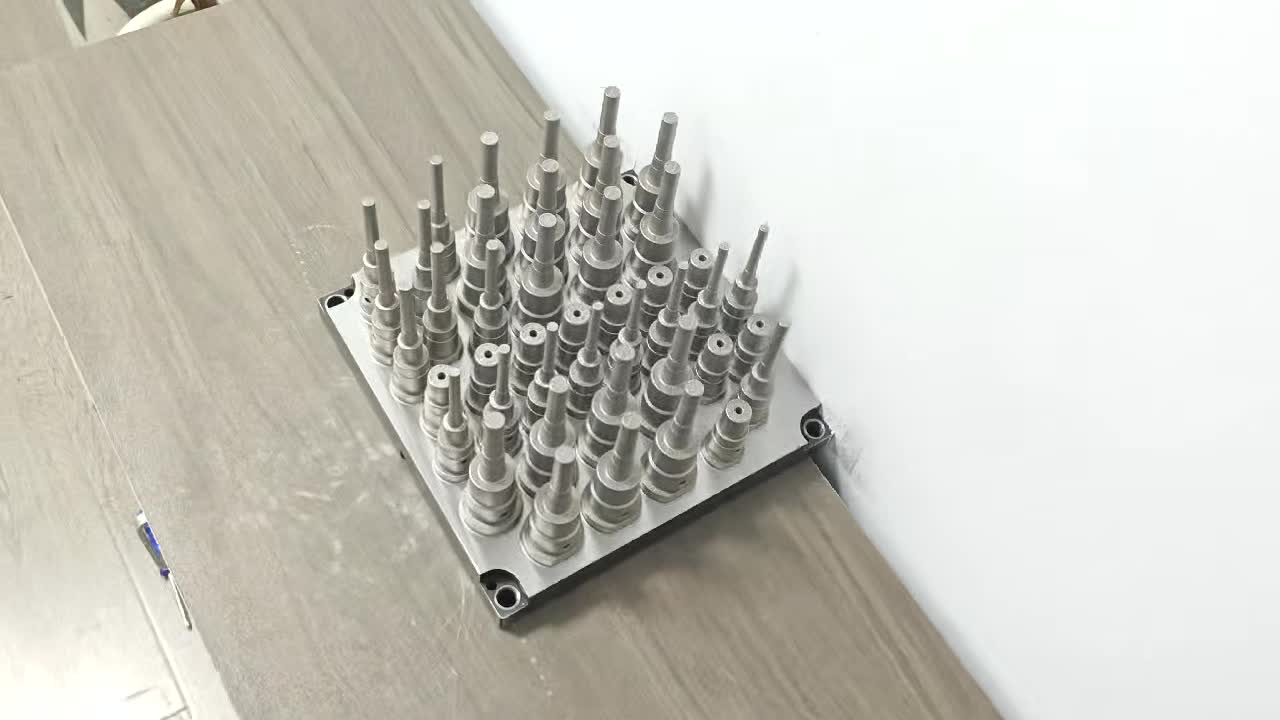
Two distinct use cases drive rapid tooling demand, and they require different approaches. Understanding which applies to your situation prevents costly mistakes in tool specification.
Rapid Prototype Tooling: Design Validation at Speed
Rapid prototype tooling is optimized for one goal: getting injection-molded parts in the actual production material as fast as possible for design validation. The key word is "injection-molded" — 3D-printed prototype parts are faster and cheaper, but they do not replicate the anisotropic fiber orientation, surface finish, weld lines, sink marks, and dimensional behavior of injection-molded parts. When a design must be validated under real production conditions before committing to a production tool, rapid prototype tooling is the answer.
Typical rapid prototype tooling specifications:
- Shot life: 50–500 parts (sufficient for design validation, functional testing, and limited field trials)
- Material: Aluminum 6061 or SLA/FDM-printed insert in steel mold base
- Lead time: 3–10 days
- Cost: $800–$5,000 per cavity depending on complexity
- Tolerance: ±0.1–0.15 mm (adequate for most design validation needs)
Rapid Production Tooling: Bridge Tooling for Volume Needs
Rapid production tooling — often called bridge tooling — fills the gap between prototype validation and mass production. It is used when a program has been approved for production and parts are needed in commercial quantities (1,000 to 100,000 shots) before the permanent hardened production tool is ready. Bridge tooling must be durable enough to sustain continuous production and accurate enough to produce parts that meet production tolerances.
Typical rapid production tooling specifications:
- Shot life: 5,000–100,000+ parts depending on material
- Material: Aluminum 7075-T6, 3D-printed maraging steel inserts, or soft P20 steel
- Lead time: 1–3 weeks
- Cost: $3,000–$25,000 per cavity depending on complexity and material
- Tolerance: ±0.05–0.08 mm (production-representative)
| Parameter | Rapid Prototype Tooling | Bridge / Rapid Production Tooling |
|---|---|---|
| Primary goal | Design validation | Commercial volume production |
| Shot life | 50–500 shots | 5,000–100,000+ shots |
| Lead time | 3–10 days | 1–3 weeks |
| Tolerance | ±0.10–0.15 mm | ±0.05–0.08 mm |
| Typical tool cost | $800–$5,000 | $3,000–$25,000 |
| Common materials | Al 6061, printed inserts | Al 7075, P20, maraging steel |
4. Rapid Tooling Manufacturing Methods
Each rapid tooling method has a specific niche defined by part complexity, volume requirement, material compatibility, and available lead time. The following covers the five primary methods in current commercial use.
1. Aluminum CNC Molds
CNC machining of aluminum — typically 6061-T6 or 7075-T6 — is the most widely used rapid tooling method. Aluminum is 3 to 5 times faster to machine than steel, which is the primary source of cost and lead time savings. A simple single-cavity aluminum mold for a palm-sized part can be CNC machined, hand-finished, and assembled in 5–7 days. Aluminum molds support injection of most thermoplastics and elastomers, including ABS, PP, PE, PC, nylon (PA6/PA66), and TPU. They are not well-suited to abrasive glass or carbon fiber-filled materials, which wear aluminum gate and cavity surfaces rapidly.
2. Metal 3D Printed Inserts (SLM/DMLS)
Selective laser melting (SLM) and direct metal laser sintering (DMLS) produce metal mold inserts directly from CAD data in 3–7 days. Unlike CNC machining, 3D printing can build internal geometries — including conformal cooling channels — that are impossible to create with drill bits. This makes 3D printed mold inserts uniquely powerful for rapid tooling applications where cycle time also matters. After printing, inserts are CNC finished to dimensional tolerance and heat treated to target hardness (48–55 HRC in maraging steel). Shot life for 3D printed maraging steel inserts is 5,000 to 50,000 shots depending on part geometry and resin.
3. Silicone Rubber Molds
Silicone rubber molds are cast from a 3D-printed or CNC-machined master pattern in liquid silicone rubber (LSR). They are the fastest method to produce a mold — the casting process takes 24 to 48 hours — and the most flexible in terms of part geometry, since silicone can be peeled off undercuts that would require side actions in a rigid tool. The critical limitation is material compatibility: silicone molds are used for casting polyurethane, wax, and low-temperature resins, not for standard injection molding thermoplastics. Shot life is typically 20–200 pours. Silicone tooling is the correct choice for form and fit evaluation when true injection molding is not required.
4. Cast Metal Tooling (Kirksite / Bismuth-Tin)
Cast metal rapid tooling uses low-melting-point metal alloys — kirksite (zinc-aluminum) or bismuth-tin alloys — cast around a master pattern to produce a rigid mold cavity. The casting process takes 2–5 days and produces cavities accurate to within 0.1–0.2 mm of the master. Kirksite molds can run 1,000 to 10,000 injection cycles with standard thermoplastics at low-to-medium injection pressures. The advantage over machined aluminum is the ability to produce complex curved and undercut surfaces without 5-axis machining. Cast metal tooling is most common in automotive styling studios for rapid prototyping of interior components.
5. 3D Printed Plastic/Composite Inserts in Steel Mold Bases
High-temperature photopolymer or composite-filled FDM inserts can be printed in 4–24 hours and installed in standard steel mold base frames for injection molding. This approach is the fastest and cheapest path to the first injection-molded part — inserts can cost $50–$300 and the first part can be injected within 48 hours of finalizing the design. However, shot life is very limited: 50–200 shots in well-supported geometries, often fewer. Part tolerances are also more variable than machined inserts, making this method best suited for early-stage design validation rather than functional testing.
5. Rapid Tooling for Injection Molding: The Bridge Tooling Concept
Rapid tooling injection molding — using a fast-made mold to produce parts on a standard injection molding machine — is the primary commercial application of rapid tooling technology. It solves a fundamental problem in the product development lifecycle: the gap between "design approved" and "production tool ready."
Conventional injection mold production tools require 10 to 20 weeks to design, machine, heat treat, EDM, polish, fit, and validate. During this period, the product team has no injection-molded parts for customer sampling, regulatory testing, assembly line trials, or market validation. Rapid tooling injection molding fills this gap by producing genuine injection-molded parts within 1 to 3 weeks at a fraction of the production tool cost.
The Bridge Tooling Workflow
Design is frozen for bridge tooling. A DFM (Design for Manufacturability) review identifies draft angles, wall thickness issues, and gate locations. The bridge tool is designed with the same gate location and parting line as the intended production tool to ensure the bridge-tooled parts are fully representative.
The bridge tool is machined from aluminum 7075 or built from 3D-printed steel inserts. For simple parts, CNC aluminum machining is faster and less expensive. For geometrically complex parts with deep ribs, undercuts, or required conformal cooling, 3D printed metal inserts are preferred. The tool is assembled in a standard mold base and tested on the injection molding machine.
Parts are injected using the production resin on the same class of injection molding machine that will run the production tool. This is a critical advantage over any prototype method: bridge-tooled parts have the same fiber orientation, weld lines, surface finish, and dimensional behavior as future production parts. The bridge run fulfills customer samples, regulatory submissions, and assembly line trials.
When the hardened production tool is validated, production transfers to it. The bridge tool is retained as a backup. Any design changes identified during bridge production are incorporated into the production tool before it is finalized, eliminating expensive steel modifications later.
6. Rapid Tooling and Additive Manufacturing
Rapid tooling with additive manufacturing — specifically metal 3D printing via SLM — is the fastest-growing segment of rapid tooling technology. It addresses the core limitation of CNC-only rapid tooling: the inability to create internal geometry inside the mold insert.
Why Metal 3D Printing Changes Rapid Tooling
CNC machining produces rapid molds quickly, but it is fundamentally constrained to surfaces that a cutting tool can reach. This means cooling channels must be straight-drilled lines — simple, slow to cool the part, and unable to follow complex cavity contours. Metal 3D printing builds inserts layer-by-layer from metal powder, enabling internal geometries that are geometrically impossible to machine. The most commercially significant application of this capability is conformal cooling.
When rapid tooling inserts include conformal cooling channels that follow the part surface at uniform distance, the cooling phase of the injection cycle — which accounts for 60–70% of total cycle time — is dramatically reduced. For a bridge production run of 20,000 parts, a 25% cycle time reduction from conformal cooling saves measurable production hours and cost.
Additive Manufacturing Enables Fast Design Iteration
The second major advantage of additive manufacturing for rapid tooling is iteration speed. If a design change is required after first article inspection, a new SLM insert can be printed and finished within 5–10 days, versus 2–4 weeks to rework a machined steel insert. For rapid prototype tooling applications where multiple design iterations are expected, 3D-printed inserts in maraging steel or H13 tool steel provide the best balance of iteration speed, tool life, and dimensional accuracy.
Hybrid Approach: 3D Printed Inserts in Machined Mold Bases
The most cost-effective approach for rapid tooling additive manufacturing combines 3D-printed cavity inserts with conventionally machined mold bases. The mold base — runner system, ejector pins, cooling manifolds, guide pillars — is fabricated from standard mold base steel in 3–5 days. The cavity and core inserts are 3D printed in maraging steel or H13 and CNC finished to tolerance. This hybrid approach avoids printing large volumes of metal that do not require additive geometry while maximizing the design freedom and cooling performance available from 3D printing where it matters most: the cavity surface.
7. Aluminum Rapid Tooling: When Aluminum Beats Steel
Aluminum rapid tooling — molds and inserts machined from 6061-T6 or 7075-T6 aircraft-grade aluminum — is the most widely used rapid tooling method globally. Understanding when aluminum outperforms steel, and when it does not, is essential to making the right tooling choice.
The Thermal Advantage of Aluminum
Aluminum conducts heat 3 to 5 times faster than steel (thermal conductivity: aluminum ~160 W/m·K versus steel ~30–50 W/m·K). This means an aluminum mold dissipates heat from the molten plastic much faster than an equivalent steel tool with the same cooling channel layout. For many plastic materials and part geometries, aluminum's superior thermal conductivity alone shortens the cooling phase by 15 to 30% compared to soft steel tools — even without conformal cooling channels. This gives aluminum rapid tooling a genuine process performance advantage, not just a cost advantage.
When to Choose Aluminum Rapid Tooling
- Volume requirement is 100 to 25,000 shots
- Material is non-abrasive (ABS, PP, PE, PC, TPU, PA without glass fill)
- Lead time target is 5–10 days
- Part wall thickness is relatively uniform (aluminum's cooling advantage is maximized here)
- Budget is constrained — aluminum tools cost 40–60% less than equivalent soft steel tools
- Part design may change — aluminum is easier and cheaper to modify than steel
Limitations of Aluminum Rapid Tooling
Aluminum is significantly softer than steel (Brinell hardness ~150 HB for 7075 versus 300+ HB for P20 steel). This matters in three specific areas:
- Gate wear: The gate point in an aluminum mold wears faster than in steel, causing dimensional variation in the gate area after 5,000–15,000 shots. For high-precision plastic parts, this limits the usable life of aluminum gate areas.
- Shutoff surface wear: Parting line shutoffs in aluminum are more prone to flash development as the tool ages, particularly with high-injection-pressure resins (PC, PEEK, PBT) or small cavity-to-parting-line transitions.
- Glass-filled and abrasive resins: PA66-GF30, PBT-GF20, and carbon fiber-filled materials will rapidly erode aluminum cavity surfaces. Steel inserts or hardened steel coatings are required for these materials.
For volumes above 25,000 shots or programs using abrasive resins, the correct rapid tooling approach is soft steel (P20 or 1.2311) or 3D-printed maraging steel inserts rather than aluminum.
8. Rapid Tooling Materials Comparison Table
The table below compares the primary materials used in rapid tooling across the dimensions that matter for tooling selection decisions.
| Material | Typical Shot Life | Lead Time | Relative Cost | Tolerance | Glass Fill OK? | Best Use |
|---|---|---|---|---|---|---|
| Aluminum 6061 | 500–5,000 | 5–8 days | Low ($) | ±0.10 mm | No | Prototype tooling, non-abrasive resins |
| Aluminum 7075-T6 | 5,000–25,000 | 7–12 days | Low–Med ($$) | ±0.05 mm | No | Bridge tooling, non-filled resins |
| Soft Steel (P20) | 50,000–200,000 | 2–4 weeks | Medium ($$$) | ±0.03 mm | Yes | Bridge tooling, filled resins, higher volume |
| 3D Printed Maraging Steel (MS1) | 5,000–50,000 | 5–12 days | Medium ($$$) | ±0.05 mm | Yes (limited) | Complex geometry, conformal cooling, bridge tooling |
| 3D Printed H13 Tool Steel | 20,000–100,000 | 7–14 days | Med–High ($$$$) | ±0.05 mm | Yes | Higher-volume bridge tooling, abrasive resins |
| Silicone Rubber | 20–200 pours | 1–3 days | Very Low ($) | ±0.20 mm | N/A | PU casting, design mockups only |
| Kirksite (cast zinc alloy) | 1,000–10,000 | 3–7 days | Low ($) | ±0.15 mm | No | Complex shapes, styling prototypes |
| Hardened Steel (H13, S7) | 500,000–5,000,000+ | 10–20 weeks | High ($$$$$) | ±0.02 mm | Yes | Full production tooling (reference only) |
9. Lead Time and Cost Comparison: Rapid vs Conventional Tooling
The most compelling argument for rapid tooling is the magnitude of the time and cost gap versus conventional production tooling. The following benchmarks are based on a medium-complexity single-cavity injection mold for a part approximately 150 mm × 100 mm × 40 mm with moderate feature density.
Lead Time Comparison
| Tooling Type | Method | Lead Time to First Part | Notes |
|---|---|---|---|
| Rapid Prototype Tool | Al 6061 CNC | 5–10 days | 50–500 shots, design validation |
| Rapid Bridge Tool — Aluminum | Al 7075 CNC | 10–15 days | Up to 25,000 shots |
| Rapid Bridge Tool — 3D Printed Steel | SLM + CNC finish | 12–18 days | 5,000–50,000 shots, conformal cooling |
| Rapid Bridge Tool — Soft Steel | P20 CNC | 3–5 weeks | 50,000–200,000 shots |
| Conventional Production Tool | H13/S7 hardened steel | 10–20 weeks | 500,000+ shots, mass production |
Cost Comparison
| Tooling Type | Typical Cost Range | vs. Production Tool |
|---|---|---|
| Rapid Prototype Tool (Al 6061) | $800–$3,500 | 5–15% of production tool cost |
| Bridge Tool — Aluminum 7075 | $2,500–$10,000 | 15–35% of production tool cost |
| Bridge Tool — 3D Printed Steel Inserts | $3,000–$15,000 | 20–45% of production tool cost |
| Bridge Tool — Soft P20 Steel | $8,000–$30,000 | 40–70% of production tool cost |
| Production Tool (H13/S7 hardened) | $20,000–$120,000+ | — |
For a typical mid-complexity consumer product part, an aluminum rapid prototype tool costs $2,000–$4,000 and delivers first parts in one week. The equivalent hardened production tool costs $25,000–$50,000 and takes 14 weeks. Rapid tooling is not a compromise — it is the economically correct choice for any program that needs parts before production volume justifies a hardened tool.
10. Typical Applications by Industry
Rapid tooling plastic injection and forming applications span virtually every manufacturing industry. The following are the highest-volume application sectors and what they use rapid tooling for.
Consumer Electronics
Consumer electronics companies are among the heaviest users of rapid tooling. Product cycles are 6–18 months, design iterations are frequent, and time-to-market is critical. Rapid prototype tooling for phone cases, wearable device housings, earphone components, and remote controls allows engineering teams to validate ergonomics, snap-fit function, and assembly clearances with real injection-molded parts before committing to expensive hardened production tools. Bridge tooling enables commercial launches before production tools are validated.
Medical Devices
Medical device programs require injection-molded samples for ISO 10993 biocompatibility testing, regulatory submissions, and clinical evaluation — all before mass production volumes are known. Rapid prototype tooling in aluminum or 3D-printed steel produces the required sample quantities (typically 50–500 parts) in production-grade medical resins such as medical-grade ABS, PP, PC, or PEEK. Bridge tooling then sustains regulatory approval quantities and initial commercial launch.
Automotive
Automotive interior components — door handles, center console trim, ventilation bezels, and electrical connector housings — use rapid tooling for pre-production trial runs, engineering verification tests (EVT), and design verification tests (DVT). Aluminum 7075 and soft steel bridge tools sustain the 500–5,000 part quantities required for automotive system-level testing before production tools are released.
Industrial Equipment
Custom industrial housings, fluid connectors, motor components, and sensor enclosures frequently use rapid tooling for small production runs that never reach the volumes that justify a fully hardened production tool. For programs requiring 1,000–25,000 parts total lifetime, aluminum rapid tooling is often the final production tooling solution, not a bridge to something else.
Packaging and Consumer Products
Packaging closures, cosmetic containers, and consumer product housings use rapid tooling for market test runs — producing 5,000–30,000 pieces for regional market launches before committing to multi-cavity hardened production tooling that costs hundreds of thousands of dollars.
11. Decision Framework: Rapid Tooling vs Conventional Tooling
The choice between rapid tooling and conventional tooling is primarily driven by three variables: total required volume, lead time constraints, and acceptable part cost per unit. The framework below provides a structured decision process.
- Total lifetime volume requirement is below 50,000 shots
- You need production-representative parts within 3 weeks
- Design changes are still likely after first article inspection
- The program is pre-production (regulatory testing, customer samples, market validation)
- You are bridging to a long-lead production tool
- The product is a low-volume custom or industrial part with no mass production path
- Budget does not support a hardened production tool at this stage
- Annual volume exceeds 100,000 shots per year on a sustained basis
- Part tolerances tighter than ±0.03 mm are required
- Material is highly abrasive (GF30+, CF-filled, mineral-filled)
- Multi-cavity tool (4, 8, 16 cavity) is required for cycle economics
- Regulatory requirements mandate production-equivalent tooling for submission (some FDA classifications)
- Surface finish requirements exceed Ra 0.4 µm (mirror polished Class A surface)
The Hybrid Strategy: Rapid Tooling First, Then Production Tooling
The most sophisticated tooling strategy combines rapid and conventional tooling in sequence. Rapid prototype tooling validates the design. Bridge tooling sustains commercial launch volume while the production tool is being built. The production tool incorporates all design improvements identified during the bridge run, eliminating the most expensive type of mold modification — changes to hardened steel after a production tool is complete. This sequence adds 2–5 weeks and $5,000–$20,000 to the total tooling program cost, but typically saves 3–6 months and $50,000–$200,000 in avoided production tool rework and scrap.
12. Rapid Tooling from China: Advantages, Lead Times, and Quality Considerations
China is the world's largest supplier of rapid tooling, with major manufacturing clusters in Ningbo, Shenzhen, Dongguan, and Suzhou. Chinese rapid tooling suppliers offer lead times and costs that are structurally lower than equivalent suppliers in the US, Germany, or Japan — not through quality shortcuts, but through manufacturing density, labor cost, and specialization.
Cost Advantage
Rapid tooling from China typically costs 30 to 60% less than equivalent tooling sourced domestically in the US or Europe. A simple aluminum prototype mold that costs $4,000–$8,000 in the US can be sourced from a qualified Chinese rapid tooling supplier for $1,500–$3,500 with equivalent dimensional accuracy and surface finish. For bridge tooling in aluminum 7075 or soft steel, the savings are proportional — a $20,000 US bridge tool runs $7,000–$12,000 from a capable Chinese supplier.
Lead Time Advantage
Leading Chinese rapid tooling suppliers offer lead times that match or exceed Western suppliers on simple-to-moderate complexity tools:
- Aluminum prototype mold (single cavity, moderate complexity): 7–12 days DDP
- Aluminum 7075 bridge tool (single cavity): 12–18 days DDP
- 3D printed maraging steel inserts with conformal cooling: 10–20 days DDP
- Soft P20 steel bridge tool: 3–5 weeks DDP
DDP (Delivered Duty Paid) lead times include shipping to the US or Europe by air freight — the preferred shipping method for time-sensitive rapid tooling deliveries. International air freight from Ningbo or Shenzhen to Los Angeles, Chicago, or Frankfurt adds 3–5 days to the manufacturing lead time.
Quality Considerations and Risk Mitigation
Quality from Chinese rapid tooling suppliers varies significantly. The top-tier suppliers offer:
- DFM analysis provided before machining starts, identifying potential issues in draft angles, wall thickness, gate location, and ejection
- CMM dimensional inspection reports with every tool delivery
- Material certificates for all mold steels and aluminum billets
- Mold flow simulation to validate cooling and filling before machining
- English-speaking engineering staff capable of direct technical communication
- T1 sample photos and dimensions sent before shipment for remote approval
The primary risk with offshore rapid tooling is communication quality during DFM review and design iteration. Suppliers without English-speaking engineers tend to machine-translate specifications, creating misunderstandings that result in incorrect geometry. Selecting a supplier with demonstrated English-language technical communication — and requiring a written DFM report before machining starts — eliminates the majority of quality failures in offshore rapid tooling programs.
MouldNova (Saiguang 3D Technology) operates from Ningbo — China's largest mold manufacturing hub — combining in-house 5-axis CNC machining, SLM metal 3D printing, EDM, and CMM inspection under one roof. Every rapid tooling inquiry receives a DFM report and mold flow simulation within 24 hours. English-speaking engineers handle all technical communication from RFQ through first article approval. Lead times start at 7 days for aluminum prototype tools and 12 days for bridge tooling with 3D printed conformal cooling inserts.
13. Frequently Asked Questions About Rapid Tooling
Rapid tooling is the process of manufacturing injection molds and mold inserts in dramatically compressed timeframes — 1 to 4 weeks — compared to conventional hardened steel tooling which takes 10 to 20 weeks. Rapid tooling uses aluminum CNC machining, metal 3D printing, cast metal alloys, or soft steel to create functional molds at 30 to 70% lower cost than production tools. The trade-off is shot life: rapid tools are optimized for 100 to 100,000 parts rather than the millions of shots that hardened production tools support. The parts produced are genuine injection-molded parts in the actual production resin, not 3D-printed approximations.
Rapid prototype tooling is designed for design validation, producing 50 to 500 injection-molded parts in the production material as fast as possible — typically in 3 to 10 days using aluminum 6061. Rapid production tooling (bridge tooling) produces 1,000 to 100,000 commercial parts while the permanent production tool is being manufactured. Bridge tooling uses more durable materials such as aluminum 7075 or 3D-printed maraging steel and achieves production-representative tolerances of plus or minus 0.05 mm. The choice depends on whether design changes are still expected and what volume of parts is required before the production tool is ready.
Metal 3D printing via SLM builds mold inserts directly from CAD data in 3 to 7 days, enabling internal geometries that are impossible to machine conventionally — most importantly, conformal cooling channels that follow the part surface. Conformal cooling in rapid tooling inserts reduces injection cycle times by 20 to 40% compared to straight-drilled channels, which is significant for bridge production runs of 10,000 to 50,000 parts. Additive manufacturing also enables rapid design iteration: if a dimensional change is required after first article inspection, a new SLM insert can be printed and finished in 5 to 10 days rather than 2 to 4 weeks for a reworked machined steel insert.
Aluminum rapid tooling is the best choice when volume requirements are 100 to 25,000 shots and the resin is non-abrasive (ABS, PP, PC, TPU, unfilled nylon). Aluminum conducts heat 3 to 5 times faster than steel, reducing cooling time by 15 to 30% on thermally sensitive parts. Aluminum 7075 tools cost 40 to 60% less than equivalent soft steel tools and can be machined in 5 to 10 days. Avoid aluminum tooling for glass-filled or carbon fiber-filled materials, which rapidly erode aluminum gate and cavity surfaces, and for programs requiring more than 25,000 shots where gate area wear becomes significant.
China-sourced rapid tooling typically costs 30 to 60% less than equivalent tooling from the US or Europe, with comparable lead times for simple to moderate complexity tools. Ningbo, Shenzhen, and Dongguan host large clusters of rapid tooling suppliers with in-house 5-axis CNC, SLM metal 3D printing, EDM, and CMM inspection. Leading Chinese rapid tooling suppliers offer DFM analysis, mold flow simulation, dimensional inspection reports, and material certificates as standard. Air freight from China adds 3 to 5 days to lead time but is included in DDP pricing. The critical selection criterion is communication quality: suppliers with English-speaking engineers and established DFM review processes deliver consistently better results than those relying solely on translated specifications.
Related Pages and Resources
- MouldNova Rapid Tooling Service — Specifications, Lead Times, and Quote Request
- 3D Printed Mold Inserts — SLM Inserts with Conformal Cooling for Rapid Tooling
- Metal 3D Printing Service — SLM Maraging Steel, H13, 316L Stainless
- Conformal Cooling Benefits — How Conformal Channels Improve Rapid Tooling Performance
- Conformal Cooling vs Conventional Cooling — Side-by-Side Comparison
- Case Studies — Real Rapid Tooling and Bridge Production Data