China supplies an estimated 60–70% of the world's injection molds by volume. For product teams working on compressed NPI timelines, sourcing rapid tooling from China is no longer a compromise — for many programs, it is the most technically rational choice. A qualified Chinese rapid tooling company can deliver an aluminum prototype mold in 5–10 business days at 40–60% of the cost of equivalent US or European tooling, with ISO 9001 quality documentation and dimensional inspection reports included.
But "China rapid tooling" covers an enormous range. At one end are weekend-operation shops with secondhand VMCs and no inspection capability. At the other are sophisticated tooling operations with Mitsui Seiki machining centers, CMM inspection, metal 3D printing for conformal cooling, EDM sinking capability, and on-site injection molding to validate tools before shipment. Knowing how to tell them apart — and what to measure — determines whether your rapid tooling project succeeds or fails.
This guide covers everything a buyer in the US, Europe, or Australia needs to know: realistic lead times, verified cost benchmarks, quality management requirements, shipping logistics, communication protocols, supplier evaluation criteria, red flags, duty implications, and case studies with real project data.
1. Why China Dominates Global Rapid Tooling
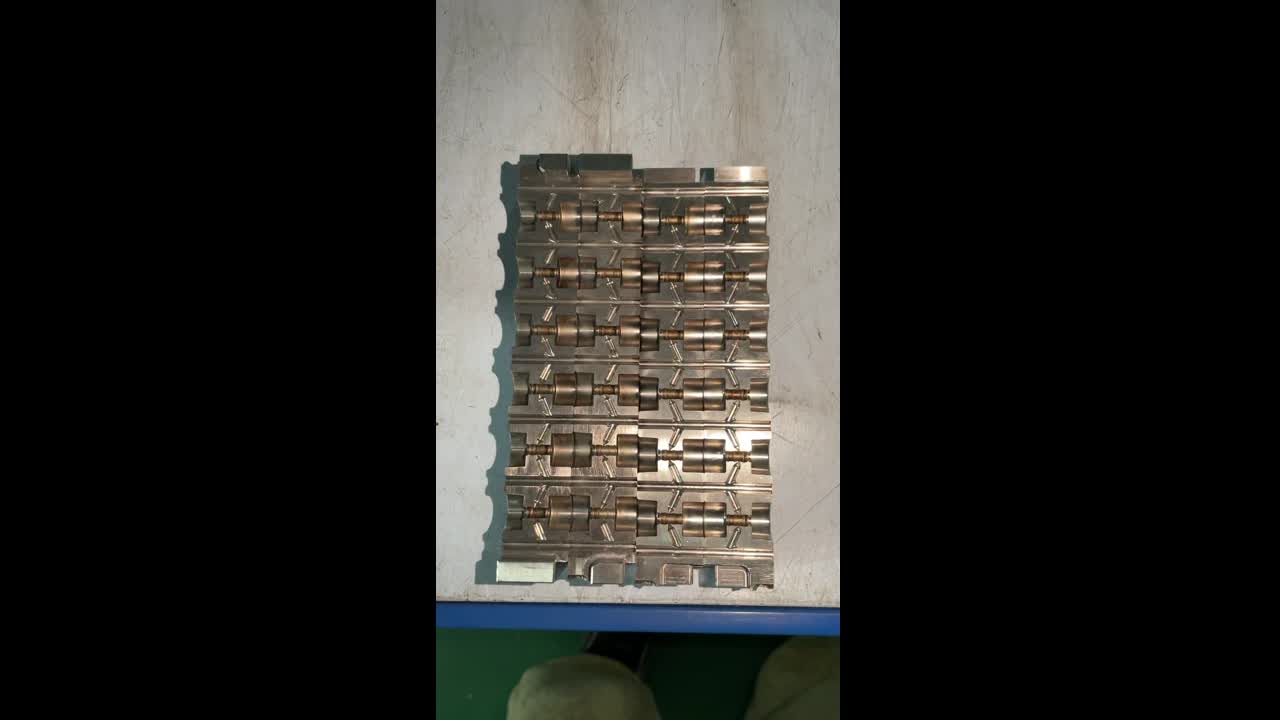
China's dominance in injection mold tooling is structural, not temporary. Three factors combine to create an advantage that Western suppliers cannot replicate at equivalent price points.
Labor Cost Differential
A skilled CNC mold machinist in Ningbo, Shenzhen, or Dongguan earns approximately $10–20 per hour including benefits and overhead. The equivalent skilled machinist in the US earns $55–95/hr, in Germany €60–110/hr, and in the UK £45–80/hr. Since machining labor is the dominant cost driver for most rapid tooling projects — typically 35–55% of total mold cost — a 5x to 6x labor rate differential creates a correspondingly large cost gap that persists even after accounting for shipping, longer communication overhead, and quality verification costs.
Manufacturing Ecosystem Depth
The tooling clusters around Ningbo, Taizhou, Shenzhen, and Dongguan host thousands of interlinked suppliers within 1–4 hours of each other: steel stockholders carrying European and Japanese steel grades, EDM wire and electrode suppliers, hot runner system manufacturers, surface treatment shops, CMM inspection bureaus, heat treatment facilities, and mold component distributors. A rapid tooling company in Ningbo can source H13 steel, a Hasco standard hot runner system, and a chrome-nitride surface coating from suppliers within a 30-minute drive, with same-day delivery standard. This supply chain density is what makes 5–10 day aluminum tooling feasible — components that would take 2–3 weeks to source in a Western market arrive the same day in China's tooling hubs.
24/7 Production Culture
The most competitive Chinese rapid tooling suppliers operate on multi-shift schedules, often with CNC machines running 20–22 hours per day, seven days a week. Rush orders can absorb weekend and holiday shifts without the premium labor surcharges that apply in US and European shops. For a 5-day aluminum mold build, this means approximately 100 machining hours are available in a calendar week — a throughput that a 40-hour-per-week Western shop would need 2.5 weeks to match even with equivalent equipment.
The China rapid tooling cost advantage is not a result of currency fluctuation, subsidies, or temporary market conditions. It reflects permanent differences in labor markets, supply chain density, and production culture. Even as Chinese wages have risen over the past decade, the relative cost advantage has been sustained because equipment investment and productivity have risen at similar rates, maintaining the cost-per-machined-hour differential.
2. Typical Lead Times by Tooling Type
Lead times from Chinese rapid tooling suppliers are frequently quoted optimistically and then missed for preventable reasons: drawing approval delays, material stock-outs, or iteration cycles that were not scoped into the original timeline. The ranges below reflect realistic production timelines from qualified suppliers when drawings are complete and approved on day one.
| Tooling Type | Material | China Lead Time | Shot Life | Typical Application |
|---|---|---|---|---|
| Soft tooling (silicone) | Silicone rubber | 3–5 days | 20–100 shots | Concept validation, small batches |
| Soft tooling (urethane) | Cast urethane | 3–5 days | 50–200 shots | Pre-production samples, fit checks |
| Aluminum rapid tooling | Aluminum A380 / 7075 | 5–10 days | 5,000–50,000 shots | Prototype injection molding, bridge tooling |
| P20 steel production mold | P20 pre-hardened steel | 10–14 days | 300,000–500,000 shots | Low-volume production, semi-permanent tooling |
| H13 hardened steel mold | H13 (HRC 48–52) | 14–20 days | 1,000,000+ shots | Full production tooling |
| Steel mold with conformal cooling | H13 + MS1 inserts (SLM) | 12–18 days | 500,000–1,000,000 shots | High-volume parts with cycle time requirements |
| Multi-cavity production tool | H13 / S136 | 20–35 days | 1,000,000+ shots | High-volume consumer or automotive parts |
What Adds Time: The Hidden Lead Time Killers
The gap between a quoted timeline and actual delivery is almost always caused by the same factors: incomplete drawings requiring clarification loops (add 1–3 days per revision cycle), DFM change approvals that require sign-off from multiple internal stakeholders (add 1–5 days), steel stock-outs requiring special-order material (add 3–7 days for European steel grades), and post-machining iteration on first article samples (add 3–7 days per iteration). Teams that ship complete, approved STEP + 2D drawing packages with tolerances on day one and assign a single decision-maker for DFM approvals reliably hit the lead times in the table above.
3. Cost Comparison: China vs US vs EU
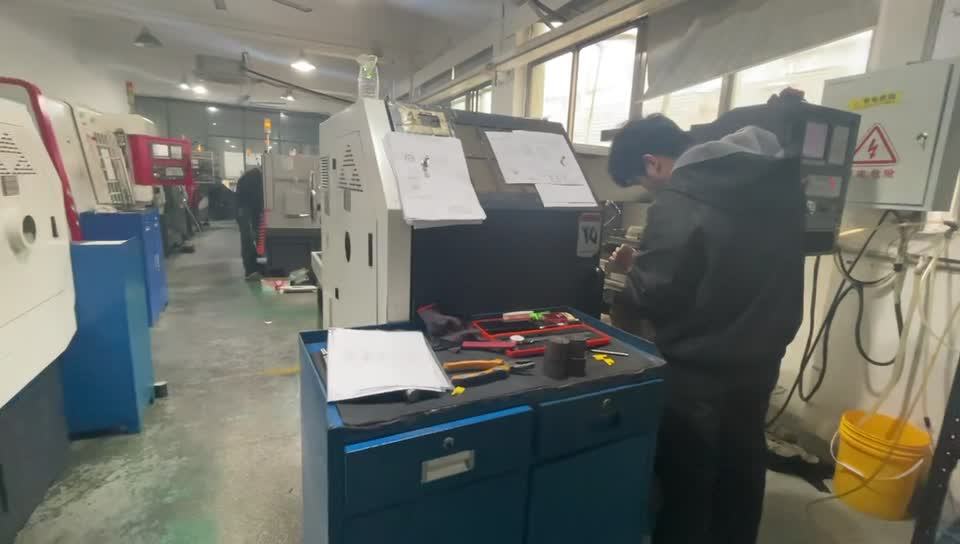
The following cost ranges are based on market pricing as of Q1 2026 for single-cavity and multi-cavity tooling of comparable complexity. Prices assume standard tolerances (±0.05 mm general, ±0.02 mm critical), P20 or H13 steel as specified, and standard surface finishes (SPI A2 / B1 range).
Single-Cavity Molds by Type
| Tooling Type | China (USD) | US (USD) | Western EU (USD) | China Savings vs US |
|---|---|---|---|---|
| Aluminum rapid tool (simple) | $2,200–4,500 | $6,000–11,000 | $7,000–13,000 | ~55% |
| Aluminum rapid tool (complex) | $4,500–9,000 | $11,000–22,000 | $13,000–26,000 | ~58% |
| P20 steel production mold (simple) | $6,000–12,000 | $18,000–35,000 | $22,000–42,000 | ~60% |
| P20 steel production mold (complex) | $12,000–28,000 | $35,000–75,000 | $42,000–90,000 | ~60% |
| H13 hardened tool (simple) | $9,000–18,000 | $25,000–50,000 | $30,000–60,000 | ~62% |
| 4-cavity P20 production tool | $18,000–38,000 | $55,000–110,000 | $65,000–130,000 | ~63% |
Total Cost of Ownership Perspective
The sticker price comparison understates the total economic case. China tooling costs must be evaluated against:
- Air freight cost: $300–1,200 for a single-cavity mold to US or Europe (DHL/FedEx)
- Import duty: 0–6.5% depending on HS code and destination country (see Section 9)
- Quality verification cost: $0 if the supplier ships with CMM reports; $400–2,000 if you commission third-party inspection in China
- Time cost of longer communication cycles: Typically 1–3 additional days vs domestic tooling
Even adding $1,500 in freight, $800 in duty, and $500 in additional engineering time to a $5,000 China mold, the total delivered cost of $7,800 compares favorably with a $20,000 domestic quote for equivalent tooling — a $12,200 saving per tool that accumulates rapidly across a product development program with multiple tooling iterations.
4. Quality Management: What to Expect and Demand
Chinese rapid tooling quality ranges from exceptional to dismal. The determining factor is almost always the quality management system the supplier operates — not their equipment list, not their website photos, and not their brochure claims. Here is what a professional rapid tooling company in China should be able to provide, and what you should ask for before placing an order.
Certifications
ISO 9001:2015 is the baseline. The certificate should cover mold design, CNC machining, EDM, assembly, and inspection — not just a subset of operations. Request the certificate number and verify it on the certification body's registry (Bureau Veritas, TÜV Rheinland, SGS, and Lloyd's Register all maintain searchable databases). Expired certificates are common with lower-tier suppliers.
IATF 16949 is required for automotive applications. It covers supply chain traceability, process FMEA, control plans, and PPAP documentation requirements that ISO 9001 alone does not address. Not all rapid tooling companies hold IATF 16949; those that do have made a significant investment in documented quality systems.
Inspection Capability
A professional rapid tooling supplier should operate or have access to:
- CMM (coordinate measuring machine) — minimum 500 mm x 700 mm measuring envelope, calibrated with current certification
- Surface roughness tester (profilometer) for verifying polished and textured surface specifications
- Hardness tester (Rockwell) for verifying heat treatment on hardened steel tooling
- Pressure testing equipment for cooling circuit leak testing (minimum 10 bar)
- First article inspection (FAI) protocol producing a dimensional report against drawing tolerances
Documentation You Should Receive
| Document | What It Verifies | Standard |
|---|---|---|
| Material certificate (mill cert) | Steel grade, heat number, chemical composition | Required for all steel molds |
| Heat treatment report | Achieved hardness (HRC), temperature profile, quench method | Required for H13, S136, P20 HH |
| CMM dimensional report | Critical dimensions vs drawing tolerances, pass/fail status | Required for all production tooling |
| Cooling circuit pressure test report | Leak-free at 10 bar for 10 minutes minimum | Required for all water-cooled tooling |
| First sample injection report | Parts produced from mold meet dimensional and visual specs | Best practice; essential for production tooling |
| DFM report | Design-for-manufacturing review with recommended changes | Best practice before machining begins |
5. Shipping & Logistics Options
Shipping is the variable that surprises buyers most frequently. Understand your options before committing to a tooling timeline, because shipping method selection directly affects the total project lead time.
Air Freight Express (DHL / FedEx / UPS)
Transit time: 3–5 business days door-to-door to US, Europe, or Australia. Weight limit: Most practical for molds under 30–40 kg. Cost: Approximately $18–28/kg chargeable weight to US; $15–22/kg to Europe. A 15 kg aluminum rapid tool typically ships for $350–550 all-in. Customs clearance is handled by the courier and typically adds 0–1 business day. This is the default choice for rapid tooling projects where the schedule is tight.
Air Freight Consolidation
Transit time: 5–8 business days airport-to-airport (add 1–2 days for pickup and local delivery). Best for: Molds 30–200 kg that are too heavy for express courier but too urgent for sea freight. Cost: Approximately $6–12/kg to US; $5–10/kg to Europe. A 60 kg steel mold set ships for roughly $500–800 via air freight consolidation vs $1,500–2,000 via express courier — a meaningful saving for larger tools.
Sea Freight LCL (Less Than Container Load)
Transit time: 25–35 days Ningbo to US West Coast; 28–40 days to US East Coast; 28–38 days to Northern Europe. Best for: Molds over 200 kg, multi-cavity toolsets, complete mold bases. Cost: Very low — typically $200–450 per cubic meter plus handling fees. Suitable when timeline flexibility exists.
DDP vs FOB Incoterms
DDP means the Chinese supplier handles all export paperwork, international shipping, customs clearance in the destination country, and import duty payment. You pay one total price and receive the mold at your door. FOB (Free On Board) means you take responsibility at the Chinese port — you arrange your own freight forwarder, import clearance, and duty payment. DDP is simpler and often comparable in total cost, but requires a supplier who understands international trade compliance. Always confirm whether the quoted price is EXW (Ex Works, factory gate), FOB, or DDP — they can differ by $400–1,500 per shipment.
6. Communication Best Practices
Communication failure is the single largest cause of rapid tooling project problems when sourcing from China. Engineering capability at the Chinese end is rarely the issue — miscommunication about design intent, tolerance requirements, and approval authority causes the vast majority of project delays and rework costs.
Timezone Management
China Standard Time (UTC+8) is 13 hours ahead of US Eastern, 16 hours ahead of US Pacific, 8 hours ahead of UK, and 7 hours ahead of Central European Time. This means real-time overlap is limited: approximately 7:00–9:00 AM US Eastern corresponds to 8:00–10:00 PM in China. The most productive teams accept this reality and use asynchronous workflows: send detailed questions and decisions with the evening email that arrives during China's workday, and expect substantive replies the following morning.
Technical Drawing Protocol
- Always provide STEP (AP214) files plus a 2D drawing in PDF. The STEP file defines geometry; the 2D drawing defines tolerances, surface finishes, and special notes. Providing one without the other creates ambiguity.
- Call out critical dimensions explicitly on the 2D drawing with geometric tolerances (GD&T). Do not rely on general title block tolerances for features that matter.
- Specify material, steel grade, heat treatment, and hardness requirements on the drawing, not just in an email.
- Number drawing revisions clearly (Rev A, Rev B, etc.) and date each revision. Establish with the supplier that only the latest approved revision is in work.
DFM Report Review
Any competent rapid tooling company will issue a DFM (Design for Manufacturability) report within 24–48 hours of receiving drawings. This report identifies undercuts that require side actions or lifters, wall thickness variations that create fill or sink problems, draft angles below recommended minimums, and gating locations. Review the DFM report thoroughly and provide written approval before machining begins. Changes made before machining starts cost nothing; changes made after steel is cut cost 10–50x more and consume 3–7 additional days.
7. How to Evaluate a Chinese Rapid Tooling Supplier: 5 Questions to Ask
The difference between a reliable and unreliable rapid tooling company from China is measurable before you place an order. These five questions expose capability gaps that brochures and websites conceal.
A legitimate rapid tooling company maintains inspection records and can share CMM reports (with customer data redacted) on request. If the response is "we check everything by eye" or "we use hand gauges," walk away. CMM inspection is the baseline for any mold that will produce parts to dimensional tolerances tighter than ±0.1 mm.
A professional supplier will describe a structured DFM review with a named engineer and a 24–48 hour turnaround on initial findings. The best suppliers will provide a sample DFM report format showing what they document. DFM quality is a proxy for engineering depth — suppliers with strong DFM processes catch problems that would otherwise surface as expensive post-machining changes.
A supplier who can shoot first article samples in-house before shipping eliminates a major project risk: discovering dimensional problems only after the mold arrives at your facility. In-house injection molding capability means the supplier has skin in the game on part quality, not just mold geometry. Ask what machine tonnage range they have available and whether they can process your specific material in-house.
Common stocked grades at professional tooling shops include P20, 718H, H13, S136, NAK80, and 2344. If the supplier cannot tell you their steel stock on hand or their typical steel sourcing lead time, they likely have a sparse supply chain that will create delays when your project specification deviates from their default.
Ask for a specific past project with side actions or a hot runner system and request photos of the completed mold plus a brief description of the design challenges. This differentiates shops with genuine mold design expertise from those that handle simple open-and-shut tools only. Complex rapid tooling projects — those involving angled lifters, tunnel gates, or hydraulic cores — require engineering experience that the simplest rapid tooling shops simply do not have.
8. Red Flags to Watch For
- Quoted lead times under 3 days for aluminum tooling — physically impossible for any mold requiring multi-axis CNC machining, assembly, and inspection. Indicates either a misunderstanding of your request or a willingness to quote unrealistically to win business.
- No DFM process mentioned — suppliers who jump straight from receiving drawings to machining without a formal DFM step create expensive change orders after steel is cut.
- Prices far below market floor — aluminum rapid tooling quotes under $1,500 for a standard mold, or P20 steel quotes under $4,000, indicate either offshore re-quoting through a broker with unknown quality, or a supplier using non-specification materials.
- Cannot provide ISO certificate number for verification — certificate claims without verifiable numbers should be treated as unconfirmed.
- Communication only through intermediaries — if you cannot communicate directly with the engineering team on technical questions, DFM risks and tolerance discussions will be filtered and distorted.
- No mention of cooling circuit testing — molds shipped without pressure-testing the cooling circuits frequently arrive with leak points that require expensive local repairs.
- Payment terms of 100% upfront with no milestone structure — legitimate rapid tooling companies accept a 50% deposit with balance on approval of first samples or prior to shipment.
9. Import Duties and Tariffs
Import duty on injection molds and tooling from China varies significantly by destination country and HS code classification. Misclassification by either the supplier or the importer is a common and costly error.
United States
Injection molds for plastics typically classify under HS 8480.71 (molds for rubber or plastics, injection or compression type). The base MFN (Most Favored Nation) duty rate is 3.1%. However, Section 301 tariffs applied under the US-China trade actions added an additional 25% tariff on molds in HS 8480. As of Q1 2026, buyers importing molds from China to the US should plan for a total effective import duty rate of approximately 28.1% on the declared mold value. This substantially changes the total cost comparison and should be factored into ROI calculations. Note that mold components (inserts, cores, cavities shipped separately from the mold base) may classify differently — work with a licensed US customs broker to optimize classification before importing.
European Union
Molds for plastics imported to EU member states typically incur a duty rate of 2.7% on CIF (cost + insurance + freight) value. No additional anti-dumping duties currently apply to plastic injection molds from China in the EU as of early 2026. The low duty rate makes China-to-EU rapid tooling economics very favorable.
United Kingdom (Post-Brexit)
UK Global Tariff for molds under HS 8480.71 is 2.7% (same as EU baseline), with no China-specific surcharges as of Q1 2026.
Australia
Australia applies a 0% duty on most industrial molds from China under the China-Australia Free Trade Agreement (ChAFTA), provided the correct Certificate of Origin (Form F) is supplied. This makes Australia one of the most favorable destinations for China rapid tooling imports.
India
India applies a basic customs duty of 7.5% on most industrial molds plus IGST (Integrated Goods and Services Tax) of 18%, calculated on assessable value + basic duty. Total effective duty burden on mold imports to India is approximately 27–30%. IGST is recoverable as input tax credit for GST-registered businesses, reducing effective cost.
Always engage a licensed customs broker in your destination country before importing tooling. Classification errors can result in duty underpayments that trigger penalties, or overpayments that reduce your cost savings. In the US, given the Section 301 tariff complexity, professional customs advice on mold imports from China is essential.
10. Case Studies: Successful Rapid Tooling Projects from China
Situation: A US medical device startup needed 500 prototype housings in ABS for regulatory submission testing. Their domestic tooling quote was $18,500 with a 6-week lead time. Budget and NPI timeline required a better option.
Approach: The team sourced a single-cavity aluminum rapid tool from MouldNova's Ningbo facility. Complete STEP + 2D drawings with GD&T tolerances were transmitted on day one. DFM report returned in 18 hours flagging a 0.8-degree draft issue on three ribs — corrected before machining. Aluminum 7075 tool machined, assembled, and first-article samples shot in 8 business days.
Shipping: 12 kg mold + 50 first-article samples shipped DHL Express. Transit to US Midwest: 4 business days.
Results: Total cost including mold, 500 production parts, air freight, and US customs: $6,200. Savings versus domestic quote: $12,300. Timeline: 14 business days total (vs 6 weeks quoted domestically). All first-article dimensions within tolerance; parts passed regulatory submission without dimensional NCRs.
Situation: An Australian consumer electronics company needed to bridge production during a 16-week wait for their high-volume tool to be completed in Taiwan. They required 40,000 units of a PP enclosure during the bridge period, at competitive piece-part cost.
Approach: MouldNova produced a 4-cavity P20 steel tool with a Yudo hot runner system. The tool was designed with the same gate locations and part geometry as the production tool to avoid re-qualification of parts. Complete mold drawings, hot runner specification, and cooling circuit layout approved by the customer team before machining. First samples inspected against a 47-dimension FAI protocol.
Results: Tool completed in 16 business days. Sea freight to Melbourne: 32 days. Tool ran 44,200 shots over 11 weeks without unplanned maintenance. Part-to-part dimensional consistency (Cpk) averaged 1.42 on critical dimensions. Tool cost: $22,800. Piece-part cost on bridge run: $0.41, versus $0.67 from the previous single-cavity bridge tool.
Situation: A German Tier 1 needed a validated mold for a PA66-GF30 bracket within 18 business days to meet an OEM program gate. Their European toolmakers quoted 8–10 weeks and €68,000–85,000.
Approach: MouldNova built a single-cavity H13 tool with SLM maraging steel conformal cooling inserts. Thermal simulation confirmed that the conformal cooling design would achieve the required 22-second cycle time. ISO 9001 and full dimensional documentation package prepared for PPAP submission. Air freight to Frankfurt with DDP terms.
Results: Mold delivered in 17 business days. Part cost landed: $28,400 (approximately €26,100 at prevailing rate). Savings vs European quote: €48,000–59,000. Cycle time achieved: 21.4 seconds (target: 22 seconds). Dimensional conformance on 38-dimension FAI: 38/38 in tolerance. PPAP Level 3 package accepted by OEM without requests for additional data.
11. How MouldNova Handles Rapid Tooling from Ningbo
MouldNova (Ningbo Saiguang 3D Technology) operates as a vertically integrated rapid tooling company in Ningbo's Beilun District — within 25 km of Ningbo Zhoushan Port, one of the world's largest container ports, and 35 km from Ningbo Lishe International Airport. This location is not incidental: it directly enables the logistics performance described in Section 5.
In-House Capabilities
Unlike many rapid tooling companies that outsource EDM, surface treatment, or injection molding, MouldNova maintains the following in-house:
- Metal 3D printing (SLM): EOS M290 and equivalent platforms for conformal cooling inserts in maraging steel (MS1), stainless steel (316L), and tool steel. Enables conformal cooling channels impossible with conventional drilling, reducing part cycle times 20–40%.
- CNC machining: 3-axis and 5-axis VMCs with ±0.005 mm positioning accuracy. Capable of machining P20, H13, S136, NAK80, and aluminum tooling grades.
- EDM (wire and sinker): For sharp internal corners, ribs below 0.3 mm radius, and electrode-finished cavity textures that CNC cannot achieve.
- Injection molding: In-house presses from 80T to 450T for first article validation before shipment. Can process ABS, PP, PA66, PC, POM, TPE, and most standard engineering resins.
- CMM inspection: Full dimensional inspection with reports against customer drawings, included with all production tooling orders.
- CCD vision inspection: For high-cavitation tools requiring 100% part inspection on mold-open cycle.
Ningbo Location Advantages
Ningbo is China's second-largest port city and a major manufacturing hub for precision machinery, automotive components, and plastics. The local supply chain for tooling steel (including European grades sourced through Shanghai distributors), hot runner systems, standard mold components (DME/Hasco-equivalent), and surface treatment is among the most developed in China. Express courier pickups (DHL, FedEx, UPS) from Ningbo reach US and European destinations in 3–5 business days with daily service. Sea freight from Ningbo Port to US West Coast (Los Angeles) typically runs 17–21 days on direct vessel services.
MouldNova Rapid Tooling Process
- Drawing review and DFM (Day 1–2): Customer submits STEP + 2D drawings. Mold design engineer reviews and issues DFM report within 24 hours. Quotation issued simultaneously.
- Design approval and deposit (Day 2–3): Customer approves DFM recommendations and signs off on mold design. 50% deposit initiates material procurement and machining programming.
- Machining and assembly (Day 3–10 for aluminum; Day 3–14 for steel): CNC roughing and finishing, EDM where required, SLM conformal inserts if specified, mold assembly and fitting.
- Inspection and first samples (Day 10–14): CMM dimensional inspection, cooling circuit pressure test, first article injection (in-house), dimensional report against FAI protocol.
- Customer approval and shipment (Day 14–18): Sample inspection report and mold photos shared with customer. Balance payment triggers shipment booking. DHL/FedEx express or air freight consolidation arranged per customer requirement.
12. FAQ — Rapid Tooling from China
Lead times depend on tooling type. Soft tooling takes 3–5 business days after drawing approval. Standard aluminum rapid tooling ships in 5–10 business days. P20 or H13 steel molds with conventional cooling run 10–14 business days. Advanced steel tooling with conformal cooling channels built by metal 3D printing adds 2–3 days for the insert build but eliminates downstream cycle time problems — total project time from order to validated parts is often shorter than conventional tooling. These timelines assume complete STEP + 2D drawings are provided on day one and DFM approval occurs within 24 hours.
For equivalent quality and steel grade, Chinese rapid tooling typically costs 40–60% less than US tooling and 45–65% less than Western European tooling. A simple single-cavity aluminum rapid tool that costs $8,000–12,000 from a US rapid tooling company typically costs $3,200–5,500 from a qualified Chinese supplier. A 4-cavity P20 production mold quoting at $45,000–70,000 in the US or EU typically runs $18,000–32,000 in China. The cost advantage comes from lower CNC machinist labor rates ($8–18/hr vs $55–95/hr), lower overhead costs, and the Ningbo tooling ecosystem providing competitive raw material and subcontractor pricing.
At minimum, look for ISO 9001:2015 certification covering mold design, manufacturing, and inspection. For automotive customers, IATF 16949 certification or documented compatibility is essential. Request the actual certificate number and verify it on the certification body's website — not all certificates presented by suppliers are current or genuine. Beyond certification, ask for CMM inspection reports on reference molds, material certificates for steel with heat treatment records, and a sample DFM report to assess engineering depth. A supplier that cannot produce these documents within 24 hours of a request is not operating at a professional level regardless of what their website claims.
For small molds and inserts under 30 kg, DHL, FedEx, or UPS express air freight from Ningbo or Shanghai delivers to the US, Europe, or Australia in 3–5 business days door-to-door. Larger molds (30–200 kg) typically ship via air freight consolidation, arriving in 5–8 days. For molds over 200 kg or complete multi-cavity toolsets, sea freight LCL takes 25–35 days to US West Coast and 28–40 days to Europe but at dramatically lower cost — often $200–600 versus $1,500–4,500 for air freight. DDP shipping removes all customs complexity and import duty handling from the buyer.
China Standard Time (UTC+8) is 13 hours ahead of US Eastern, 16 hours ahead of US Pacific, and 8 hours ahead of UK. Use WhatsApp for real-time messaging (Chinese engineers monitor it continuously), email for formal drawings and approvals, and a shared drawing revision tracker for change management. Always send complete STEP files plus 2D drawings with tolerances — verbal descriptions create costly miscommunications. Agree on a single point of contact on each side with authority to approve DFM changes, and establish a clear drawing approval sign-off protocol before production starts.
Related Pages
- MouldNova Rapid Tooling Service — Specifications & Capabilities
- Conformal Cooling Benefits — Five Benefit Categories with a 3-Year Factory Model
- Conformal Cooling ROI: Payback Period, Annual Savings & 5-Year NPV Calculator
- Conformal Cooling Inserts — Service Details & Specifications
- 3D Printed Mold Inserts — SLM Metal Printing for Tooling Applications
- Case Studies — Full Production Data from Real Programs
- CNC / EDM Machining — In-House Precision Machining Capabilities