1. What "Conformally Cooled" Means Precisely
The term conformally cooled has a specific geometric meaning that distinguishes it from any mold insert with internal channels. A conformally cooled insert is one in which the channel centerline follows the part cavity surface at a constant geometric offset — typically Δ = 2–4 mm — throughout the full length of the channel, including through curves, undercuts, and changes in wall thickness direction.
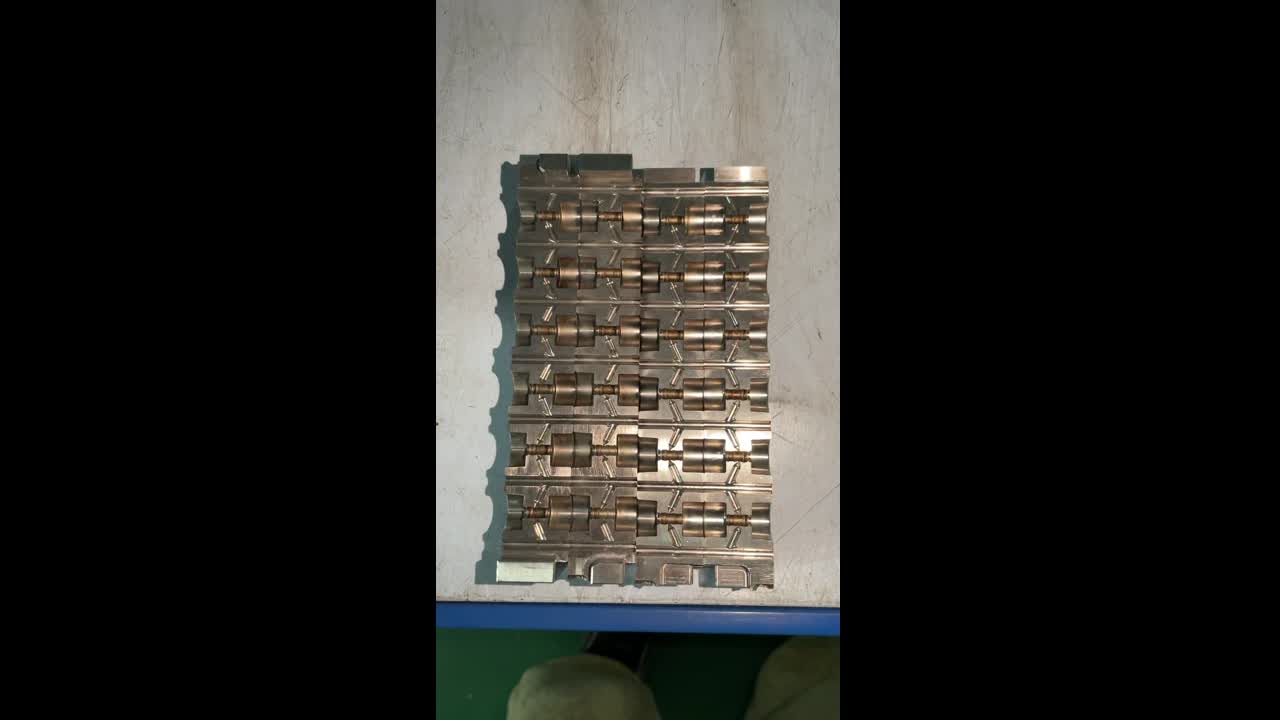
This constant-offset relationship is the defining criterion. It is not sufficient for channels to merely be closer to the surface than conventional drilling achieves. The offset must be maintained geometrically constant as the channel traces the contour. In practice this means:
- The offset distance Δ from any point on the channel centerline to the nearest point on the cavity surface is within ±0.5 mm of the target offset across the entire channel length.
- The channel path is generated by offsetting the cavity surface solid by Δ in CAD or simulation software — not by freehand routing or manual approximation.
- Build orientation and print strategy are chosen so that the dimensional accuracy of the printed channel maintains the design offset within ±0.3 mm.
The practical consequence of the constant-offset definition is temperature field uniformity. When every point on the cavity surface has the same thermal resistance path to the coolant, the steady-state surface temperature is determined by coolant temperature and flow conditions alone — not by local geometry. This is why conformally cooled inserts routinely achieve ±2–3°C temperature uniformity across a complex part surface while conventional cooling yields ±15–40°C on the same geometry.
Offset Distance Selection: Δ = 2–4 mm
The target offset Δ is selected based on a structural integrity versus thermal efficiency trade-off:
| Offset Δ | Thermal Efficiency | Wall Integrity | Recommended Application |
|---|---|---|---|
| < 2 mm | Maximum | High risk of thermal fatigue cracking | Not recommended for production inserts |
| 2.0–2.5 mm | Very high | Acceptable with conservative channel diameter (D ≤ 6 mm) | Small inserts, CuCrZr material |
| 2.5–3.5 mm | High | Standard — adequate for D = 6–10 mm | Most conformally cooled production inserts |
| 3.5–4.0 mm | Good | Conservative — suitable for larger D or aggressive thermal cycling | High-cycle automotive parts, PEEK molding |
| > 4 mm | Diminishing return | Excellent | Represents over-conservative design; consider reducing D instead |
2. Geometry Taxonomy of Conformally Cooled Channels
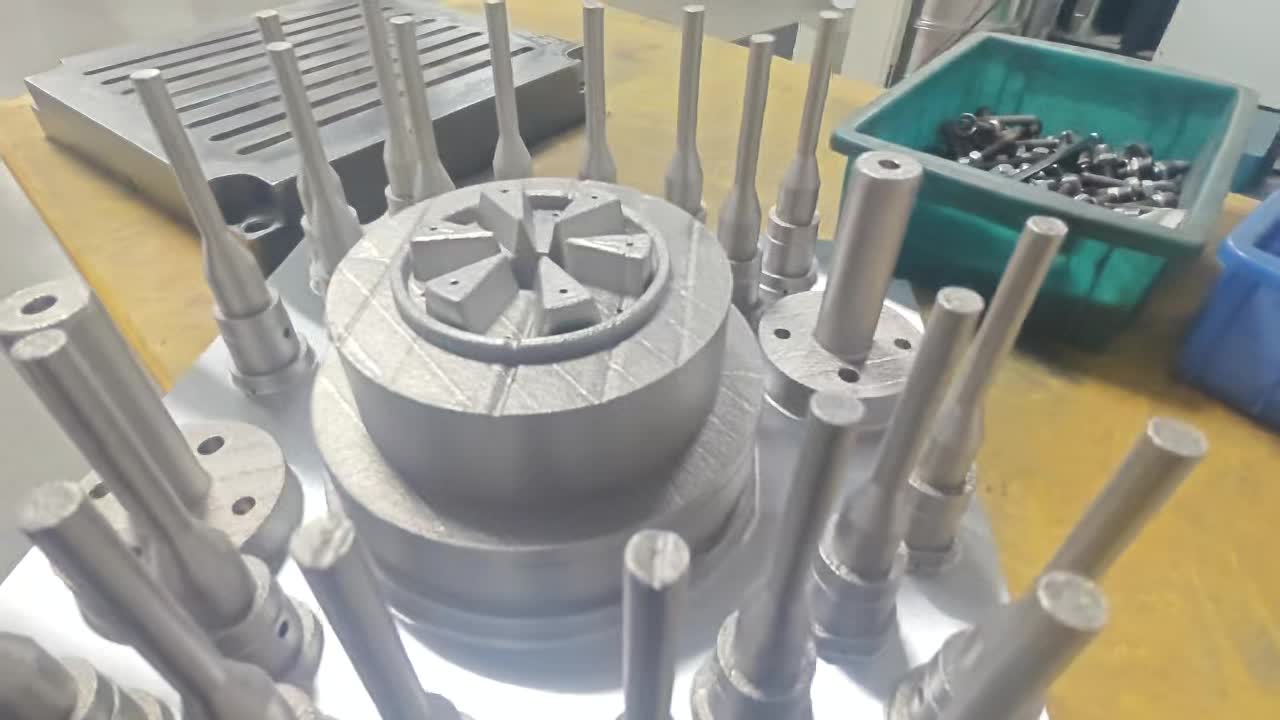
Six distinct channel geometry types are used in conformally cooled inserts. Each represents a different trade-off between thermal performance, manufacturing complexity, and flow uniformity. Selection depends on insert geometry, thermal requirements, and acceptable complexity.
| Type | Description | Best For | Thermal Uniformity | Print Difficulty |
|---|---|---|---|---|
| (a) Single-pass serpentine | One continuous channel inlet-to-outlet following cavity contour in a back-and-forth pattern. Single flow path, no branching. | Simple convex or concave inserts; straightforward cores where inlet-outlet temperature rise (<5°C) is acceptable. | Moderate — ΔT 4–8°C inlet-to-outlet along flow path | Low — self-supporting with correct build orientation |
| (b) Multi-pass parallel | Multiple parallel channel passes connected by inlet and outlet manifolds. Coolant splits and recombines rather than travelling a single long path. | Large flat inserts, automotive panels, wide cavity inserts where inlet-to-outlet ΔT must be minimized. | High — ΔT 1.5–3°C with balanced flow distribution | Medium — requires balanced manifold design to equalize flow between passes |
| (c) Helical spiral | Channel coils in a continuous helix around or through the insert. Used for cylindrical or near-cylindrical geometries. | Core pins, cylindrical cores, bottle neck inserts, packaging caps, closures. | High — excellent circumferential uniformity; ΔT 2–4°C | Low to Medium — helical path is naturally self-supporting above 45° pitch angle |
| (d) Double-helix counter-flow | Two helical channels wound in opposite directions. Inlet and outlet helices interleave so the warm return flow is always adjacent to the cold supply flow, averaging the temperature field. | Long cylindrical cores where single-helix ΔT is too high; precision barrel or syringe inserts. | Very high — counter-flow cancels axial temperature gradient; ΔT <2°C | High — narrow wall between helices requires careful structural analysis; minimum wall 1.5 mm |
| (e) Branching manifold | Primary supply channel branches into secondary and tertiary channels, tree-like, to distribute flow across a complex 3D surface. Each branch terminates in a dedicated return manifold. | Highly complex 3D cavity surfaces; automotive structural components; parts with deep ribs and bosses. | Very high — each surface zone gets dedicated flow; ΔT <2°C achievable with balanced design | Very High — flow balancing critical; CT scan verification strongly recommended post-print |
| (f) TPMS lattice | Triply Periodic Minimal Surface geometry (Schwartz P, Gyroid, Diamond) replaces discrete channels with a space-filling lattice of interconnected flow passages. Maximum surface area per unit volume. | Maximum heat extraction in hot spots; materials with severe warpage (PC, PA66-GF30); where discrete channel spacing is geometrically insufficient. | Maximum — surface temperature uniformity ±1–2°C achievable in design; performance is geometry-dependent | Very High — requires CT scan for qualification; powder evacuation critical; design validation with CFD mandatory |
3. The Thermal Physics of Conformally Cooled Inserts
Key Dimensionless Groups
Two dimensionless numbers govern the transient thermal behavior of a conformally cooled insert during the injection-cooling cycle:
Biot Number: Bi = h·L / ksteel
Where: h = convective heat transfer coefficient (W/m²·K), L = characteristic length = wall thickness between channel and cavity (m), ksteel = thermal conductivity of insert material (W/m·K)
Fourier Number: Fo = α·t / L²
Where: α = thermal diffusivity of insert material (m²/s), t = cooling time (s), L = wall thickness (m)
Biot number interpretation for conformally cooled inserts: When Bi < 0.1, conduction through the steel is not the limiting resistance — the bottleneck is convection at the coolant interface, and increasing steel conductivity (e.g., switching to CuCrZr) gives diminishing returns. When Bi > 1, conduction through steel is significant and a higher-conductivity material can meaningfully improve cooling rate. For typical conformally cooled inserts in 420 SS with 3 mm wall, Bi ≈ 0.3–0.6, meaning both conduction and convection contribute, and design improvements to either pathway improve performance.
Fourier number interpretation: Fo > 0.2 indicates the insert has thermally "soaked through" — the temperature gradient between cavity surface and channel wall is approximately uniform. For a steel insert with α ≈ 5×10⁻⁶ m²/s and L = 3 mm, Fo = 0.2 is reached in approximately 0.36 seconds. This means that for injection molding cycles above 5 seconds, the thermal response of the steel itself is not the bottleneck — the bottleneck is either the coolant heat capacity (insufficient flow rate) or the polymer cooling time.
Heat Flux Calculation
q = (Tmelt − Tcoolant) / Rtotal
Where Rtotal = Rpolymer + Rsteel + Rconvection
Rsteel = Δ / ksteel · A | Rconvection = 1 / (h · Achannel)
Typical values: Rsteel for 3mm 420SS ≈ 1.25×10⁻⁴ m²·K/W; Rconvection for Re=12,000 in 8mm channel ≈ 8×10⁻⁵ m²·K/W
The calculation illustrates why turbulent flow is mandatory: at Re = 2,000 (laminar), h ≈ 800 W/m²·K and Rconvection ≈ 1.25×10⁻³ m²·K/W — 10× larger than Rsteel, making the coolant side the dominant resistance. At Re = 12,000 (turbulent), h ≈ 6,000–12,000 W/m²·K and Rconvection drops to the same order as Rsteel. This is why you cannot separate conformally cooled channel design from hydraulic design.
The S/D Ratio Rule: Channel Spacing and Temperature Uniformity
The most practically important design rule for conformally cooled inserts is the relationship between channel spacing S (center-to-center distance between adjacent parallel passes), channel diameter D, and the resulting temperature uniformity at the cavity surface (ΔT between the point directly above a channel and the midpoint between two channels).
| S/D Ratio | Estimated ΔT at Cavity Surface | Assessment | Structural Note |
|---|---|---|---|
| 1.5×D | ~1°C | Excellent — laboratory-grade uniformity | Minimum wall between channels may be <1 mm; structural analysis required |
| 2.0×D | ~2–3°C | Very good — recommended for medical, optical, precision parts | Wall between channels = D; feasible for D ≤ 8 mm |
| 2.5×D | ~3–5°C | Good — standard for most automotive and consumer applications | Comfortable structural margin; no special analysis needed |
| 3.0×D | ~5–7°C | Acceptable lower bound — meets most injection molding requirements | Conservative; generous inter-channel wall thickness |
| 4.0×D | ~10–14°C | Poor — hot spots between channels are significant | Structurally safe but defeats the purpose of conformally cooled design |
Note that S/D is a simplified model. Actual ΔT also depends on channel depth Ddepth (distance from cavity surface to channel centerline), coolant flow Reynolds number, and steel thermal conductivity. The S/D rule assumes a standard conformally cooled design with Ddepth = 1.0–1.5×D and Re > 10,000. For shallower channels or laminar flow, ΔT will be higher than these estimates.
4. Materials for Conformally Cooled Inserts
Four materials cover virtually all conformally cooled insert applications. Each is characterized by thermal conductivity, hardness, relative cost, maximum service temperature, and the applications where it is the preferred choice.
| Material | Thermal Conductivity | Hardness (post-HT) | Relative Cost | Max Service Temp | Best Application |
|---|---|---|---|---|---|
| 420 Stainless Steel | 24 W/m·K | 50–52 HRC | Baseline | ~250°C | High-volume commodity parts (PP, ABS, PA6); >500k shots/year; standard production inserts |
| 18Ni300 Maraging Steel | 20 W/m·K | 52–54 HRC | +30–40% | ~300°C | Precision medical, optical, tight-tolerance parts; highest dimensional stability; PC, LCP, PEI |
| CuCrZr Copper Alloy | 320 W/m·K | 35–40 HRC | +60–80% | ~200°C (softening above 350°C) | Hot spot inserts, weld line suppressors, thin rib cores; where heat extraction rate is the sole criterion |
| H13 Tool Steel | 28 W/m·K | 48–52 HRC | +5–10% | ~600°C | Die casting inserts (zinc, aluminum); high mold temperature applications; PEEK molding (>180°C mold temp) |
Material Selection Notes
Why 18Ni300 over 420 SS for precision parts: Maraging steel undergoes age hardening — precipitation strengthening — rather than the quench-and-temper cycle required for 420 SS. Age hardening (490°C × 6 hours) produces negligible dimensional change (<0.05%), whereas quench hardening of 420 SS produces 0.1–0.3% dimensional change that must be accounted for in the CNC finishing step. For inserts requiring final tolerances of ±0.01–0.02 mm, 18Ni300 requires less corrective CNC work post-heat treatment.
Why CuCrZr is not universally better despite 13× higher conductivity: In a well-designed conformally cooled insert with turbulent coolant flow, the convective resistance at the channel wall is comparable to — or greater than — the conductive resistance through the steel. Substituting CuCrZr reduces only the steel conduction term, not the convection term. For inserts with Δ = 3 mm in 420 SS and Re = 12,000, switching to CuCrZr reduces total thermal resistance by only 15–25%, not the 13× implied by raw conductivity ratio. CuCrZr becomes clearly superior only when the offset Δ is large (>5 mm) or when design constraints prevent turbulent flow.
H13 for die casting: Die casting inserts experience mold temperatures of 150–300°C and thermal shock from liquid aluminum or zinc. H13's advantage is its hot hardness and thermal fatigue resistance at elevated temperature — properties neither 420 SS nor 18Ni300 match above 250°C. For injection molding, H13 is rarely chosen over 420 SS because its printability in LPBF is more challenging (higher cracking susceptibility).
5. LPBF Manufacturing Requirements for Conformally Cooled Channels
The internal channel quality in a conformally cooled insert is entirely determined by LPBF process parameters set at print time. Unlike external surfaces, channels cannot be reworked after printing. The following parameters directly affect dimensional accuracy, surface roughness, and structural integrity of internal channels.
Layer Thickness
Standard production conformally cooled inserts are built at 30–50 μm layer thickness. The selection is a trade-off:
- 30 μm: Higher dimensional accuracy, finer surface finish on curved channel walls (Ra 8–12 μm vs. Ra 12–20 μm at 50 μm). Build time ~1.6× longer. Required for channel diameters below 5 mm or when offset Δ < 2.5 mm.
- 40 μm: Standard for most conformally cooled inserts with D = 6–10 mm. Balance of quality and build speed.
- 50 μm: Appropriate for large inserts with D ≥ 10 mm and Δ ≥ 3 mm where absolute dimensional accuracy is less critical than build speed. Porosity risk increases at 50 μm for some 420 SS powder batches; verify with sample prints.
Beam Diameter and Energy Density
Focused beam diameter of 70–100 μm is standard for tool steel inserts. Wider beams (>120 μm) reduce resolution at channel walls — particularly at the top of circular cross-sections where the "droop" of unmolten powder can reduce effective channel diameter by 5–15% if the melt pool is too wide. The target volumetric energy density for 420 SS is 55–70 J/mm³; outside this range, either lack-of-fusion porosity (below 55 J/mm³) or keyhole porosity (above 80 J/mm³) becomes a defect risk.
Hatch Spacing
Hatch spacing (line-to-line distance within each layer) of 60–90 μm is standard for 420 SS and 18Ni300. Closer spacing improves density but increases build time and residual stress. The critical region for conformally cooled inserts is the contour pass — the outer boundary scan around the channel perimeter. Using 2–3 contour passes with a slight speed reduction (80% of bulk scan speed) significantly improves channel wall surface quality and reduces stepped-wall defects that can trap coolant residue.
Support Strategy for Internal Features
Conformally cooled channels are internal features and, by definition, cannot be accessed post-print to remove supports. The support strategy must therefore keep all channel cross-sections self-supporting:
- Circular channels (D ≤ 10 mm): Self-supporting if the channel centerline makes an angle >45° from horizontal at all points in the build. Build orientation is the primary design variable. Most conformally cooled inserts can be oriented so all channel runs exceed 45°.
- Circular channels (D > 10 mm): The flat top section of a large circle sags below 45°. Redesign to teardrop or diamond cross-section in this diameter range. Teardrop channels (pointed top, rounded bottom) with included angle ≥ 90° at the apex are self-supporting to any build angle.
- TPMS lattices: These are inherently self-supporting due to their continuous curved topology. No special orientation is required. However, powder evacuation is critical — all TPMS inlets must connect to accessible ports and the lattice must be flushed under pressure post-print.
- Branching manifolds: Each branch must independently satisfy the 45° rule or be redesigned with teardrop cross-section. Map every channel segment against build orientation before printing; unsupported horizontal branches are a common print failure in complex manifold designs.
6. Qualification Testing for Conformally Cooled Inserts
A conformally cooled insert requires a more rigorous qualification sequence than a conventional machined insert because its critical features — the internal channels — are inaccessible for direct inspection. The standard qualification sequence consists of four tests, two mandatory and two conditional:
Test 1: Flow Rate and Pressure Drop (Mandatory)
Connect the insert to a calibrated flow test bench. Measure actual flow rate at the design operating pressure. Calculate Re from measured flow rate, channel diameter (from design intent), and coolant viscosity. Confirm Re > 10,000 throughout. Measure pressure drop across the insert; compare to CFD prediction — discrepancy >20% indicates a channel dimensional error or blockage worth investigating before deployment.
Test 2: Hydrostatic Pressure Test (Mandatory)
Pressurize the insert cooling circuit to 1.5× the working pressure (WP) and hold for a minimum of 30 minutes with all ports sealed. Zero leakage is the pass criterion. For standard injection mold cooling circuits with WP = 10–15 bar, the test pressure is 15–22.5 bar. For high-pressure cooling systems (WP up to 80 bar), test at 120 bar. Any leakage — including weeping at O-ring faces — is a reject condition. The insert must be repaired (port face regrind) or scrapped; do not reduce test pressure to achieve a pass.
Test 3: CT Scan for Internal Channel Integrity (Conditional)
Industrial CT scanning resolves internal channel geometry at 50–200 μm voxel resolution. It is the only non-destructive method that can confirm: (a) channel dimensions match design intent throughout, (b) no residual powder deposits exist inside channels, (c) no channel deformation or collapse occurred during printing, and (d) no significant internal porosity (>0.5 mm diameter) is present in the insert body.
CT scan is strongly recommended (and provided as standard by MouldNova) for inserts with branching manifold or TPMS lattice geometries. It is optional but worth considering for any insert above $5,000 value or for initial qualifications of a new insert design. For repeat orders of a proven design on a stable LPBF machine, CT scan at first article and then on a statistical sampling basis (1 in 10 inserts) is a practical approach.
Test 4: CMM Dimensional Report (Mandatory)
Coordinate Measuring Machine (CMM) inspection of all external critical dimensions: mating surfaces to ±0.01 mm, cavity surfaces to ±0.02 mm, port face flatness ≤ 0.01 mm, overall envelope dimensions to ±0.05 mm. This is the standard pre-shipment report for any precision mold component and is not specific to conformally cooled inserts — but it is worth emphasizing that the conformally cooled insert's cavity surface is the reference surface for the molded part, and any out-of-tolerance deviation here directly affects part dimensional quality.
7. How to Specify a Conformally Cooled Insert: 10-Parameter Checklist
A complete specification for a conformally cooled insert requires 10 parameters. Underspecification leads to the supplier making assumptions — often conservative ones that reduce thermal performance — or to mismatched inserts that require expensive rework. Use this checklist when issuing an RFQ:
- Insert geometry (CAD file): STEP or Parasolid format. Identify which surfaces are the mold cavity/core surfaces that require conformally cooled channels. Mark surfaces that must NOT have channels (witness line areas, ejector pin locations, slide contact faces).
- Target channel offset Δ: Specify the required constant offset from cavity surface to channel centerline, e.g., "Δ = 3.0 mm ± 0.5 mm." If different regions of the insert require different offsets (e.g., hot zones at 2.5 mm, general zones at 3.5 mm), indicate this on the CAD model.
- Channel diameter D: Specify the nominal internal diameter of the cooling channel, e.g., "D = 8 mm." If a specific cross-section geometry is required (circular vs. teardrop for overhang management), specify it.
- Channel spacing S: Specify center-to-center spacing, or specify the target ΔT and let the supplier calculate S. If specifying S, state S as a ratio of D (e.g., "S = 2.5×D").
- Channel geometry type: From the taxonomy in Section 2: single-pass serpentine, multi-pass parallel, helical spiral, double-helix counter-flow, branching manifold, or TPMS lattice. If uncertain, state the target temperature uniformity requirement (e.g., "ΔT < 3°C across cavity surface") and let the supplier propose the geometry type.
- Material: 420 SS / 18Ni300 / CuCrZr / H13. Include post-print heat treatment specification: "stress relief + age hardening to 52 HRC" for 18Ni300, or "stress relief + quench-and-temper to 50 HRC" for 420 SS.
- Working pressure: State the operating cooling circuit pressure in bar, e.g., "WP = 12 bar." The supplier will design channels for 1.5×WP proof pressure and test accordingly.
- Port connection type: Specify port thread standard (BSP, NPT, metric), port size, and O-ring groove standard (AS568, metric DIN). State any required face-seal flatness: "port face flatness ≤ 0.01 mm."
- Surface finish requirements: Cavity surfaces: specify Ra in μm and any polishing or texturing requirement (EDM, manual polish, VDI texture class). Channel interior: specify Ra if known (default: as-printed, Ra 8–16 μm). External mating surfaces: specify Ra for sliding fits.
- Quality documentation required: List which certificates are required with delivery: CMM report, hardness certificate, hydrostatic pressure certificate, material certification (powder traceability), CT scan report. MouldNova provides CMM + hardness + hydrostatic certificates as standard; CT scan is provided on request or as standard for complex geometries.
8. Common Failure Modes of Conformally Cooled Inserts and How to Prevent Them
Five failure modes account for the majority of premature conformally cooled insert failures. All are addressable at the design, manufacturing, or commissioning stage.
Channel Blockage from Residual Powder
Mechanism: Unfused metal powder trapped in channels during LPBF build. Powder does not affect pressure testing (it is incompressible) but partially or fully obstructs coolant flow in service, creating asymmetric cooling and hot spots. Typically presents as unexplained part warpage or temperature non-uniformity that was not present in simulation.
Prevention: Require powder evacuation protocol as part of print specification: flushing with compressed air at >6 bar through all ports immediately after build removal. Require CT scan verification for any branching manifold or TPMS geometry. Inspect all port openings under magnification before acceptance.
O-Ring Face Leak at Cooling Ports
Mechanism: The as-printed surface at cooling port faces is too rough (Ra 12–20 μm) for reliable O-ring sealing against a flat face. Surface asperities under the O-ring create a leak path that may not appear in a static pressure test but opens under thermal cycling. Typically presents as coolant weeping at the port face during production.
Prevention: Specify port face flatness ≤ 0.01 mm and surface finish Ra ≤ 1.6 μm on all O-ring sealing faces. This requires a CNC facing operation on the port faces post-print — confirm it is included in the supplier's process. Verify with a feeler gauge at goods receipt.
Fatigue Crack at Channel Wall
Mechanism: Tight channel bends (R < 1.5×D) create stress concentration factors of 1.8–3.5× at the outer wall of the bend. Combined with the residual tensile stress from LPBF build, and the cyclic thermal stress from injection molding (temperature cycling from 20°C to 180°C and back 2–3 million times in 5 years), the concentrated stress accumulates fatigue damage at the bend. Crack initiation typically at 300,000–800,000 shots; through-wall crack and coolant leak follows.
Prevention: Enforce minimum bend radius R ≥ 1.5×D in all channel designs, reviewed in CAD before print. Require stress relief heat treatment post-print before CNC machining. For inserts above 1 million shots/year target life, specify HIP treatment to close residual LPBF porosity at potential crack initiation sites.
Corrosion from Untreated Coolant
Mechanism: Untreated tap water with hardness above 200 ppm CaCO₃ deposits calcium carbonate scale on channel walls within 3–6 months, progressively reducing flow cross-section. Chloride content above 50 ppm causes pitting corrosion of 420 SS channel walls, creating microscopic pits that accelerate fatigue crack initiation. Bacterial biofilm in TPMS geometry can block channels completely within months.
Prevention: Specify coolant requirements at commissioning: hardness < 100 ppm, pH 7.0–8.5, chlorides < 50 ppm, 3–5% glycol-based corrosion inhibitor, inline 100 μm filter. Clean channels with 2% citric acid solution every 6 months of production. Record coolant quality in insert maintenance log.
Dimensional Drift from Inadequate Heat Treatment
Mechanism: LPBF-printed inserts contain significant residual stress from the rapid thermal cycling of the print process. If the insert is CNC-finished to final dimensions before stress relief, residual stresses release over the first 50,000–200,000 injection cycles as the insert is thermally cycled, causing the cavity surface to drift dimensionally by 0.05–0.15 mm. Part dimensions gradually drift out of tolerance. For 420 SS, quench hardening without prior stress relief is the common mistake; for 18Ni300, machining before age hardening has the same effect.
Prevention: Specify the heat treatment sequence explicitly in the purchase specification: (1) stress relief anneal immediately post-print, (2) heat treatment (age hardening or Q&T) to target hardness, (3) CNC finish machining to final dimensions after heat treatment. Verify sequence with supplier's process documentation before order placement.
9. Conformally Cooled Insert ROI by Production Volume
The financial case for a conformally cooled insert depends on three variables: cycle time reduction achieved, machine rate (cost per hour of the injection press), and insert premium cost. The table below uses conservative assumptions: 30% cycle time reduction, $90/hour machine rate, and medium insert premium of $3,000 over a conventional machined insert. Actual payback periods for aggressive geometries (40–50% cycle reduction) are proportionally shorter.
| Annual Volume | Conventional Cycle | Conformally Cooled Cycle | Annual Machine Hours Saved | Annual Savings | Insert Premium | Payback Period |
|---|---|---|---|---|---|---|
| 10,000 shots/yr | 30 s | 21 s (−30%) | 25 hrs | $2,250 | $3,000 | 16 months — marginal |
| 50,000 shots/yr | 30 s | 21 s (−30%) | 125 hrs | $11,250 | $3,000 | 3.2 months |
| 100,000 shots/yr | 30 s | 21 s (−30%) | 250 hrs | $22,500 | $3,000 | 1.6 months |
| 500,000 shots/yr | 30 s | 21 s (−30%) | 1,250 hrs | $112,500 | $3,000 | 9.6 days |
| 1,000,000 shots/yr | 30 s | 21 s (−30%) | 2,500 hrs | $225,000 | $3,000 | 4.8 days |
Assumptions: Medium insert, 30% cycle time reduction, $90/hour machine rate, $3,000 insert premium over conventional. At 40–50% cycle reduction or higher machine rates ($120–150/hour), payback periods are proportionally shorter.
The ROI analysis shows a clear volume threshold: below 50,000 shots/year, the payback period is long enough that a conformally cooled insert is difficult to justify on cycle time alone — though quality improvements (warpage reduction, dimensional stability) may provide additional value. Above 100,000 shots/year, the payback period is under 2 months for medium inserts and the ROI case is unambiguous.
At 500,000–1,000,000 shots/year — a typical automotive tier-1 supplier volume — the $3,000 insert premium is recovered in under 2 weeks of production. At this volume, the conformally cooled insert not only pays back but represents one of the highest-return capital investments available in a molding operation.
10. Frequently Asked Questions
What does "conformally cooled" mean precisely in mold engineering?
A conformally cooled insert is one whose cooling channel centerline runs at a constant geometric offset Δ (typically 2–4 mm) from the cavity surface throughout the entire channel length. This distinguishes it from conventional cooling, where channels are drilled in straight lines with no geometric relationship to the part surface, resulting in highly variable cavity-to-channel distances. The constant offset is what produces uniform surface temperature — the defining performance characteristic of conformally cooled tooling.
What S/D ratio is needed to achieve surface temperature uniformity below 5°C?
The S/D ratio rule states that channel center-to-center spacing S must be less than 3×D to achieve ΔT < 5°C between channel centerlines at the cavity surface. For ΔT < 3°C — the target for precision parts — design to S ≤ 2.5×D. This assumes a standard conformally cooled geometry with channel depth of 1.0–1.5×D and turbulent coolant flow (Re > 10,000). Laminar flow or shallower channels will produce higher ΔT at the same S/D ratio.
Which material is best for a conformally cooled insert?
For most production applications, 420 Stainless Steel (24 W/m·K, 50–52 HRC) is the optimal material: proven printability, adequate thermal conductivity, high hardness, and baseline cost. 18Ni300 Maraging Steel is preferred for precision parts where dimensional stability after heat treatment is critical — its age-hardening cycle produces <0.05% dimensional change versus 0.1–0.3% for 420 SS Q&T. CuCrZr (320 W/m·K) is used for hot-spot inserts where maximum heat extraction is the sole criterion, accepting lower hardness and tool life. H13 is used where mold temperature exceeds 180°C (PEEK, PEI, die casting applications).
What qualification tests are required before deploying a conformally cooled insert?
The minimum qualification sequence is: (1) flow rate test to confirm Re > 10,000 at operating conditions, (2) hydrostatic pressure test at 1.5× working pressure for ≥ 30 minutes with zero leakage, and (3) CMM dimensional report on all critical surfaces. CT scan for internal channel integrity is optional for simple geometries (serpentine, spiral) but strongly recommended for complex geometries (branching manifold, double-helix, TPMS). MouldNova provides hydrostatic pressure certificates and CMM reports as standard with every order, and CT scan on request.
What is the most common failure mode in conformally cooled inserts and how is it prevented?
The most commonly encountered — and preventable — failure mode is channel blockage from residual metal powder left in channels after LPBF printing. Powder does not compress and passes hydrostatic pressure testing undetected, but obstructs coolant flow in service. Prevention requires a documented powder evacuation protocol (compressed air flushing at >6 bar immediately post-print) and CT scan verification for geometries where powder cannot be confirmed cleared by visual inspection or air pressure alone.
Get a Conformally Cooled Insert Quote
Upload your core or cavity model. We'll review channel routing, propose geometry type and material, and deliver a quote with CT scan and pressure test options within 24 hours. Hydrostatic pressure certificate and CMM dimensional report included as standard on every order.
Request Engineering Review WhatsApp UsRelated Engineering Guides
Conformal Cooling Inserts: Design Rules, Materials & ROI
Channel geometry design rules, material comparison tables, breakeven ROI analysis, and 7-step production process.
Read Guide →Conformal Cooling Channel Design: Parameter Guide
Detailed parameter guide: diameter, wall thickness, pitch, bend radius, and printability constraints.
Read Guide →How Conformal Cooling Inserts Are 3D Printed
LPBF process steps, post-processing requirements, and quality inspection — from powder to finished insert.
Read Guide →Conformal Cooling Mold: Complete Buyer's Guide
System components, mold types, pricing, supplier evaluation criteria, and first article inspection checklist.
Read Guide →