Home › Blog › Conformal Cooling Research
Conformal cooling has moved from a niche curiosity to a mainstream tooling strategy over the past decade. Behind that transition is a substantial body of academic and industry research — more than 1,200 peer-reviewed papers published since 2015 — that has systematically answered the fundamental questions mold designers care about: which channel geometries work best, how close to the part surface can you safely go, what materials perform reliably under millions of cycles, and how accurately do simulations predict real-world results.
This article distills the most important conformal cooling research findings into practical guidance. We cover the six major research themes, highlight landmark studies from leading universities and machine manufacturers, and identify where the field is heading with AI-driven design and digital twin integration. Most importantly, we translate research conclusions into design rules you can apply to your next mold project.
1. A Decade of Conformal Cooling Research: Overview
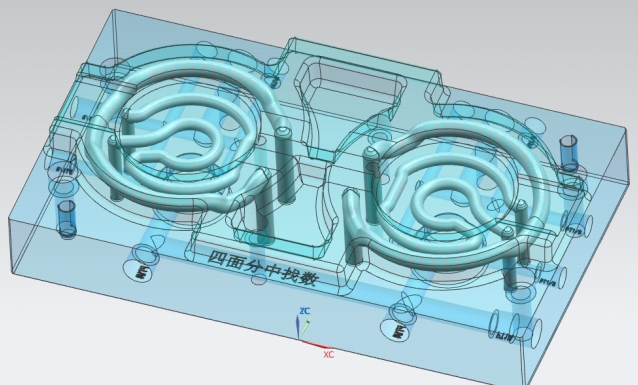
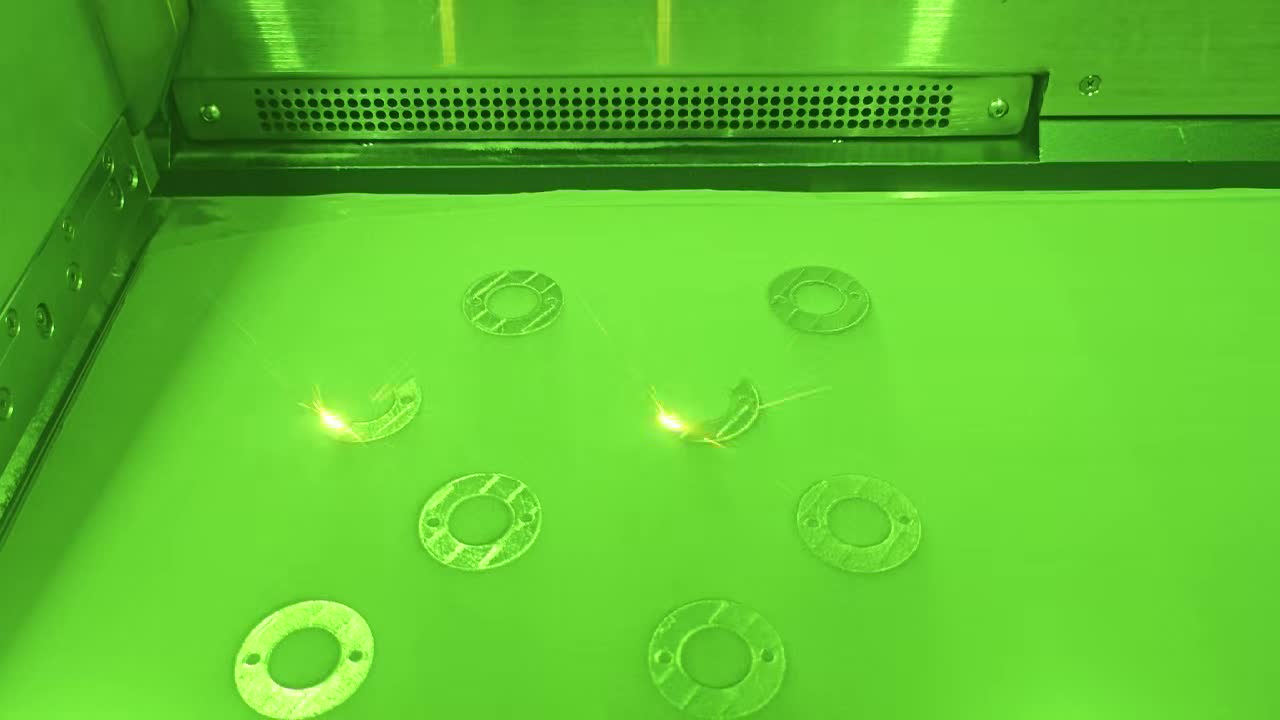
Research interest in conformal cooling began accelerating around 2014–2015, coinciding with the maturation of selective laser melting (SLM) and direct metal laser sintering (DMLS) platforms capable of producing mold-grade steel inserts with densities above 99.5%. Before that threshold, the academic focus was on proving that 3D-printed cooling channels could survive production environments. After it, the focus shifted to optimization — how to design the best possible channel layout for a given part geometry.
The research landscape can be divided into three chronological waves:
- 2015–2018: Validation era. Studies focused on confirming that conformal cooling worked as predicted by simulation. Researchers compared conformal vs. conventional cooling on benchmark geometries, validated CFD and Moldflow predictions against physical measurements, and documented cycle time reductions of 15–40% across dozens of part types.
- 2019–2022: Optimization era. With basic efficacy established, research shifted to finding the best channel designs. Topology optimization, multi-objective genetic algorithms, and parametric studies of channel cross-sections dominated the literature. TPMS (Triply Periodic Minimal Surface) lattice structures emerged as a breakthrough concept.
- 2023–2026: AI and integration era. Machine learning, generative design, physics-informed neural networks, and digital twin concepts entered the field. The focus broadened from channel geometry alone to whole-system optimization including material selection, process parameters, and lifecycle cost.
2. Six Major Research Themes
Theme 1: Channel Geometry Optimization
The most extensively studied topic in conformal cooling research is the relationship between channel cross-section shape, diameter, pitch, and wall distance, and the resulting thermal performance. Hundreds of parametric studies have explored circular, elliptical, teardrop, rectangular, and free-form cross-sections. The consistent finding across the literature is that circular cross-sections of 4–8 mm diameter offer the best balance of heat transfer, pressure drop, and printability for most injection mold applications. Elliptical channels (aspect ratio 1.5:1 to 2:1) show 5–12% better heat transfer in thin-wall regions but require careful orientation relative to the build direction during SLM printing.
The critical geometric parameters established by research are:
- Wall distance (L): 1.5D to 2.5D from the mold surface, where D is the channel diameter. Closer than 1.5D risks structural failure; further than 2.5D diminishes cooling effectiveness.
- Pitch (P): 2D to 3D between channel centerlines. Tighter pitch improves uniformity but increases pressure drop and printing complexity.
- Diameter (D): 4–8 mm for most applications. Below 4 mm, powder removal becomes unreliable; above 8 mm, the structural impact on the insert becomes significant.
Theme 2: TPMS Lattice Structures
One of the most exciting research developments since 2020 has been the application of Triply Periodic Minimal Surface (TPMS) geometries — gyroid, Schwarz-P, diamond, and IWP surfaces — as internal cooling architectures. Unlike single-channel conformal designs, TPMS structures create a continuous, interconnected porous network throughout the insert with dramatically higher surface area for heat exchange. Research from Hong Kong Polytechnic University (2021) demonstrated that gyroid-based TPMS cooling improved heat transfer coefficients by 18–25% compared to optimized single-channel conformal designs while simultaneously increasing the mechanical stiffness of the insert by 30–40%.
The challenge with TPMS cooling remains practical: cleaning residual metal powder from the intricate internal network is difficult, and flow paths are less predictable than single channels. Current production use is limited to small inserts (under 80 mm) where ultrasonic cleaning can reliably remove all powder.
Theme 3: Topology Optimization
Topology optimization applies mathematical algorithms to determine the ideal material distribution (solid steel vs. cooling channel) within a design domain. Rather than designing channels as discrete tubes, topology optimization treats the entire insert volume as a design variable and lets the algorithm determine where cooling passages should exist. Research from the University of Michigan (2020) showed that topology-optimized cooling layouts reduced cooling time by 20–30% compared to manually designed conformal channels on the same part geometry. The resulting channel shapes are often organic and impossible to design intuitively, but they are printable by SLM.
Theme 4: Multi-Objective Optimization
Real mold cooling design involves competing objectives: minimize cooling time, maximize temperature uniformity, minimize pressure drop, and maintain structural integrity. Multi-objective optimization using genetic algorithms (NSGA-II is the most commonly used) allows researchers to find Pareto-optimal solutions that represent the best available tradeoffs. Studies from 2019–2024 have shown that multi-objective approaches outperform single-objective optimization by 8–15% on composite performance metrics because they avoid over-optimizing one parameter at the expense of others.
Theme 5: Material Development
The dominant material for conformal cooling inserts is maraging steel (1.2709 / MS1), which offers excellent printability, good thermal conductivity (20 W/m-K), and hardness up to 54 HRC after aging. Research has explored alternatives including H13 tool steel (higher hardness but harder to print without cracking), CuCrZr copper alloy (thermal conductivity 3–5x higher but lower hardness), and multi-material approaches that combine copper-core channels with steel shells. Recent work at the National University of Singapore (2024) demonstrated graded-composition inserts produced by multi-laser SLM, with copper-rich zones near the cooling surface and steel-rich zones in structural areas. These achieved 40% better thermal performance than uniform maraging steel while maintaining adequate wear resistance.
Theme 6: Simulation Accuracy
A critical question for practitioners is how well simulation predicts actual performance. Multiple validation studies comparing Moldflow, Sigmasoft, and COMSOL predictions against thermocouple measurements in production molds have established that modern simulation tools predict mold surface temperatures within +/-3–5 degrees C and cycle time reductions within +/-10–15% of measured values, provided that boundary conditions (coolant flow rate, inlet temperature, contact resistance) are accurately specified. The primary source of simulation error is not the CFD solver itself but inaccurate boundary condition assumptions, particularly thermal contact resistance between the printed insert and the mold base.
3. Landmark Studies and Their Practical Findings
Systematically compared circular, elliptical, rectangular, and teardrop cross-sections on a standardized test insert. Conclusion: circular channels provided the most consistent performance across varying flow rates and mold temperatures. Elliptical channels showed marginal improvement (7%) in thin-wall zones but introduced printing orientation dependency. Practical takeaway: Use circular cross-sections as the default; consider elliptical only for thin-wall regions where the build orientation can be controlled.
Applied density-based topology optimization to a multi-cavity mold insert, achieving 26% reduction in cooling time versus manually designed conformal channels. The optimized geometry featured variable-diameter channels that widened near thick part sections and narrowed near thin sections. Practical takeaway: Variable-diameter channels significantly outperform constant-diameter designs. Even without full topology optimization, designers should use larger diameters near thick sections and smaller diameters near thin sections.
Replaced conventional conformal channels with a gyroid TPMS lattice in a core insert for a medical device housing. Achieved 22% better temperature uniformity and 18% faster cooling versus optimized single-channel design. Insert stiffness increased by 35%. Practical takeaway: TPMS cooling is viable for small, high-value inserts where powder removal can be guaranteed. Not yet suitable for large inserts or cores with blind holes.
Trained a generative adversarial network (GAN) on 8,000 validated Moldflow simulations to propose conformal channel layouts. The ML model generated designs in under 30 seconds that matched or exceeded the performance of manually optimized designs requiring 2–3 days of engineering time. Thermal performance of ML-generated designs was within 5% of topology-optimized solutions. Practical takeaway: AI-assisted design tools are approaching practical usability for channel routing, dramatically reducing design iteration time. However, engineering review remains essential for manufacturability validation.
Ran conformal cooling inserts printed in MS1 maraging steel for 2.1 million injection cycles at mold temperatures of 60–80 degrees C with 40-bar coolant pressure. No measurable channel degradation, no leaks, no dimensional drift beyond 0.02 mm. Practical takeaway: Properly printed and post-processed maraging steel inserts with >99.5% density are reliable for multi-million shot production. The fatigue concern that historically limited adoption has been definitively addressed.
4. Research Milestones Timeline (2015–2026)
| Year | Milestone | Researchers / Institution | Impact |
|---|---|---|---|
| 2015 | First large-scale validation of SLM conformal cooling vs. drilled channels on production molds | Fraunhofer ILT / RWTH Aachen | Established 20–30% cycle reduction as a reliable baseline |
| 2016 | Parametric study of channel diameter, pitch, and wall distance design rules | University of Padova | Codified the D/P/L design rules still used today |
| 2017 | Cross-section shape comparison (circular vs. elliptical vs. teardrop) | University of Padova | Confirmed circular as optimal default cross-section |
| 2018 | Moldflow simulation validation against thermocouple data on conformal-cooled molds | University of Massachusetts Lowell | Proved simulation accuracy within +/-5 degrees C for well-defined boundary conditions |
| 2019 | Multi-objective optimization (NSGA-II) for simultaneous cycle time and uniformity optimization | National Cheng Kung University (Taiwan) | Demonstrated 12% improvement over single-objective optimization |
| 2020 | Topology optimization of cooling channel layouts | University of Michigan | Achieved 26% improvement over manually designed conformal channels |
| 2021 | TPMS gyroid lattice cooling for injection mold inserts | Hong Kong Polytechnic University | Opened new research direction; 22% better uniformity than single-channel designs |
| 2022 | 2.1M-cycle fatigue life validation of MS1 conformal inserts | EOS GmbH / Innolite | Removed durability as a barrier to adoption |
| 2023 | Reinforcement learning agent for conformal channel path optimization | MIT | First AI-driven channel routing producing near-optimal layouts automatically |
| 2024 | GAN-based channel design trained on 8,000 Moldflow simulations | Technical University of Munich | Reduced design time from days to seconds with <5% performance gap vs. topology optimization |
| 2024 | Graded-composition (copper-steel) inserts via multi-laser SLM | National University of Singapore | 40% thermal performance improvement; pioneered multi-material approach |
| 2025 | Digital twin integration — real-time thermal monitoring with adaptive coolant flow control | Renishaw / University of Sheffield | Closed the loop between simulation prediction and production monitoring |
| 2026 | Physics-informed neural networks for real-time thermal prediction without CFD | ETH Zurich | Enables in-cycle thermal prediction for digital twin applications |
5. University Research Programs
University of Padova (Italy)
The Padova group, led by researchers in the Department of Industrial Engineering, has been one of the most productive academic teams in conformal cooling research since 2015. Their work focuses on the fundamentals: channel cross-section geometry, design parameter optimization, and rigorous experimental validation of simulation predictions. Their 2016–2017 parametric studies remain the most widely cited source for the D/P/L design rules (diameter, pitch, wall distance) used in industrial practice. Their experimental methodology — using instrumented test molds with embedded thermocouples at multiple depths — has become the gold standard for validating conformal cooling simulation accuracy.
University of Michigan (USA)
Michigan's contribution centers on topology optimization. Their 2020 paper introducing density-based topology optimization for cooling channel layout was a paradigm shift — it showed that algorithmically generated channel geometries could significantly outperform expert-designed conformal channels. Their follow-up work (2021–2023) extended the approach to multi-cavity molds and included manufacturing constraints (minimum channel diameter, minimum wall thickness, self-supporting angles) directly in the optimization formulation, making the results actually printable by SLM.
Hong Kong Polytechnic University
PolyU's research group pioneered the application of TPMS lattice structures for mold cooling. Their 2021 paper on gyroid cooling is the most cited work on TPMS mold cooling. Subsequent studies have explored the relationship between TPMS unit cell size, volume fraction, and cooling performance, establishing that a 30–40% volume fraction with 3–5 mm unit cell size provides the best tradeoff for injection mold applications. They have also addressed the powder removal challenge through novel design features that incorporate drainage channels within the TPMS structure.
Technical University of Munich (TUM)
TUM's research since 2022 has focused on applying machine learning to conformal cooling design. Their approach of training neural networks on large datasets of validated simulation results has produced the most practically useful AI design tools in the field. Their 2024 GAN-based design tool is being commercialized through a spin-off company and integrated into mainstream CAD/CAM workflows.
National University of Singapore (NUS)
NUS has taken a materials-first approach, exploring how multi-material printing can create inserts with spatially varying thermal conductivity. Their graded copper-steel inserts represent a fundamentally different approach to improving cooling performance — rather than optimizing channel geometry, they optimize the thermal properties of the insert material itself. This approach is especially promising for applications where geometric constraints limit channel placement.
6. Industry Research: EOS, SLM Solutions, Renishaw & Others
Machine manufacturers have conducted extensive research on the process parameters required to produce reliable conformal cooling inserts. Their contributions are often less visible in academic journals but are critical for production adoption.
EOS GmbH
EOS has published extensively on process parameter optimization for MS1 (maraging steel) and 316L stainless steel. Their application guides provide validated parameter sets for achieving >99.5% density, which is the threshold for leak-free cooling channels. EOS's fatigue life validation study (2022, in collaboration with Innolite) was a turning point for industry confidence — demonstrating that SLM-produced conformal inserts survive over 2 million cycles without degradation effectively eliminated the durability objection that had slowed adoption. EOS has also developed standardized leak testing protocols (helium leak testing at 40 bar) that have become the industry standard for qualifying conformal cooling inserts.
SLM Solutions (now Nikon SLM Solutions)
SLM Solutions' research has focused on multi-laser productivity for conformal cooling insert production. Their work on quad-laser systems demonstrated that printing time for typical conformal cooling inserts can be reduced by 50–65% compared to single-laser systems, directly addressing the cost objection. Their application engineering team has published case studies documenting cycle time reductions across dozens of production applications, providing the largest publicly available dataset of real-world conformal cooling performance data.
Renishaw
Renishaw's unique contribution has been in post-process quality assurance — using industrial CT scanning to verify internal channel geometry and detect residual powder. Their research established that CT scanning at 100–150 micron voxel resolution can reliably detect powder occlusion, micro-cracks, and dimensional deviations in printed channels. More recently, Renishaw's collaboration with the University of Sheffield on digital twin integration (2025) connected in-mold thermal sensors with real-time simulation models, enabling adaptive coolant flow control during production.
Trumpf
Trumpf's research has focused on green laser technology for printing copper alloys, which are critical for high-thermal-conductivity conformal cooling applications. Conventional infrared lasers achieve less than 5% absorptivity on copper powder, making reliable printing extremely difficult. Trumpf's green laser systems (515 nm wavelength) achieve 40% absorptivity, enabling production of CuCrZr conformal cooling inserts with >99.3% density. This technology, commercialized since 2023, has opened the door to copper conformal cooling for applications where maraging steel's thermal conductivity is insufficient.
7. From Research to Design Rules
The most valuable output of a decade of conformal cooling research is a set of validated design rules that practitioners can apply without running topology optimization or training neural networks. These rules synthesize findings from hundreds of studies into actionable guidance.
Use 4–5 mm diameter for thin-wall parts (<2 mm wall thickness) and small inserts. Use 6–8 mm for thick-wall parts (>3 mm) and large inserts. Below 4 mm, residual powder removal becomes unreliable and pressure drop increases sharply. Above 8 mm, structural integrity concerns dominate. Research consistently shows diminishing thermal returns above 8 mm diameter.
The optimal wall distance depends on the part's required surface finish and the mold material. For cosmetic parts requiring class-A surfaces, use 2.0D to 2.5D to avoid thermal imprinting of channel patterns. For technical parts where surface finish is secondary, 1.5D to 2.0D maximizes cooling rate. Going below 1.5D risks hot cracking under cyclic thermal loading after 500K+ shots.
A pitch of 2D provides excellent temperature uniformity but high pressure drop and long print times. A pitch of 3D is adequate for most applications and significantly reduces print time and cost. For critical uniformity applications (optical parts, medical devices), use 2D. For automotive and consumer parts, 2.5D to 3D is typically sufficient.
Topology optimization research consistently shows that variable-diameter channels outperform constant-diameter designs by 10–20%. Even without formal optimization, designers should increase diameter near thick part sections (where more heat must be extracted) and decrease diameter near thin sections. This principle alone captures most of the benefit of topology optimization at zero additional design cost.
For SLM printing without internal supports (which cannot be removed from closed channels), all channel surfaces must be self-supporting. For circular cross-sections, this is inherently satisfied up to about 8 mm diameter. For larger channels or non-circular cross-sections, ensure no overhang exceeds 45 degrees from horizontal relative to the build direction. Teardrop cross-sections were specifically developed to address this constraint for channels that must be oriented horizontally.
8. Current Research Frontiers (2024–2026)
AI-Driven Channel Design
The most active research frontier is the application of artificial intelligence to conformal cooling channel design. Three distinct approaches are being pursued. Reinforcement learning agents (MIT, 2023) treat channel routing as a sequential decision problem, learning to place channel segments by receiving rewards proportional to thermal performance. Generative adversarial networks (TUM, 2024) learn to produce entire channel layouts from part geometry inputs. Physics-informed neural networks (ETH Zurich, 2026) replace CFD simulation entirely, predicting thermal fields in milliseconds rather than hours. All three approaches are converging toward practical tools that will dramatically reduce the engineering time required for conformal cooling design.
Generative Design Integration
Commercial CAD platforms — Autodesk Fusion, Siemens NX, and PTC Creo — are integrating generative design capabilities specifically for cooling channel layout. These tools combine topology optimization algorithms with manufacturing constraints (printability, powder removal, leak testing access) to generate ready-to-print channel designs. Autodesk Moldflow 2025 introduced an ML-assisted "channel suggest" feature that proposes initial channel layouts based on part geometry analysis, which designers can then refine. Siemens NX Mold Cooling offers similar capabilities with tighter integration to their AM build preparation tools.
Digital Twin Integration
The concept of a "digital twin" for conformal-cooled molds connects real-time sensor data (in-mold temperature, coolant flow rate, coolant temperature) with a continuously running simulation model. The Renishaw/Sheffield collaboration (2025) demonstrated this concept on a production mold, using the digital twin to automatically adjust coolant flow rates in real-time to maintain optimal mold surface temperature as ambient conditions and resin lot variations changed throughout a production run. The result was a further 8–12% reduction in part-to-part dimensional variation beyond what static conformal cooling achieved. This represents the next evolution: not just better channels, but intelligent, adaptive cooling systems.
Multi-Material and Functionally Graded Inserts
Building on NUS's 2024 work, several groups are pursuing functionally graded inserts where material composition varies continuously from copper-rich (high thermal conductivity) near cooling channels to steel-rich (high hardness and wear resistance) at the mold surface. The challenge is metallurgical: copper-steel interfaces can develop intermetallic phases that are brittle under thermal cycling. Research at RMIT University (Australia) and Fraunhofer IAPT (Germany) is addressing this through graded transition zones that avoid sharp compositional boundaries.
Micro-Channel and Surface-Textured Channels
Emerging research is exploring channels with internal surface textures — micro-fins, dimples, and helical ridges printed directly into the channel walls — to enhance turbulent heat transfer without increasing channel diameter. Early results from Loughborough University (2025) show 15–20% improvement in convective heat transfer coefficients with textured channels, though pressure drop increases by 25–35%. The net benefit depends on the available coolant pump capacity.
9. The Gap Between Research and Production Reality
Any honest review of conformal cooling research must acknowledge the persistent gap between academic findings and production results. Understanding this gap helps practitioners set realistic expectations and focus on the research findings that actually translate to the shop floor.
Where Research Over-Promises
- Idealized boundary conditions: Most academic studies assume perfect thermal contact between the printed insert and the mold base. In production, thermal contact resistance at this interface can reduce effective heat transfer by 10–20%. Vacuum brazing or shrink-fitting helps but does not eliminate the gap entirely.
- Single-cycle vs. steady-state: Some papers report results from single-cycle or first-few-cycle measurements. Production performance is determined by steady-state behavior after hundreds of consecutive cycles, which is typically 5–10% worse than initial-cycle performance due to thermal saturation of surrounding mold steel.
- Lab-scale vs. production-scale: Many studies use small test inserts (50–80 mm). Scaling to full production inserts (150–400 mm) introduces challenges including longer coolant flow paths, higher pressure drops, more complex powder removal, and greater thermal distortion during printing.
- Ignoring secondary constraints: Research optimizations often ignore ejector pin locations, parting line geometry, gate locations, and other practical constraints that limit where channels can actually be placed. Production designs typically achieve 60–75% of the theoretical optimum because of these constraints.
Where Research Under-Reports
- Quality improvements: Academic papers focus heavily on cycle time reduction but often underreport the quality improvements (reduced warpage, improved Cpk, lower scrap rates) that are frequently more valuable than the cycle time savings in production economics. The ROI of quality improvements can exceed the throughput ROI by 2–3x.
- Process stability: Conformal cooling creates more consistent, predictable thermal conditions shot-to-shot, which reduces process instability — a benefit that is difficult to measure in short academic studies but highly valuable in 24/7 production environments.
- Tool life extension: Several production users report 15–30% longer tool life with conformal cooling due to reduced thermal stress on the mold surface. This benefit is almost never studied in academic research but represents significant value in high-volume programs.
The practical rule of thumb: take the cycle time reduction reported in academic papers and apply a 0.65–0.80 multiplier to estimate production results. A paper reporting 40% cycle reduction will likely achieve 26–32% in production. This is still an excellent result — but setting accurate expectations matters for securing management approval and avoiding disappointment.
Bridging the Gap
The most impactful research going forward will come from groups that embed production constraints directly into their optimization frameworks. The University of Michigan's 2023 work on manufacturing-constrained topology optimization is a model for this approach: by including minimum diameter, maximum overhang angle, and powder removal access as optimization constraints, they produced designs that achieved 85–90% of the unconstrained theoretical optimum while being directly printable and production-ready. This "design for additive manufacturing" (DfAM) integration is the key to closing the research-production gap.
10. Frequently Asked Questions
The most impactful findings are: circular cross-sections outperform other shapes for most applications (Padova, 2017); topology-optimized channels reduce cooling time by 20–30% over manual designs (Michigan, 2020); TPMS lattice structures improve heat transfer by 15–25% while increasing structural rigidity (Hong Kong PolyU, 2021); and multi-objective optimization outperforms single-objective by 8–15% on composite metrics (multiple studies, 2019–2024).
TPMS lattice structures such as gyroid and Schwarz-P offer 15–25% better heat transfer than single-channel conformal designs due to dramatically increased surface area. However, they are harder to flush clean of residual powder and require careful DfAM consideration. As of 2026, TPMS cooling is used primarily for small inserts (under 80 mm) where powder removal is manageable.
Yes. Since 2022, several research groups and commercial software companies have developed AI/ML approaches. Reinforcement learning (MIT, 2023), GANs (TUM, 2024), and physics-informed neural networks (ETH Zurich, 2026) all show promise. Commercial tools like Autodesk Moldflow 2025 and Siemens NX now incorporate ML-assisted channel routing. These tools reduce design time from days to hours but still require experienced engineering review.
Academic studies often report 40–60% cycle time reductions under idealized conditions. Production deployments typically achieve 20–35%. The gap comes from thermal contact resistance, practical geometric constraints, steady-state vs. single-cycle differences, and scaling effects. Apply a 0.65–0.80 multiplier to academic results for realistic production estimates.
The most prolific groups include the University of Padova (channel geometry fundamentals), Hong Kong Polytechnic University (TPMS lattice structures), University of Michigan (topology optimization), Technical University of Munich (machine learning design tools), and National University of Singapore (multi-material inserts). Industry research from EOS, SLM Solutions, Renishaw, and Trumpf complements the academic work with process and materials focus.
MouldNova designs conformal cooling inserts using validated design rules from a decade of published research. Send us your part geometry for a free thermal analysis and cycle time estimate.
Request Free Analysis →Related Pages
- Conformal Cooling Design — Complete Design Guidelines
- Conformal Cooling Channel Design — Geometry, Sizing & Layout
- Conformal Cooling Simulation — Tools, Accuracy & Workflow
- Conformal Cooling Materials — Maraging Steel, H13, Copper Alloys
- Conformal Cooling Design Software — CAD/CAM/CAE Tools Compared
- Conformal Cooling Benefits — Five Benefit Categories with a 3-Year Factory Model
- Conformal Cooling Inserts — Service Details & Specifications
- Case Studies — Full Production Data from Real Programs