Sourcing CNC machining services from China saves 40–65% compared to domestic US or European suppliers — but only if you choose the right partner, manage quality properly, and understand the full landed cost. This guide covers everything an engineer or procurement manager needs to make that decision confidently.
Whether you are evaluating a China CNC machining service for the first time or optimizing an existing supply chain, we break down pricing, supplier selection, quality management, regional specializations, tariffs, and logistics — all based on real factory data from our own CNC, EDM, and turning operations in Yuyao, Ningbo.
1. Why China Remains the Global Leader in CNC Machining
China accounts for approximately 31% of global manufacturing output and has more CNC machine tools installed than any other country. For CNC machining services in China, this scale translates into concrete advantages that no other country can match simultaneously.
Cost Advantage with Real Numbers
The price gap between Chinese and Western CNC machining is not just about labor rates. It is a function of the entire manufacturing ecosystem:
| Cost Factor | China | United States | Germany |
|---|---|---|---|
| CNC operator wage | $6–12/hr | $25–45/hr | $30–50/hr |
| Shop rate (3-axis mill) | $15–22/hr | $75–120/hr | $85–150/hr |
| Shop rate (5-axis mill) | $30–45/hr | $120–200/hr | $140–250/hr |
| Raw material (6061-T6 bar) | $3.20–4.50/kg | $5.50–7.00/kg | $6.00–8.00/kg |
| Factory floor space | $3–8/sqm/mo | $15–35/sqm/mo | $12–30/sqm/mo |
| Electricity (industrial) | $0.08–0.12/kWh | $0.07–0.14/kWh | $0.18–0.30/kWh |
The combined effect: a part that costs $45 to machine in the US typically costs $15–22 from a comparable Chinese shop. Even after shipping, duties, and quality management overhead, the landed cost advantage is typically 35–55%.
Equipment Investment and Scale
China imported over $10 billion worth of CNC machine tools in the past five years, including high-end equipment from Mazak (Japan), DMG MORI (Germany/Japan), Okuma (Japan), and Makino (Japan). The best Chinese CNC shops run the same machines as their Western counterparts — but at a fraction of the hourly cost.
This investment is not limited to large enterprises. Mid-tier shops with 30–80 machines routinely operate 5-axis machining centers, Swiss-type lathes, and wire EDM machines that would be classified as premium equipment in any Western market.
Supply Chain Ecosystem
Chinese manufacturing clusters offer complete supply chains within a small geographic radius:
- Material sourcing: Steel mills, aluminum smelters, and specialty alloy distributors are within the same industrial zones. Material procurement takes 1–3 days, not 1–3 weeks.
- Heat treatment: Vacuum hardening, nitriding, carburizing, and induction hardening services are available from specialists within 30 minutes of most CNC shops.
- Surface finishing: Anodizing lines, plating shops, PVD coating facilities, and polishing services cluster around CNC machining hubs.
- Assembly and packaging: Downstream assembly, gauging, and export-ready packaging are standard capabilities — not a separate sourcing project.
The real advantage of CNC machining in China is not just the shop rate. It is the fact that material, machining, heat treatment, surface finishing, inspection, and packaging can all happen within a 20-kilometer radius — coordinated by a single project manager.
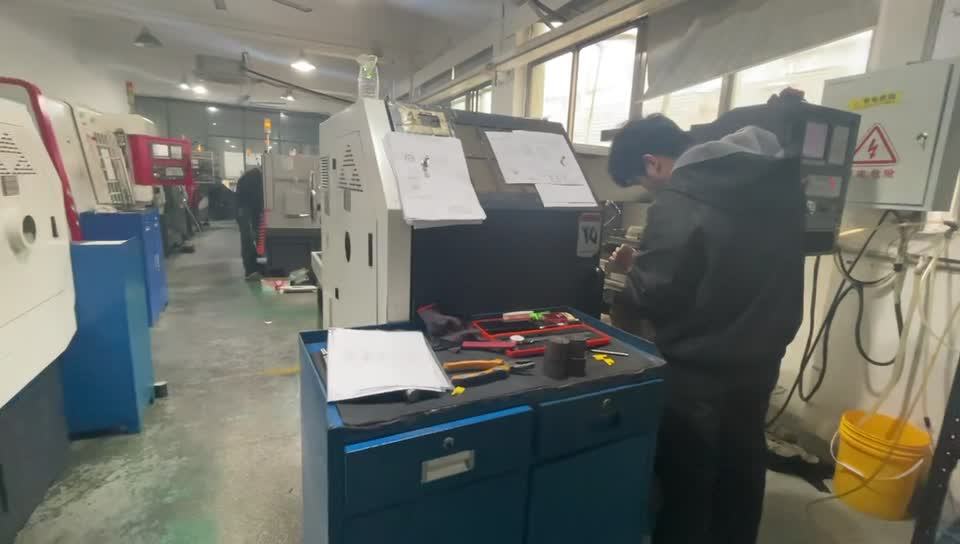
2. Types of CNC Machining Services Available in China
A capable CNC machining service in China offers more than just milling and turning. Here is a breakdown of the core processes and what to look for in each.
CNC Milling: 3-Axis, 4-Axis, and 5-Axis
3-axis CNC milling is the workhorse process for prismatic parts — brackets, housings, plates, and fixtures. Virtually every Chinese CNC shop offers 3-axis capability. Machine brands to look for: Mazak VCN, Haas VF series, or domestic equivalents with Fanuc or Siemens controls.
4-axis CNC milling adds a rotary axis, enabling machining of features on multiple faces in a single setup. This reduces setup time and improves positional accuracy between features. Common applications: manifold blocks, valve bodies, and multi-port hydraulic components.
5-axis CNC milling is the benchmark for complex geometry: impellers, turbine blades, aerospace structural components, and mold cavities with deep ribs and undercuts. Top-tier Chinese shops run 5-axis machines from DMG MORI, Makino, and Hermle. Shop rates for 5-axis work in China run $30–45/hr — versus $120–250/hr in Germany.
CNC Turning and Swiss Turning
CNC turning produces cylindrical parts: shafts, bushings, sleeves, pins, and threaded components. Look for shops running Mazak Quick Turn or Okuma LB series lathes with live tooling capability — this allows milling features (flats, cross-holes, keyways) on the lathe without a second setup.
Swiss-type CNC turning (also called sliding-headstock turning) is the process of choice for small, long, precision parts: medical bone screws, electrical connector pins, watch components, and nozzle tips. The sliding headstock design provides exceptional rigidity and accuracy on parts with length-to-diameter ratios of 3:1 and beyond.
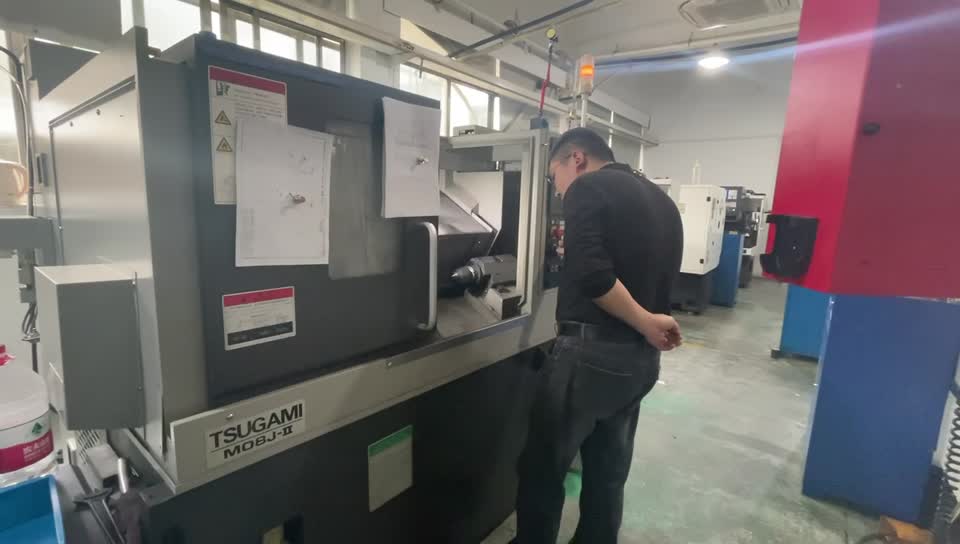
At Saiguang's Yuyao facility, we run the TSUGAMI M08J-II Swiss-type lathe for precision turned parts that require tolerances tighter than ±0.01mm. This machine handles bar stock up to 20mm diameter with 8-axis simultaneous control, producing complex geometries in a single cycle — including turning, milling, drilling, and thread-whirling.
Wire EDM and Sinker EDM
Wire EDM (Electrical Discharge Machining) cuts conductive materials with a thin wire electrode, achieving tolerances of ±0.003mm and surface finishes to Ra 0.2µm. Primary applications: mold cavity inserts, stamping dies, precision gears, and any part requiring sharp internal corners that a milling cutter cannot reach.
Sinker EDM (also called die-sinking EDM or ram EDM) uses a shaped electrode to erode a mirror-image cavity into the workpiece. This is the standard process for injection mold cavities, rib details, micro-features, and textured surfaces.
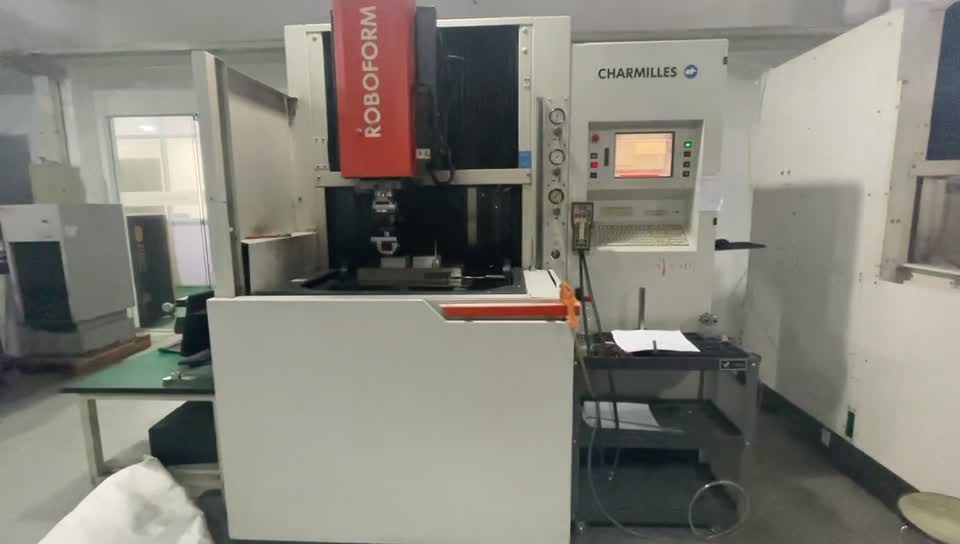
Our Charmilles ROBOFORM 35 sinker EDM handles mold cavities up to 350 × 250mm with positioning accuracy of ±0.002mm. The machine's automatic tool changer runs unattended overnight, significantly reducing lead times for complex mold components. For a deeper look at our EDM and CNC capabilities, see our CNC / EDM / Injection Molding service page.
Surface Finishing and Secondary Operations
A full-service CNC machining supplier in China should offer the following secondary operations either in-house or through verified local partners:
- Anodizing: Type II (decorative, 5–25µm) and Type III hard anodize (25–75µm) for aluminum parts
- Electroless nickel plating: 10–50µm coating for corrosion resistance and hardness (HV 500–700 after heat treatment)
- Chrome plating: Decorative or hard chrome (HV 850–1050) for wear surfaces
- Passivation: Citric acid or nitric acid passivation for stainless steel parts per ASTM A967
- Heat treatment: Vacuum hardening, nitriding, carburizing, stress relieving, and age hardening
- Polishing: From standard machined finish (Ra 1.6µm) to mirror polish (Ra 0.05µm)
- Grinding: Surface grinding (±0.005mm flatness), cylindrical grinding, and centerless grinding
- Laser marking/engraving: Part numbers, logos, and traceability codes
3. How Much Does CNC Machining in China Actually Cost?
This is the section that most competitor guides skip. Below is real pricing data based on our factory operations and market knowledge across Chinese CNC machining regions.
Price Ranges by Material and Complexity
| Part Type | Material | Tolerance | China Price | US Price |
|---|---|---|---|---|
| Simple bracket (3-axis) | 6061-T6 Aluminum | ±0.05mm | $8–15 | $25–45 |
| Housing (3+2 axis) | 6061-T6 Aluminum | ±0.02mm | $25–55 | $80–160 |
| Complex cavity (5-axis) | P20 Tool Steel | ±0.01mm | $80–200 | $250–600 |
| Turned shaft | 4140 Steel | ±0.02mm | $5–12 | $18–35 |
| Swiss-turned pin | 303 Stainless | ±0.005mm | $2–6 | $8–18 |
| Wire EDM insert | H13 Tool Steel | ±0.003mm | $50–120 | $150–350 |
| Mold cavity (sinker EDM) | S136/420SS | ±0.005mm | $200–800 | $600–2,500 |
| Titanium component (5-axis) | Ti-6Al-4V | ±0.02mm | $120–350 | $350–900 |
Prices are per-piece for batch quantities of 50–100 units. Prototype pricing (1–5 pieces) is typically 2–3x higher.
Country Cost Comparison: China vs US vs India vs Vietnam
China is not the only low-cost option. Here is how it compares to other popular sourcing destinations:
| Factor | China | India | Vietnam | United States |
|---|---|---|---|---|
| 3-axis shop rate | $15–22/hr | $12–20/hr | $10–18/hr | $75–120/hr |
| 5-axis availability | Widespread | Limited | Rare | Widespread |
| Material range | Excellent | Good | Limited | Excellent |
| Quality consistency | High (tier 1 shops) | Variable | Developing | High |
| Lead time (production) | 5–10 days | 7–15 days | 10–20 days | 5–10 days |
| Shipping to US (air) | 3–5 days | 4–7 days | 4–6 days | 1–3 days |
| Surface finishing in-house | Standard | Sometimes | Rare | Standard |
| English communication | Good | Excellent | Limited | Native |
| EDM capability | Widespread | Good | Limited | Widespread |
| Import duty to US | 7.5–25% | 0–5% | 0–5% | N/A |
The verdict: India offers lower labor costs and better English communication, but lacks 5-axis and EDM depth. Vietnam is emerging but the supply chain is still immature. China offers the best combination of capability, capacity, and speed — which is why it remains the dominant choice for precision CNC machining despite higher tariffs.
Hidden Costs to Factor In
The quoted part price from a Chinese CNC supplier is not your total cost. Make sure you account for:
- Shipping: Air freight from China to the US costs $5–12/kg. Sea freight costs $2–4/kg but takes 25–35 days. For small, high-value parts, air freight adds a negligible percentage. For large, heavy parts, sea freight is mandatory — budget 2–5% of part cost.
- Import duties: US Section 301 tariffs on machined parts from China range from 7.5% to 25%. Classify your parts early — HTS codes determine the rate. Some exclusions still apply.
- Quality management overhead: First-article inspection, in-process checks, and incoming inspection at your facility add 2–5% to total cost. Third-party inspection in China (SGS, TUV) costs $300–500 per visit.
- Wire transfer fees: International T/T transfers cost $25–50 per transaction. For small orders, this can add 1–2%.
- Packaging and customs brokerage: Export-ready packaging adds $0.50–3.00 per part. US customs brokerage costs $150–250 per shipment.
- Communication and project management time: Your engineering and procurement team's time managing an overseas supplier has a real cost. A well-run supplier minimizes this; a poorly run one multiplies it.
China: Part cost $32 + anodize $4 + packaging $1 + air freight $2.80/pc + duty (25%) $8 + QC allocation $1.50 = $49.30/pc
US: Part cost $95 + anodize $12 + packaging $0.50 = $107.50/pc
4. How to Choose a Reliable CNC Supplier in China
The difference between a good and bad experience sourcing CNC machining services in China comes down to supplier selection. Follow this systematic approach.
Certifications to Verify
- ISO 9001:2015 — Minimum standard for any supplier. Verify the certificate is current and issued by an accredited registrar (UKAS, CNAS, or equivalent).
- IATF 16949 — Required for automotive components. Demonstrates APQP, PPAP, and FMEA capability.
- AS9100D — Required for aerospace components. Verifies traceability, FOD prevention, and special process control.
- ISO 13485 — Required for medical device components. Covers risk management and design control.
- ISO 14001 — Environmental management. Increasingly required by European OEMs.
Equipment Brands to Ask About
The machines on a shop floor tell you more than any sales pitch. Here is what to look for:
| Tier | Machine Brands | What It Tells You |
|---|---|---|
| Tier 1 (Premium) | Mazak, Okuma, Makino, DMG MORI, Hermle, TSUGAMI, GF/Charmilles, Sodick | High-precision shop, serious investment, capable of tight tolerances and complex geometry |
| Tier 2 (Good) | Haas, Doosan, Hyundai, Brother, Tongtai, Victor Taichung, Mitsubishi | Solid production capability, good value, suitable for most commercial machining work |
| Tier 3 (Budget) | Chinese domestic brands (Shenyang, Dalian, Bochi), older refurbished machines | Cost-focused shop, acceptable for simple parts with standard tolerances (±0.05mm+) |
10-Point Supplier Audit Checklist
Red Flags to Watch For
- No factory photos or videos — Legitimate manufacturers are proud of their shop floors. Trading companies hide theirs.
- Prices significantly below market — If a quote is 40%+ below other bids, the supplier is either cutting corners on material, using worn tooling, or planning to renegotiate after your deposit.
- Unwillingness to provide material certificates — Any shop using certified material can provide mill test reports. Refusal is a red flag for material substitution.
- No CMM or no CMM report — If they cannot provide a First Article Inspection (FAI) report with CMM data, they cannot verify they are making parts to your specifications.
- Communication delays exceeding 24 hours — Responsiveness during the quoting phase predicts responsiveness during production. Slow communication before the order only gets worse after.
- 100% prepayment requirement — Standard terms are 50/50 (deposit/balance). Demanding full prepayment on a first order signals either cash-flow problems or bad faith.
5. Top CNC Machining Regions in China
China's CNC machining industry is not evenly distributed. Each major manufacturing region has a distinct specialization shaped by decades of industrial history, local supply chains, and anchor customers. Choosing the right region for your project type can improve quality, reduce lead times, and lower costs.
Ningbo / Yuyao (Zhejiang Province) — Mold Tooling & Automotive
Key specializations:
- Injection mold tooling (automotive, appliance, consumer goods)
- Die-casting molds for aluminum and zinc alloy components
- Precision CNC machining for mold inserts, cores, and cavities
- Conformal cooling inserts using metal 3D printing (SLM/LPBF) integrated with CNC finishing
- Automotive structural components and under-hood parts
Typical suppliers: 200–500 employee factories with 50–200 CNC machines, in-house EDM, grinding, and CMM inspection. Many serve Japanese, German, and American automotive OEMs and Tier 1 suppliers.
Shenzhen / Dongguan (Guangdong Province) — Electronics & Consumer Products
The Pearl River Delta is the global epicenter for electronics manufacturing. The CNC machining ecosystem here is optimized for:
- Aluminum and magnesium alloy housings for smartphones, laptops, and wearables
- High-volume 5-axis CNC machining with automated production lines
- Tight-tolerance connector and contact components
- Rapid prototyping with 24–72 hour turnaround
- Anodizing and surface finishing at scale (millions of pieces per month)
Best for: High-volume consumer electronics parts, rapid prototyping, aluminum housings. Many suppliers here are experienced with Apple, Samsung, and Huawei supply chain requirements.
Shanghai / Suzhou / Kunshan (Jiangsu Province) — Aerospace & Medical
The Yangtze River Delta region around Shanghai attracts the most technology-intensive CNC machining operations:
- Aerospace structural components (titanium, Inconel, aluminum)
- Medical device components with ISO 13485 and FDA registration
- Semiconductor equipment parts requiring ultra-precision machining
- Multi-axis machining with in-process CMM verification
- European and Japanese joint-venture factories with Western quality systems
Best for: High-precision, high-compliance work where quality certifications (AS9100, ISO 13485) are mandatory and price is secondary to reliability.
Other Notable Regions
| Region | Specialization | Typical Applications |
|---|---|---|
| Dalian (Liaoning) | Heavy machining, large parts | Wind turbine components, shipbuilding, heavy equipment |
| Chongqing / Chengdu | Automotive, defense | Transmission housings, military components |
| Wuhan (Hubei) | Optical and laser components | Lens housings, fiber laser parts, precision optics |
| Xiamen / Quanzhou (Fujian) | Stone and ceramic machining | Construction hardware, sanitary ware, stone CNC |
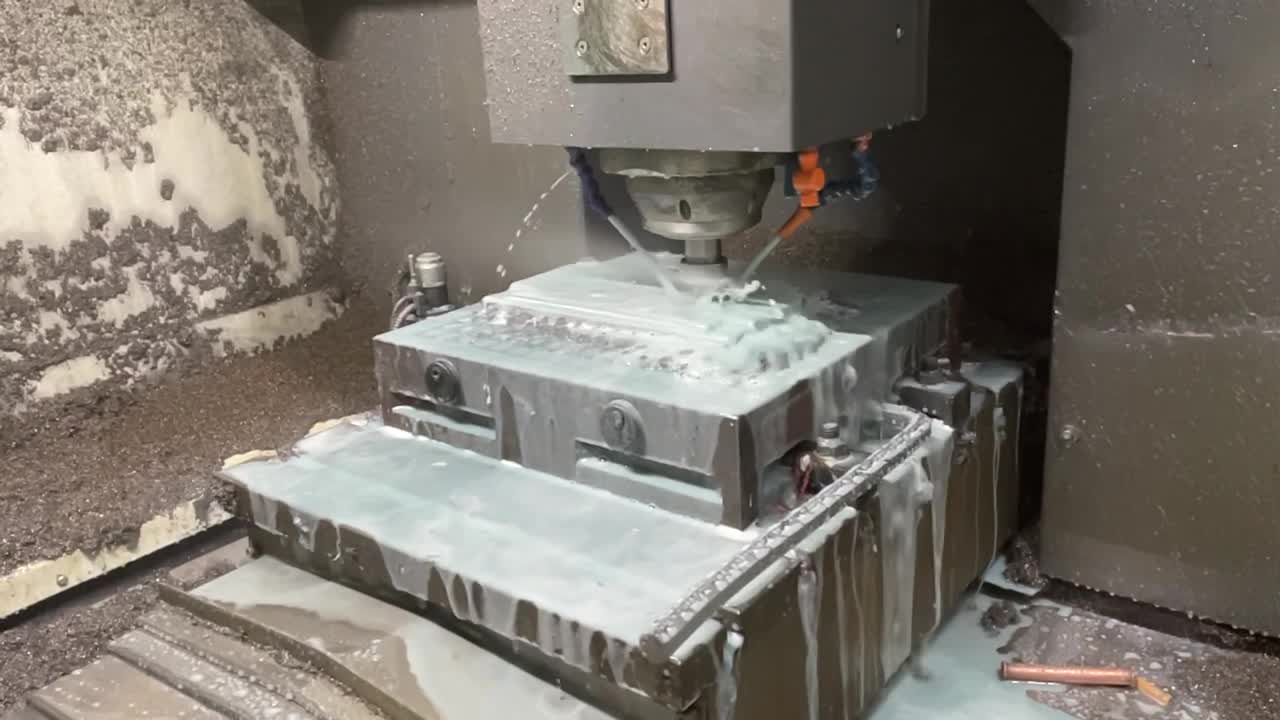
6. Quality Management: Inspection & QC
Quality management is where online CNC machining services in China differ most dramatically. The best suppliers operate quality systems comparable to European or Japanese standards. The worst rely on visual inspection and a hope that defects will not be noticed. Here is what to demand.
First Article Inspection (FAI)
For any new part, require a full FAI per AS9102 (even if your parts are not aerospace). A proper FAI includes:
- Ballooned drawing with numbered dimensions
- CMM measurement report for all critical dimensions
- Material test report (MTR) with chemical composition and mechanical properties
- Surface finish measurement (Ra/Rz) at specified locations
- Hardness test results (if heat treatment is specified)
- Photographs of the finished part from multiple angles
- Any special test results (pressure test, conductivity, etc.)
A supplier who pushes back on FAI requirements is a supplier you should not use.
In-Process Inspection
Critical dimensions should be checked during production — not just at the end. Ask your supplier to define inspection gates:
- Incoming material inspection: Verify material certificates match the physical material (hardness check, PMI test)
- First-off inspection: Measure the first piece from each setup before running the batch
- In-process SPC: For production volumes above 500 pieces, statistical process control on critical dimensions
- Final inspection: 100% inspection on critical dimensions, AQL sampling on non-critical dimensions
Third-Party Inspection Services
For orders above $10,000 or safety-critical components, consider hiring a third-party inspection firm to verify parts at the supplier's facility before shipment:
- SGS — Global leader, offices in every major Chinese manufacturing city
- TUV Rheinland / TUV SUD — Strong in automotive and industrial components
- Bureau Veritas — Comprehensive inspection and testing services
- Asia Inspection (QIMA) — Cost-effective option for commercial components
Cost: $300–500 per man-day for a standard dimensional inspection. This is insurance against receiving a shipment of non-conforming parts — which would cost far more to rework or reject.
GD&T Communication
Miscommunication on geometric dimensioning and tolerancing is the single biggest quality risk when sourcing CNC machining services from China. Follow these rules:
- Always provide 2D drawings with GD&T callouts — do not rely on the 3D model alone
- Use ISO 1101 standard (not ASME Y14.5 unless you confirm the supplier is trained in it)
- Specify datum references explicitly — do not assume the supplier will interpret them correctly
- Call out surface finish requirements on the drawing (Ra values at specific surfaces)
- Include a tolerance table on the drawing that specifies default tolerances for untoleranced dimensions (e.g., ISO 2768-m for general, ISO 2768-f for fine)
- Flag critical-to-quality (CTQ) dimensions with a diamond symbol or note — these get 100% inspection
7. Logistics, Tariffs & Import in 2026
Shipping Options and Lead Times
| Shipping Method | Transit Time (to US West Coast) | Cost per kg | Best For |
|---|---|---|---|
| Express air (DHL/FedEx/UPS) | 3–5 days | $6–12/kg | Urgent prototypes, small batches <50kg |
| Standard air freight | 5–8 days | $3.50–6/kg | Production batches 50–500kg |
| Sea freight (FCL) | 18–25 days | $0.30–0.80/kg | Large shipments >2 CBM |
| Sea freight (LCL) | 25–35 days | $0.80–2.00/kg | Medium shipments 0.5–2 CBM |
| Rail (China–Europe) | 18–22 days | $1.50–3.00/kg | EU-bound shipments, balanced cost/speed |
Pro tip: For machined metal parts, weight-to-volume ratio is high, so air freight costs are calculated on actual weight (not volumetric weight). This makes air freight surprisingly cost-effective for small, heavy precision parts.
US Tariff Structure (2026)
As of March 2026, US import duties on CNC machined parts from China include:
- Base MFN duty: Varies by HTS code, typically 0–6.5% for machined metal components
- Section 301 tariff: Additional 7.5% or 25% depending on product classification (List 1–4A)
- Total duty range: 7.5% to 31.5% for most machined parts
- Exclusions: Some product-specific exclusions are still active. Check with your customs broker.
Even with a 25% tariff, the cost advantage of Chinese CNC machining typically remains 35–50% over domestic US production, as demonstrated in the landed cost example above.
EU and India Tariff Structure
- EU: Standard MFN duty of 0–5% for machined components. No additional punitive tariffs on CNC parts from China as of 2026.
- India: Basic customs duty of 7.5–15% plus GST (18%) on imported machined components. Total landed cost markup: 25–35%.
Intellectual Property Protection
IP theft is a legitimate concern — but it is manageable with proper precautions:
- Use a bilingual NDA that is enforceable in Chinese courts. Have it drafted or reviewed by a Chinese IP lawyer. A Chinese-language NDA is far more enforceable than an English-only document.
- Register your patents and designs in China through CNIPA (China National Intellectual Property Administration). China operates on a first-to-register system — if your competitor registers first, they own the rights in China.
- Split manufacturing across suppliers so no single vendor sees the complete assembly. This is standard practice for sensitive military and medical products.
- Control your CAD data: Send STEP files (not native CAD with design history). Watermark drawings with the supplier's name and "Confidential" markings.
- Build long-term relationships: A supplier earning $500,000/year from your account has no incentive to risk that relationship by copying your design.
8. Communication & Project Management
Technical Drawing Standards
Clear technical communication prevents 80% of quality problems. Follow this protocol:
- 3D model format: STEP (.stp) is the universal standard. Avoid IGES (older, less reliable geometry transfer). Do not send native CAD files unless specifically requested.
- 2D drawing format: PDF for reference, DWG/DXF if the supplier needs to extract data. Include all GD&T, material callouts, surface finish requirements, and special notes on the 2D drawing.
- Revision control: Use a clear revision numbering system (Rev A, Rev B, etc.) and always reference the revision number in every email and PO. Mismatched revisions are a leading cause of machining errors.
- Units: Confirm whether drawings are in mm or inches. Most Chinese shops work in metric — sending inch-dimensioned drawings without a clear note invites conversion errors.
Time Zone Management
China operates on a single time zone (CST/UTC+8). Here is how the overlap works:
- US East Coast (EST/UTC-5): 13-hour difference. Your 8 PM = their 9 AM next day. Morning emails from the US are answered by your afternoon.
- US West Coast (PST/UTC-8): 16-hour difference. Send messages before 5 PM and expect replies by early morning.
- India (IST/UTC+5:30): 2.5-hour difference. Excellent overlap — communicate in real time during normal business hours.
- Central Europe (CET/UTC+1): 7-hour difference. Morning overlap is possible for urgent calls.
Best practice: Use WeChat or WhatsApp for quick questions (most Chinese engineers respond within 1–2 hours during business hours). Use email for formal communications, RFQs, and PO confirmations. Avoid scheduling weekly calls at inconvenient times — asynchronous communication works better for routine project management.
Contract and Payment Terms
| Order Size | Recommended Terms | Payment Method |
|---|---|---|
| < $5,000 | 50% deposit, 50% before shipment | T/T wire transfer, PayPal |
| $5,000 – $50,000 | 30% deposit, 70% before shipment | T/T wire transfer |
| > $50,000 | 30% deposit, 70% against B/L | T/T or Letter of Credit (L/C) |
| Ongoing relationship (>1 year) | Net-30 or Net-60 after shipment | T/T wire transfer |
Contract essentials: Every PO should specify the part number, revision, material, quantity, unit price, delivery date, inspection requirements (FAI, dimensional report), packaging requirements, and Incoterms (FOB Ningbo, CIF Los Angeles, etc.). Include a quality clause that allows you to reject non-conforming parts and recover rework/replacement costs.
9. Case Studies: Real Projects from Saiguang / MouldNova
Here are three projects that demonstrate the range of CNC machining services available from our Yuyao, Ningbo facility — combining CNC, EDM, and metal 3D printing under one roof.
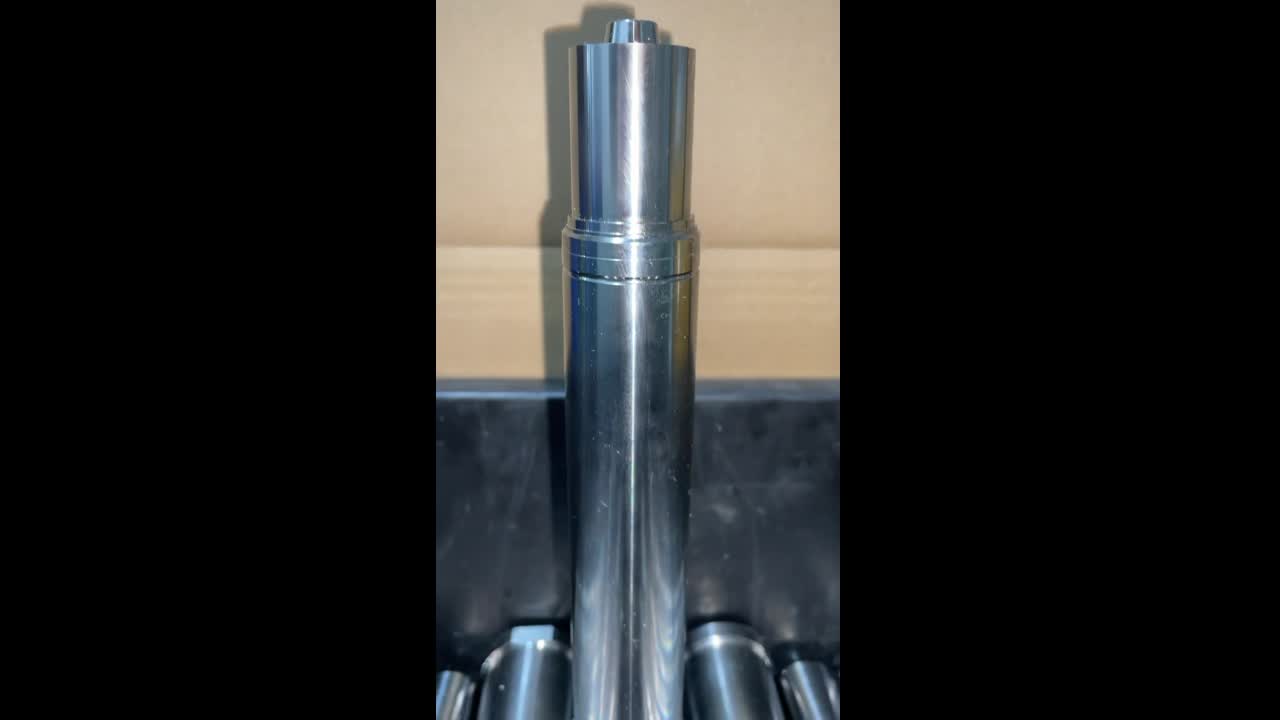
Challenge: A US-based Tier 1 automotive supplier was running a 32-cavity connector mold with 45-second cycle times. Hot spots on the core side caused sink marks and inconsistent dimensions, leading to a 4.2% reject rate.
Solution: We designed and manufactured a conformal cooling insert using a hybrid approach: the cooling channel geometry was built by SLM (Selective Laser Melting) in maraging steel (18Ni300), then CNC finish-machined to final dimensions (±0.01mm) and polished to Ra 0.4µm on the cavity surface.
Process: SLM printing (3 days) → stress relief (1 day) → CNC milling on Mazak 5-axis (2 days) → EDM detail features on Charmilles (1 day) → surface grinding (0.5 day) → polishing (1 day) → CMM inspection & FAI report (0.5 day)
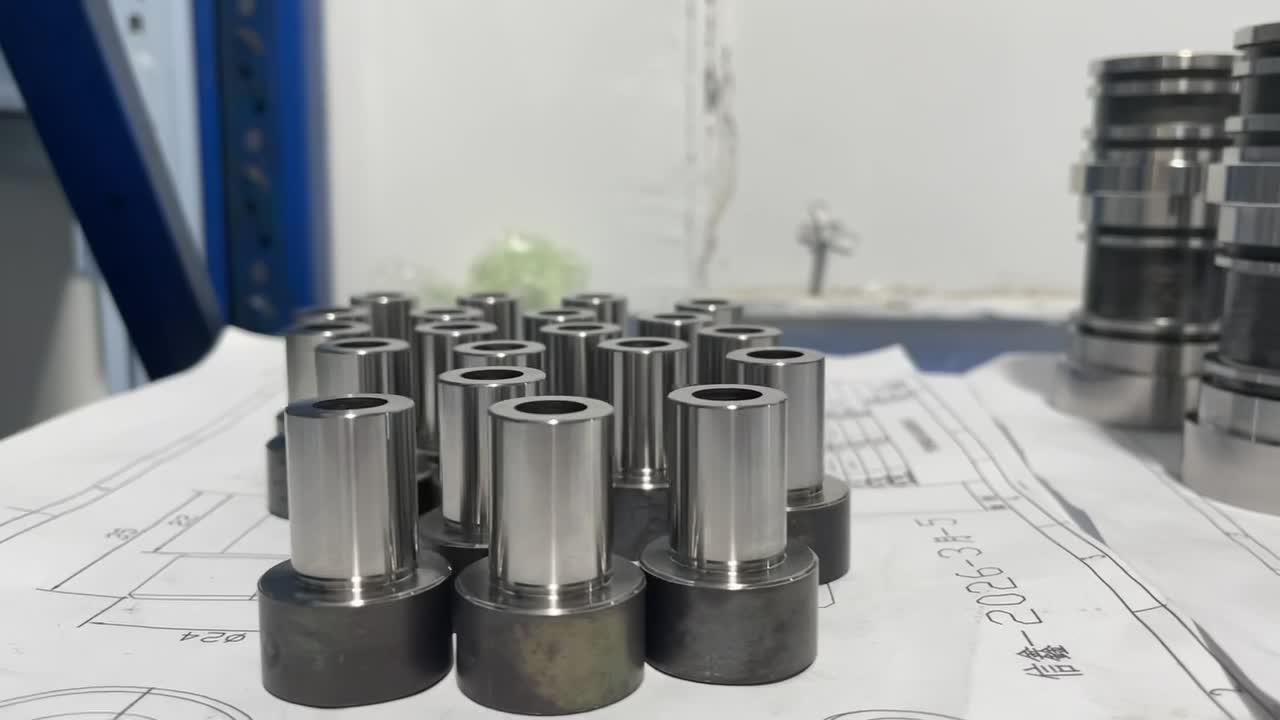
Challenge: An Indian injection mold manufacturer needed 2,000 custom sprue bushings per month in H13 tool steel with ±0.005mm tolerance on the bore diameter and Ra 0.2µm finish on the nozzle seat.
Solution: We programmed the TSUGAMI M08J-II Swiss-type lathe to produce the bushings in a single cycle — turning the OD profile, boring the melt channel, threading the mounting flange, and finish-boring the nozzle seat without removing the part from the machine.
Process: Bar stock loading → Swiss turning (complete in 4.5 minutes/piece) → vacuum heat treatment to HRC 48–52 → centerless grinding OD → CMM inspection → laser marking
Challenge: A cosmetics packaging company in Europe needed a 4-cavity mold for a perfume cap with intricate surface texturing, deep ribs (L/D ratio 8:1), and mirror-finish requirements (Ra 0.05µm) on the visible surface.
Solution: CNC rough-machined the S136 stainless steel cavity to within 0.3mm of final geometry, then used the Charmilles ROBOFORM 35 sinker EDM with copper-tungsten electrodes to achieve the final surface texture and deep rib details that milling cutters could not reach.
Process: CNC roughing (2 days) → electrode manufacture by wire EDM (1.5 days) → sinker EDM with 3 electrode stages: rough, semi-finish, finish (3 days) → manual polishing to mirror finish (2 days) → CMM + surface profilometer inspection
10. Frequently Asked Questions
11. Get a Free CNC Machining Quote
MouldNova (Ningbo Saiguang 3D Technology) operates a full-service CNC machining, EDM, and metal 3D printing facility in Yuyao, Ningbo — the center of China's mold and precision machining industry.
Our capabilities include:
- CNC milling: 3-axis, 4-axis, and 5-axis machining centers (Mazak, Haas)
- CNC turning: Standard lathes and TSUGAMI M08J-II Swiss-type lathe
- Wire EDM & Sinker EDM: Charmilles ROBOFORM 35 and Sodick wire EDM
- Metal 3D printing: SLM/LPBF for conformal cooling inserts and complex geometries
- Surface finishing: Polishing, grinding, heat treatment, plating (through verified local partners)
- Quality: CMM inspection, FAI reports, material traceability