Why Titanium CNC Machining Demands Specialized Expertise
Titanium is one of the most sought-after engineering metals in the world. Its exceptional strength-to-weight ratio, outstanding corrosion resistance, and biocompatibility make it indispensable across aerospace, medical, marine, and chemical processing industries. However, these same properties that make titanium so valuable also make it one of the most challenging metals to CNC machine.
At Ningbo Saiguang 3D Technology (MouldNova), we have invested years in developing specialized titanium CNC machining capabilities. Our facility in Yuyao, Ningbo combines advanced multi-axis CNC machining centers with metal 3D printing technology, giving us a unique hybrid manufacturing advantage for complex titanium components.
This page covers our titanium machining capabilities, the grades we work with, the engineering challenges we solve daily, and the industries we serve. Whether you need a single prototype or a production run of precision titanium parts, you will find the technical depth and manufacturing capacity here to support your project.
Titanium Grades We Machine
Not all titanium is the same. The grade you select determines the mechanical properties, machinability, cost, and suitability for your application. Here is a detailed breakdown of the titanium grades we regularly CNC machine.
Grade 2 — Commercially Pure (CP) Titanium
Grade 2 is the most widely used commercially pure titanium. It offers excellent corrosion resistance, good weldability, and moderate strength. With a tensile strength of approximately 345 MPa and elongation of 20%, it provides a good balance of formability and mechanical performance.
Grade 2 titanium is the go-to choice for chemical processing equipment, heat exchangers, marine hardware, and medical devices that do not require the higher strength of alloyed grades. It is also more machinable than Grade 5, which translates to lower per-part costs for components where extreme strength is not required.
Grade 5 — Ti-6Al-4V (The Workhorse Alloy)
Ti-6Al-4V is the most commonly used titanium alloy in the world, accounting for more than 50% of all titanium consumed globally. It contains 6% aluminum and 4% vanadium, which produce a two-phase alpha-beta microstructure that delivers an outstanding combination of properties.
With a tensile strength of 950 MPa, yield strength of 880 MPa, and density of only 4.43 g/cm3, Grade 5 titanium offers a specific strength (strength-to-weight ratio) that surpasses virtually all steels and aluminum alloys. This makes it the default material for aerospace structural components, jet engine parts, high-performance fasteners, and load-bearing medical implants.
Ti-6Al-4V is also the most challenging titanium grade to machine. Its low thermal conductivity (6.7 W/m-K compared to 167 W/m-K for aluminum) means that cutting heat concentrates at the tool tip rather than dissipating through the workpiece. This demands careful management of cutting speeds, feeds, and coolant delivery to prevent premature tool failure.
Grade 23 — Ti-6Al-4V ELI (Extra Low Interstitials)
Grade 23 is the medical-grade version of Ti-6Al-4V. The "ELI" designation means it has tighter controls on oxygen, nitrogen, carbon, and iron content. This produces superior fracture toughness, fatigue strength, and biocompatibility compared to standard Grade 5.
Grade 23 is the preferred material for orthopedic implants (hip joints, knee replacements, spinal fusion devices), dental implants, and surgical instruments. We machine Grade 23 with full material traceability and certification documentation to support medical device regulatory submissions.
Other Grades: Grade 1, Grade 7, Grade 9
We also machine Grade 1 (softest CP titanium, excellent formability), Grade 7 (palladium-enhanced corrosion resistance for chemical processing), and Grade 9 (Ti-3Al-2.5V, a lighter-duty alloy used in aerospace tubing and bicycle frames). Contact us with your specific grade requirement for a detailed capability assessment.
The Challenges of CNC Machining Titanium — And How We Solve Them
Titanium machining is fundamentally different from machining aluminum, steel, or even stainless steel. The material's unique physical and chemical properties create a set of interconnected challenges that require a systematic engineering approach to overcome.
Challenge 1: Extreme Heat Generation at the Cutting Edge
Titanium's thermal conductivity is roughly 1/4 that of steel and 1/25 that of aluminum. When a cutting tool engages titanium, the heat generated by plastic deformation and friction cannot escape through the workpiece. Instead, it concentrates at the tool-chip interface, where temperatures can exceed 1,000 degrees Celsius.
Our solution: We use high-pressure through-spindle coolant systems operating at 70-100 bar to deliver coolant directly to the cutting zone. This evacuates chips before they re-weld to the tool and provides the thermal management necessary to extend tool life. We also use climb milling strategies that allow the tool to exit the cut cleanly, reducing the time the cutting edge spends in contact with the heated material.
Challenge 2: Rapid Tool Wear and Tool Failure
Titanium is chemically reactive at elevated temperatures. Above approximately 500 degrees Celsius, it begins to react with the cobalt binder in carbide tools, causing diffusion wear and crater wear on the rake face. This chemical attack, combined with the abrasive nature of the alpha-phase microstructure, means that tool life in titanium is typically 1/5 to 1/10 of what you would achieve in mild steel.
Our solution: We exclusively use PVD-coated micro-grain carbide tools with AlTiN or TiAlN coatings optimized for titanium. These coatings provide a thermal barrier that reduces diffusion wear and increases tool life by 40-60%. We also track tool wear in real-time and replace tools on a predictive schedule rather than running them to failure, which prevents surface quality degradation and dimensional drift.
Challenge 3: Spring-Back and Vibration
Titanium has a modulus of elasticity of approximately 114 GPa — roughly half that of steel (200 GPa). This means titanium deflects more under cutting forces, then springs back after the tool passes. The result is dimensional inaccuracy, poor surface finish, and chatter vibration that can damage both the workpiece and the tool.
Our solution: We use rigid workholding setups with custom fixtures that support the workpiece close to the cutting zone. For thin-walled components, we program light radial depths of cut with multiple finish passes rather than aggressive material removal. Our CNC machines are equipped with high-rigidity spindles and vibration damping systems that minimize chatter at the cutting speeds required for titanium.
Challenge 4: Fire Risk and Safety
Titanium chips can ignite if cutting conditions generate excessive heat, particularly with fine chips and dry machining. A titanium chip fire is extremely difficult to extinguish with water (titanium reacts with water at high temperatures) and requires Class D fire extinguishing media.
Our solution: We never dry-machine titanium. All operations use flood coolant or high-pressure coolant. Our chip management systems evacuate chips continuously to prevent accumulation, and all titanium machining stations are equipped with appropriate fire suppression systems. Operator training on titanium-specific safety protocols is mandatory.
Our Titanium CNC Machining Capabilities
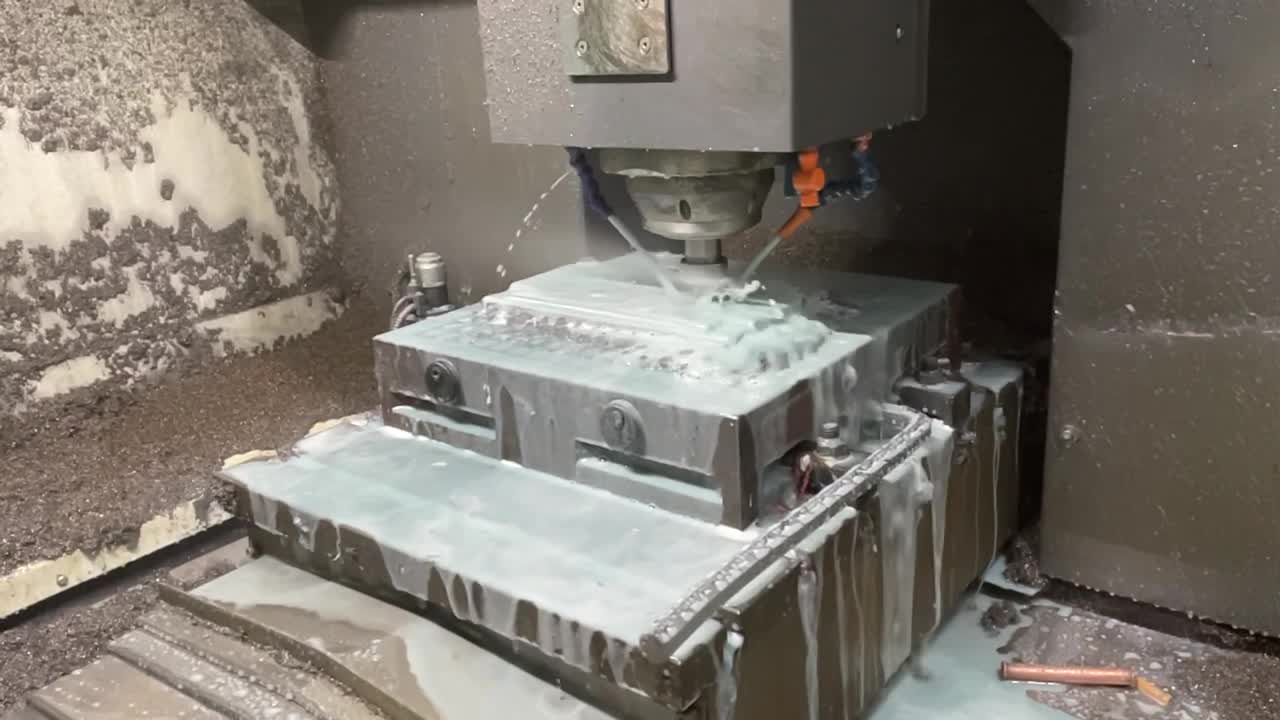
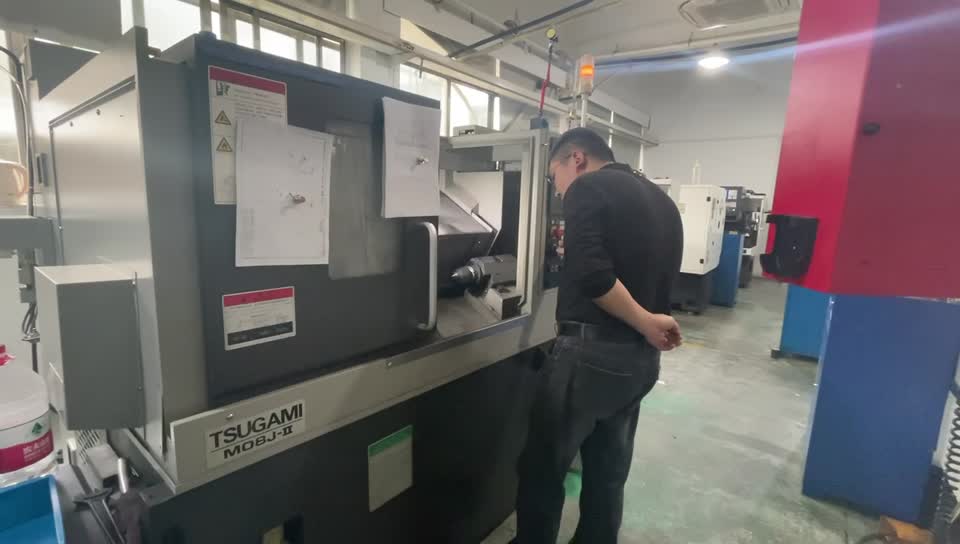
Our Yuyao facility is equipped for complete titanium part manufacturing, from raw billet to finished, inspected components ready for assembly.
Aerospace Applications for Titanium CNC Machining
The aerospace industry consumes more titanium than any other sector, driven by the relentless demand to reduce aircraft weight while maintaining structural integrity. Every kilogram saved in airframe weight translates to measurable fuel savings over the aircraft's service life.
We machine titanium components for aerospace applications including structural brackets and fittings, bulkhead frames and rib sections, engine mount brackets, landing gear components, fasteners (bolts, nuts, pins) to aerospace specifications, and hydraulic system fittings. Our titanium machining processes support the traceability and documentation requirements typical of aerospace supply chains, including material certificates, first article inspection reports, and dimensional inspection data packages.
Medical Applications for Titanium CNC Machining
Titanium's biocompatibility — its ability to integrate with human bone tissue (osseointegration) without causing adverse immune reactions — makes it irreplaceable in medical device manufacturing. The body does not recognize titanium as a foreign material, which means implants made from titanium can remain in the body for decades without degradation or rejection.
We machine titanium components for medical applications including orthopedic implants (hip stems, acetabular cups, tibial trays), spinal fusion cages and pedicle screws, dental implants and abutments, surgical instruments (forceps, retractors, bone saws), and trauma fixation plates and screws. For medical titanium machining, we use Grade 23 (Ti-6Al-4V ELI) with full material traceability from mill certification through to finished part inspection.
Case Study: Titanium Aerospace Bracket — 40% Weight Reduction
A European aerospace tier-2 supplier approached us to manufacture a structural mounting bracket that was previously machined from 17-4 PH stainless steel. The customer wanted to reduce component weight without sacrificing load-bearing capacity, as part of a program-wide weight reduction initiative for a commercial aircraft platform.
The Challenge
The original stainless steel bracket weighed 340 grams and required machining from a 2.1 kg billet — a buy-to-fly ratio of 6.2:1. The bracket had complex internal pockets, thin walls (1.2mm minimum), and tight positional tolerances on four mounting holes (true position within 0.05mm). The customer required the part in Ti-6Al-4V with identical dimensional specifications.
Our Approach
We proposed a hybrid manufacturing approach. Instead of machining from solid billet (which would have required a 1.8 kg titanium block and generated over 80% waste), we 3D printed a near-net-shape blank using selective laser melting (SLM) on our in-house metal 3D printer. The printed blank weighed only 280 grams, requiring only 75 grams of material removal during CNC finish machining.
The CNC machining program focused on critical interface surfaces: the four mounting holes, mating faces, and seal grooves. We used 5-axis simultaneous milling to access all features in a single setup, eliminating repositioning errors and reducing total machining time to 45 minutes per part.
Results
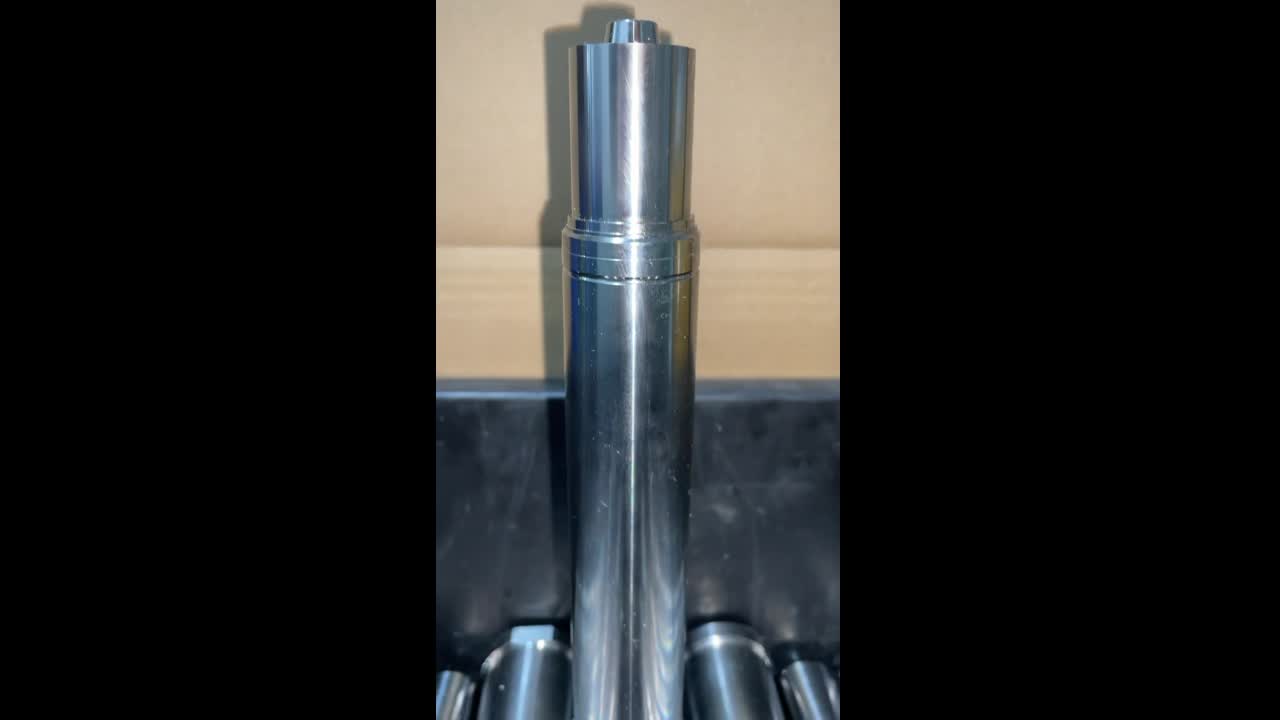
The finished titanium bracket weighed 205 grams — a 40% weight reduction versus the original stainless steel part. The buy-to-fly ratio improved from 6.2:1 to 1.37:1. All dimensional specifications were met on the first article, and the customer has since ordered production quantities of 200 units per quarter.
Titanium CNC Machining vs. 3D Printing: When to Use Each
As a company with both CNC machining and metal 3D printing capabilities in-house, we are uniquely positioned to advise on when each process — or a combination of both — delivers the best result for titanium parts.
CNC machining from billet is optimal when the part geometry is relatively simple (prismatic shapes, turned components), when you need the highest possible material properties (wrought titanium has superior fatigue life versus printed titanium), when surface finish requirements are stringent (Ra 0.4 µm or better), or when quantities are low enough that the cost of 3D printing setup is not justified.
3D printing + CNC finishing is optimal when the part has complex internal features (cooling channels, lattice structures, organic shapes), when the buy-to-fly ratio from billet machining exceeds 8:1, when lead time is critical (printing a near-net blank is faster than procuring large billet stock), or when weight optimization through topology optimization delivers meaningful performance gains.
3D printing only is rarely sufficient for precision titanium components. As-printed surface roughness (typically Ra 6-15 µm) and dimensional accuracy (±0.1mm) do not meet the requirements of most engineering applications. CNC machining of critical surfaces is almost always required as a finishing step.
Surface Finishing Options for Titanium Parts
After CNC machining, we offer a range of secondary finishing operations to meet your functional and aesthetic requirements.
As-machined finish delivers Ra 0.8 µm standard, suitable for most structural and functional applications. Fine-machined finish achieves Ra 0.4 µm using optimized finish passes with sharp, new tooling. Polished finish reaches Ra 0.2 µm or better through mechanical polishing, required for medical implants and high-fatigue aerospace components.
Anodizing (Type II and Type III) creates a controlled oxide layer that improves wear resistance and allows color coding for part identification. Passivation removes free iron contamination and enhances the natural oxide layer that gives titanium its corrosion resistance. Bead blasting produces a uniform matte texture that hides machining marks and provides a consistent aesthetic.
Quality Assurance and Material Traceability
Every titanium part we machine ships with complete documentation. This includes incoming material certification (mill test report verifying chemical composition and mechanical properties), in-process inspection records, final dimensional inspection report (CMM data for critical features), surface roughness measurements, and photographs of the finished part.
For aerospace and medical customers, we provide first article inspection (FAI) reports in AS9102 format, full material traceability from heat lot to finished part, and process documentation including tool lists, cutting parameters, and fixture drawings upon request.
Related Services
Our titanium CNC machining service integrates with our broader manufacturing capabilities. Explore our complete CNC and EDM machining services for mold and part manufacturing. Learn about our metal 3D printing service for complex titanium geometries and hybrid manufacturing. See how our conformal cooling inserts use 3D-printed titanium and tool steel to optimize injection mold performance. Contact us to discuss your titanium machining project.
Frequently Asked Questions About Titanium CNC Machining
What titanium grades can you CNC machine?
We machine all commercially available titanium grades including Grade 1 (CP), Grade 2 (CP), Grade 5 (Ti-6Al-4V), Grade 7, Grade 9, and Grade 23 (Ti-6Al-4V ELI). Ti-6Al-4V (Grade 5) is our most commonly machined titanium alloy, accounting for roughly 60% of titanium machining projects.
Why is titanium so difficult to CNC machine?
Titanium is challenging because of its low thermal conductivity (heat concentrates at the cutting edge), high chemical reactivity with tool materials at elevated temperatures, strong spring-back effect due to low modulus of elasticity, and work-hardening tendency. These factors cause rapid tool wear and require specialized cutting strategies, tooling, and coolant systems.
What tolerances can you achieve on titanium parts?
We routinely hold ±0.01mm (±0.0004 in.) on critical dimensions for titanium components. For ultra-precision applications such as medical implants and aerospace fittings, we can achieve ±0.005mm with additional process controls and in-process inspection.
How does titanium CNC machining cost compare to aluminum or steel?
Titanium machining typically costs 5-10x more than aluminum and 3-5x more than steel. This is due to higher raw material cost, slower cutting speeds (typically 30-60 m/min vs. 200+ m/min for aluminum), faster tool wear requiring more frequent tool changes, and the need for specialized tooling and coolant. However, titanium's superior strength-to-weight ratio often justifies the premium.
What surface finishes can you achieve on titanium?
We achieve Ra 0.8 µm as standard, Ra 0.4 µm with finish machining passes, and Ra 0.2 µm or better with polishing. We also offer anodizing (Type II and Type III), passivation, bead blasting, and PVD coating as secondary finish operations.
What industries use your titanium machining services?
Our titanium CNC machining services serve aerospace (structural brackets, engine components), medical (orthopedic implants, surgical instruments), marine (corrosion-resistant fittings), chemical processing (reactor vessels, heat exchangers), and motorsport (lightweight performance parts) industries.
What is your lead time for titanium CNC machined parts?
Prototype titanium parts typically ship in 7-12 business days. Production runs of 50-500 pieces usually require 15-25 business days depending on complexity. We maintain stock of common titanium grades (Grade 2, Grade 5) to minimize material procurement delays.
Can you combine 3D printing with titanium CNC machining?
Yes. We use metal 3D printing (SLM/DMLS) to produce near-net-shape titanium blanks, then CNC machine critical surfaces to final tolerance. This hybrid approach reduces material waste by up to 80% compared to machining from solid billet, significantly lowering cost for complex geometries while maintaining precision where it matters.