Medical device injection molding operates under constraints that no other industry segment combines simultaneously: optical clarity, dimensional tolerances of ±0.02–0.05 mm, biocompatibility-certified materials with narrow processing windows, and regulatory documentation that traces every variable from raw powder to finished part. Conventional straight-drilled cooling circuits cannot meet these demands reliably across production volumes because they create thermal gradients that drift over time and vary between cavities.
Conformal cooling — where channels are 3D-printed via SLM to follow the exact contour of the cavity surface — eliminates the root cause. This guide covers the specific medical device applications where conformal cooling has the highest impact, the material-specific cooling profiles that each resin demands, the documentation packages required for FDA and ISO compliance, and measured production data from three medical device programs.
1. Why Medical Devices Need Conformal Cooling
The core problem in medical device molding is not cycle time — it is process consistency. A conventional mold running polycarbonate diagnostic housings might hold tolerance for the first 500 shots after startup, then drift as thermal equilibrium shifts unevenly across the cavity. By shot 2,000, the hot-spot zones have accumulated enough differential shrinkage to push 5–10% of parts outside the ±0.05 mm specification. The molder compensates by extending cooling time, which brings cycle time from 28 seconds to 38 seconds — and scrap still runs at 5–8%.
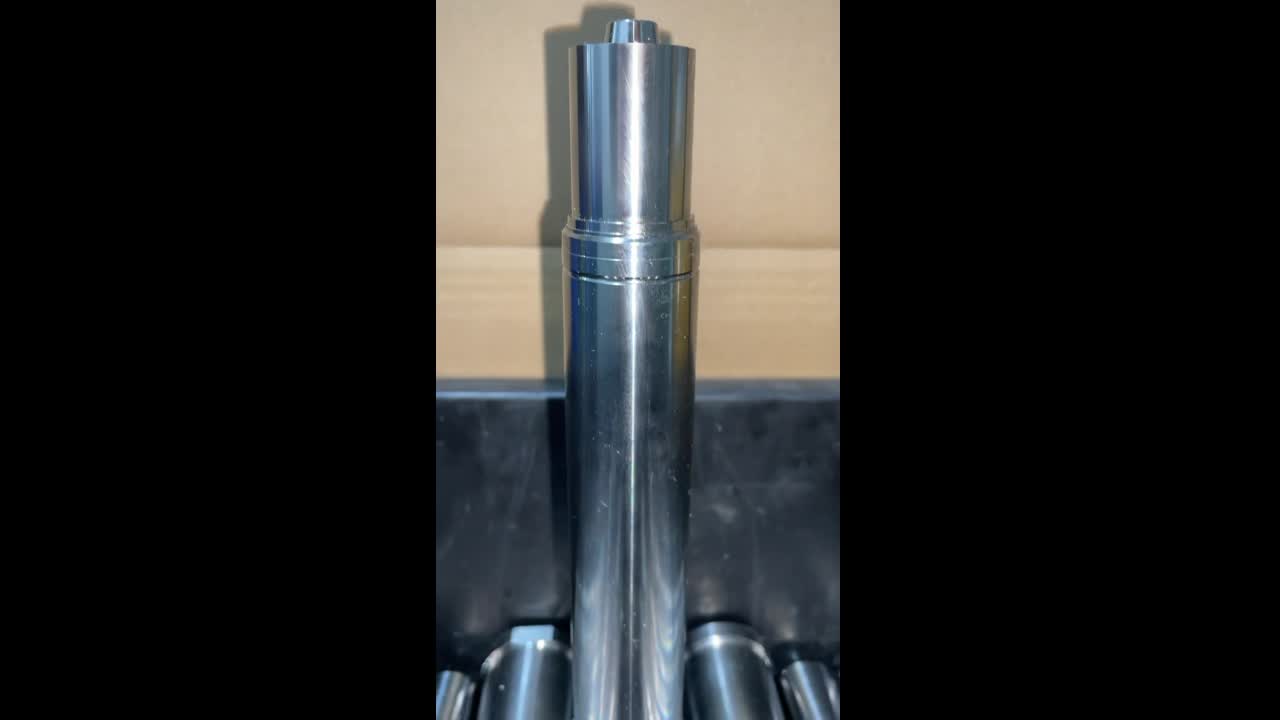
Conformal cooling changes this equation fundamentally:
- Uniform cavity surface temperature: Channels follow the part geometry at a consistent 8–12 mm distance from the cavity surface, reducing temperature variation from ±12–18°C (conventional) to ±2–4°C (conformal).
- Faster thermal equilibrium: The mold reaches steady-state temperature 60–70% faster at startup, reducing the number of scrap shots during warm-up from 50–100 to fewer than 10.
- Optical clarity preservation: For transparent PC and PMMA parts, uniform cooling eliminates the birefringence patterns caused by residual stress from uneven solidification. This is not a cosmetic issue — in diagnostic devices with optical windows, birefringence causes measurement errors.
- Dimensional stability across production runs: Because the thermal profile does not drift, Cpk values remain stable throughout the entire production run, not just during the first hour after process validation.
In conventional medical molds, 60–70% of cooling time is spent waiting for the hottest zone to reach ejection temperature — while the coldest zone has been ready for 8–12 seconds. Conformal cooling eliminates this waiting time by making all zones reach ejection temperature simultaneously.
Optical Clarity: The PC and PMMA Challenge
Transparent medical components — blood analysis chambers, diagnostic cartridge windows, IV drip chambers, and endoscope lens housings — require a level of optical consistency that conventional cooling rarely achieves at production volumes above 100k shots/year. The issue is birefringence: when polycarbonate or PMMA cools unevenly, molecular chains orient in the direction of thermal gradients, creating regions of differing refractive index visible as rainbow patterns under polarized light.
Conformal cooling reduces birefringence by 70–85% compared to conventional cooling because the thermal gradient across the part wall during solidification drops from 15–25°C to 3–6°C. For optical medical components, this is the difference between pass and fail at incoming quality inspection.
Dimensional Precision: Why ±0.02 mm Matters
Medical devices that interface with other components — syringe barrels with plunger seals, Luer lock connectors, diagnostic cartridges that dock into analyzers — require dimensional tolerances tighter than any other injection molding segment. At ±0.02–0.05 mm, there is zero margin for the warpage and differential shrinkage that conventional cooling creates in zones more than 30 mm from the nearest cooling line.
Conformal cooling channels can be placed within 4–8 mm of any cavity surface, regardless of geometry complexity. This proximity eliminates the "cooling dead zones" that exist in every conventionally-drilled mold and are the primary source of dimensional non-conformance in medical parts.
2. Syringe Barrels and IV Components — Uniform Wall Thickness Cooling
Syringe barrels present a deceptively simple geometry — a thin-walled cylinder — that is extremely difficult to cool conventionally. The core pin creates an annular cooling problem: the inside surface of the barrel is cooled by the core (which has limited internal channel diameter), while the outside surface is cooled by the cavity block. If the core and cavity cool at different rates, the barrel warps into an oval cross-section, the plunger seal fails leak testing, and the part is scrapped.
Conventional core cooling uses a single baffle or bubbler inside the core pin, creating a temperature gradient along the barrel length of 8–15°C. Conformal cooling replaces this with a helical channel that follows the core pin contour, reducing the gradient to 2–4°C and holding concentricity within ±0.015 mm — half the tolerance budget.
The same principle applies to IV drip chambers, blood collection tubes, and any cylindrical medical component where wall thickness uniformity determines functional performance. Key outcomes with conformal cooling on syringe-type geometries:
- Ovality reduction: From 0.06–0.10 mm (conventional) to 0.01–0.025 mm (conformal)
- Cycle time: 25–35% reduction, primarily from eliminating the extended cooling hold needed to compensate for core-cavity temperature imbalance
- Startup scrap: Reduced from 80–120 shots to 5–15 shots due to faster thermal equilibrium
- Leak test pass rate: Improved from 92–95% to 99.2–99.6% by eliminating warpage-induced seal failures
IV Component Manifolds
Multi-port IV manifolds with Luer lock connections present compound cooling challenges: multiple thin-wall cylindrical features at different orientations, connected by a central body with varying wall thickness. Conventional cooling can reach the central body but cannot effectively cool the individual port cylinders, which are typically 6–8 mm OD with 0.8–1.0 mm wall thickness.
Conformal cooling channels are designed to wrap around each port individually while maintaining balanced flow rates across all channels. The result is uniform solidification across all features simultaneously, eliminating the sequential cooling pattern (center cools first, ports cool last) that causes warpage and dimensional variation between ports.
3. Diagnostic Housings — Thin-Wall Precision with Zero Sink Marks
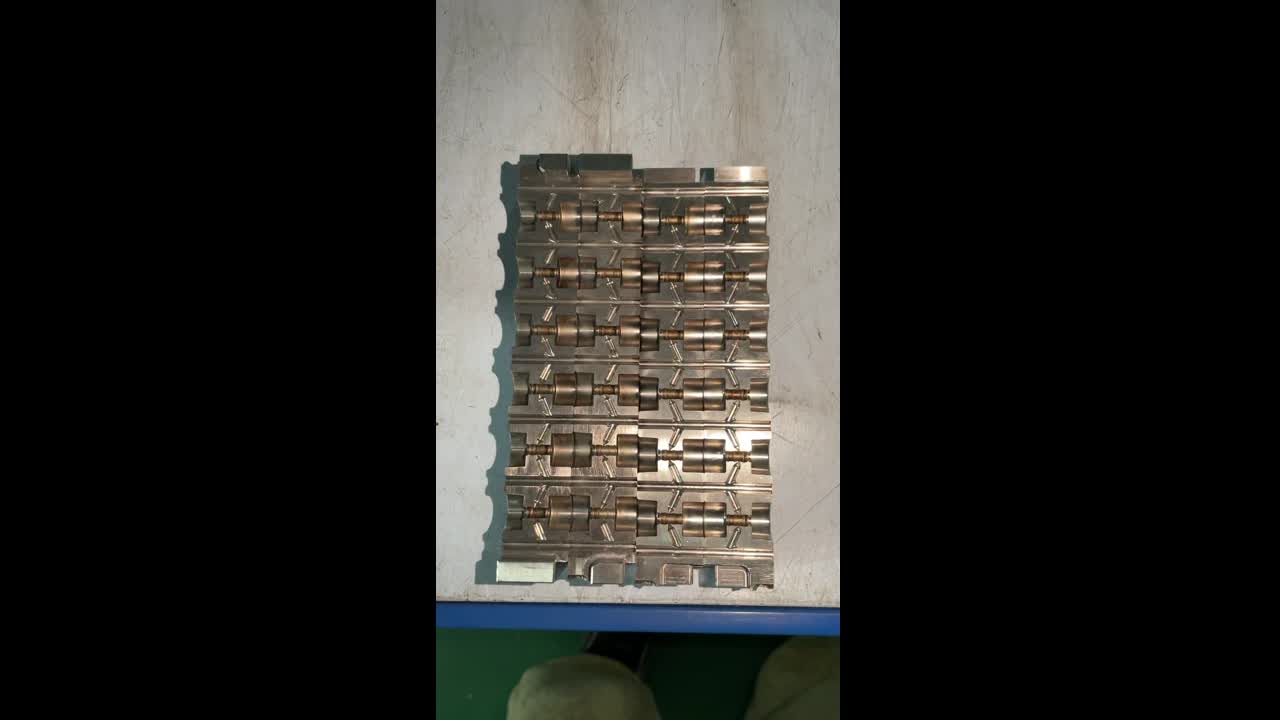
Diagnostic device housings — point-of-care test cartridges, blood glucose meter enclosures, lateral flow assay cassettes — combine thin walls (0.8–1.5 mm) with internal features (snap fits, alignment ribs, fluid channels) that create local thick sections. These thick sections are where sink marks form: the surface solidifies first, then the interior shrinks as it cools, pulling the surface inward and creating a visible depression.
In consumer products, minor sink marks are acceptable. In medical diagnostics, they are not — for two reasons:
- Optical interference: Many diagnostic housings include transparent windows or light paths where surface irregularities scatter light and affect measurement accuracy.
- Sealing surface integrity: Housings that contain fluid channels or reagent chambers require flat sealing surfaces. A sink mark on a sealing face creates a leak path.
Conformal cooling addresses sink marks at the source by placing channels directly adjacent to the thick sections — the rib bases, boss roots, and snap-fit features where conventional cooling cannot reach. By extracting heat from these zones at the same rate as the surrounding thin wall, the differential shrinkage that causes sink marks is eliminated.
Thin-Wall Challenges: 0.8 mm and Below
As diagnostic devices miniaturize, wall thicknesses of 0.6–0.8 mm are increasingly common. At these thicknesses, the polymer freezes extremely fast — often within 1–2 seconds of injection. The challenge shifts from "how to cool fast enough" to "how to cool uniformly enough" because any temperature gradient across the cavity surface creates differential freeze-off timing, which causes internal stress, warpage, and short shots.
Conformal channels placed 3–5 mm from the cavity surface (versus 15–25 mm with conventional drilling) provide the thermal uniformity required. The improvement in fill consistency at thin walls directly reduces short-shot scrap from 3–5% to below 0.5%.
4. Surgical Instrument Handles — Complex Ergonomic Geometry
Surgical instrument handles represent the most geometrically complex medical device molding challenge for cooling design. These parts combine: ergonomic contours with compound curvature, overmolded soft-touch grip zones, internal cavities for mechanism housings, and wall thickness transitions from 1.5 mm (finger grip areas) to 6–8 mm (palm swell and tool head connection).
Conventional cooling for these parts is a compromise at best. Drilled lines can follow straight paths through the mold block, but the ergonomic contour of the handle curves in three dimensions. The result: some zones are 8 mm from the nearest cooling line, while others are 35 mm away. The thick palm-swell section may require 45–60 seconds of cooling time, while the thin finger-grip section is ready to eject in 12 seconds.
Conformal cooling channels follow the compound curvature of the handle, maintaining 6–10 mm distance from the cavity surface throughout. In the thick palm-swell zone, channels are spaced more densely (8 mm pitch) to extract the additional thermal mass. In thin finger-grip areas, channels are wider-spaced (14 mm pitch) to prevent over-cooling. The result: all zones reach ejection temperature within a 2–3 second window, versus the 30–45 second spread with conventional cooling.
Key results for surgical handle applications:
- Cycle time reduction: 20–30%, primarily from eliminating the extended hold for thick sections
- Warpage: Reduced from 0.3–0.5 mm total deviation to 0.05–0.12 mm
- Sink marks on grip surfaces: Eliminated — critical for ergonomic comfort and sterilization surface integrity
- Internal stress: Reduced by 60–75%, improving resistance to stress cracking during autoclave sterilization cycles
Overmolding Considerations
Many surgical handles use a two-shot or overmolding process: a rigid substrate (PC, PSU, or PEEK) followed by a soft-touch elastomer (TPE or silicone) grip. Conformal cooling is critical in the first shot because any warpage or residual stress in the substrate transfers to the overmold interface, causing delamination during autoclave cycling at 134°C. By delivering a stress-free, dimensionally precise substrate from the first shot, conformal cooling eliminates the most common overmold failure mode in surgical instruments.
5. Material Considerations: PC, PMMA, PEEK, and PSU
Each medical-grade polymer has a specific thermal profile that dictates how conformal cooling channels must be designed. Using the wrong cooling rate or temperature differential for a given material produces parts that pass dimensional inspection but fail in service — through stress cracking, chemical attack susceptibility, or loss of mechanical properties. The table below summarizes the critical cooling parameters for the four most common medical device resins.
| Material | Mold Temp (°C) | Max ΔT Across Cavity | Cooling Rate Sensitivity | Primary Risk if Cooling Is Non-Uniform |
|---|---|---|---|---|
| Polycarbonate (PC) | 80–120 | ±3°C | Very High | Birefringence, residual stress cracking, loss of optical clarity |
| PMMA (Acrylic) | 60–90 | ±2°C | Extreme | Internal stress crazing, surface haze, crack propagation under chemical exposure |
| PEEK | 170–200 | ±5°C | High | Insufficient crystallinity (<30%), reduced chemical resistance, lower mechanical strength |
| PSU / PPSU | 140–160 | ±4°C | High | Residual stress, warpage, susceptibility to environmental stress cracking during sterilization |
Polycarbonate (PC) — The Optical Clarity Challenge
PC is the most widely used transparent medical-grade polymer — blood analysis chambers, IV connectors with visual flow indicators, and device housings requiring impact resistance. Its processing window for optical-grade results is narrow: mold temperature must be maintained at 90–120°C with cavity surface variation below ±3°C. Cooling must be slow enough to prevent frozen-in molecular orientation but fast enough to maintain cycle economics.
Conformal cooling achieves this by running higher-temperature coolant (oil at 90–110°C rather than water at 25–40°C) through channels positioned at a precisely calculated distance from the cavity surface. The uniform channel-to-surface distance ensures that the cooling rate is identical at every point on the part surface, which is the single most important factor in achieving consistent optical clarity.
PMMA — Zero Tolerance for Thermal Stress
PMMA is more sensitive to cooling non-uniformity than any other medical plastic. Internal stresses from uneven cooling manifest as crazing — microscopic cracks that propagate when the part is exposed to solvents or cleaning agents used in medical environments. A PMMA part that passes all inspections at the molding facility can fail catastrophically after 30 days of exposure to isopropyl alcohol in a hospital setting — if residual stress from non-uniform cooling exceeds the material's environmental stress crack resistance threshold.
Conformal cooling reduces PMMA internal stress by 70–85% compared to conventional cooling, measured by the photoelastic fringe count method. This margin is not optional — it is the difference between a product that survives 5 years of clinical use and one that fails within months.
PEEK — Crystallinity Control at 170–200°C
PEEK is unique among medical polymers because its mechanical and chemical performance depends on achieving a minimum crystallinity level (typically 30–35%) during solidification. Crystallinity is controlled by cooling rate: too fast, and the polymer solidifies in an amorphous state with inferior properties; too slow, and the cycle becomes uneconomical. The required mold temperature of 170–200°C means conventional water cooling is not possible — oil-based thermal management is mandatory.
Conformal cooling channels designed for PEEK use oil at 170–190°C and are positioned to provide a controlled, uniform cooling rate of 2–4°C/second across the entire part. The uniform rate ensures consistent crystallinity throughout the wall thickness, eliminating the skin-core crystallinity gradient that weakens conventionally-cooled PEEK parts.
PSU / PPSU — Sterilization-Ready Stress Management
Polysulfone and polyphenylsulfone are chosen for reusable medical devices that must withstand >1,000 autoclave cycles at 134°C. Residual stress from non-uniform cooling is the primary failure mechanism: each autoclave cycle acts as an annealing step that relaxes stress differentially, causing progressive warpage and eventual cracking at stress concentration points.
Conformal cooling produces PSU/PPSU parts with residual stress levels 60–70% lower than conventional cooling, extending autoclave life from a typical 800–1,200 cycles to >2,000 cycles. For reusable surgical instruments priced at $150–$500 each, this extended service life represents significant lifetime value.
6. Quality Documentation — FDA 21 CFR, ISO 13485, Material Certs, and FAIR
The most common question medical device manufacturers ask about conformal cooling inserts is not about performance — it is about documentation. Can a 3D-printed metal insert be qualified and documented to the same standard as a conventionally-machined tool steel insert? The answer is yes, and in several important respects the documentation for SLM-manufactured inserts is more comprehensive than for conventional inserts.
1. Material Certificate (per heat lot): Chemical composition, mechanical properties (tensile, yield, hardness, elongation), density measurement, powder particle size distribution. Material: MS1 maraging steel (1.2709) or 316L stainless steel per ASTM F3184.
2. SLM Process Record: Machine serial number, build plate ID, laser parameters (power, speed, hatch spacing, layer thickness), build atmosphere (argon purity), in-process monitoring data.
3. Post-Processing Record: Heat treatment profile (time-temperature curve), stress relief parameters, machining operations log, surface finish measurements.
4. First Article Inspection Report (FAIR): Full dimensional CMM report per AS9102 or customer-specified format, surface roughness (Ra) measurements, hardness verification (HRC), visual inspection per acceptance criteria.
5. Cooling Performance Verification: Moldflow thermal simulation results (before/after comparison), flow rate and pressure drop measurements for each cooling circuit, thermal imaging of cavity surface at steady-state operation.
FDA 21 CFR Part 820 Compatibility
FDA 21 CFR Part 820 (Quality System Regulation) requires that all production equipment — including molds and mold components — be validated, documented, and controlled under a quality management system. Conformal cooling inserts fit within this framework through:
- Design controls (820.30): Design input (cooling performance requirements), design output (channel geometry and simulation results), design verification (CMM inspection), design validation (production trial data).
- Production and process controls (820.70): SLM process parameters documented as controlled manufacturing instructions, validated through IQ/OQ/PQ protocol.
- Equipment (820.72): Insert identified with unique serial number, maintenance schedule documented, replacement criteria defined.
- Records (820.184): Device History Record includes insert identification, material certificate reference, dimensional inspection reference, and installation date.
ISO 13485:2016 Alignment
For manufacturers operating under ISO 13485, conformal cooling inserts are documented as "production equipment affecting product quality" under Clause 7.5.1. MouldNova provides documentation in formats compatible with standard ISO 13485 QMS templates, including:
- Supplier qualification records (Clause 7.4.1)
- Purchasing data with full material and process specifications (Clause 7.4.2)
- Verification of purchased product with dimensional and material test reports (Clause 7.4.3)
- Traceability records linking insert serial number to material heat lot, build batch, and inspection records (Clause 7.5.9)
Material Certifications for Patient-Contact Consideration
While the conformal cooling insert itself does not contact the patient or the drug product, the mold surface formed by the insert does contact the polymer melt. For this reason, medical device manufacturers may require confirmation that the insert material does not leach contaminants into the molded part. MouldNova provides:
- Material composition certificate confirming compliance with applicable standards (ASTM F3184 for additively manufactured maraging steel)
- Surface finish verification (Ra ≤ 0.4 μm on cavity-forming surfaces after polishing)
- Corrosion resistance data for 316L stainless steel inserts used in applications requiring enhanced chemical resistance
7. Case Data — Three Medical Device Projects with Measured Results
The following three case examples present measured production data from medical device programs where conformal cooling inserts replaced conventional cooling circuits. All data was collected over a minimum of 30 production days after process validation.
Part: PC (Makrolon 2458) diagnostic cartridge housing, 1.2 mm wall, optical window zone requiring <5 nm/cm birefringence
Previous cooling: Conventional drilled circuits, 42 s cycle, 8.2% scrap (birefringence + dimensional failures)
Conformal cooling result: 28 s cycle, 0.9% scrap
Cycle time reduction: 33.3%
Scrap reduction: 8.2% → 0.9% (7.3 percentage points)
Annual volume: 320,000 shots/year (1.28M parts)
Part value: $4.20/part
Annual throughput savings (Term A): 33.3% × 5,500 hr × $95/hr = $174,023
Annual quality savings (Term B): 7.3% × 1,280,000 parts × $4.20 = $392,448
Insert set cost: $3,600 (4 cavity inserts + 4 core inserts)
Part: PMMA (Plexiglas 8N) 3 mL syringe barrel, 0.9 mm wall, concentricity ±0.025 mm
Previous cooling: Conventional baffle-cooled core pins, 35 s cycle, 6.5% scrap (ovality + stress crazing at solvent exposure test)
Conformal cooling result: 24 s cycle, 1.1% scrap
Cycle time reduction: 31.4%
Scrap reduction: 6.5% → 1.1% (5.4 percentage points)
Annual volume: 580,000 shots/year (9.28M parts)
Part value: $0.85/part
Annual throughput savings (Term A): 31.4% × 6,200 hr × $75/hr = $146,010
Annual quality savings (Term B): 5.4% × 9,280,000 parts × $0.85 = $425,952
Insert set cost: $4,200 (16 conformal core pins + 16 cavity inserts)
Part: PSU (Udel P-1700) laparoscopic instrument handle, 2–7 mm variable wall, overmolded TPE grip
Previous cooling: Conventional drilled circuits with extended 55 s cooling hold for thick palm section, 62 s total cycle, 7.8% scrap (warpage + sink marks + autoclave stress cracking at 600 cycles)
Conformal cooling result: 41 s cycle, 1.4% scrap, autoclave life extended to >2,000 cycles
Cycle time reduction: 33.9%
Scrap reduction: 7.8% → 1.4% (6.4 percentage points)
Annual volume: 45,000 shots/year (90,000 parts)
Part value: $12.50/part (substrate only, excluding overmold)
Annual throughput savings (Term A): 33.9% × 4,800 hr × $110/hr = $179,064
Annual quality savings (Term B): 6.4% × 90,000 parts × $12.50 = $72,000
Insert set cost: $2,800 (2 cavity inserts + 2 core inserts)
Summary of Three Cases
| Metric | Case 1: PC Diagnostic Housing | Case 2: PMMA Syringe Barrel | Case 3: PSU Surgical Handle |
|---|---|---|---|
| Material | PC (Makrolon 2458) | PMMA (Plexiglas 8N) | PSU (Udel P-1700) |
| Cavities | 4 | 16 | 2 |
| Cycle time reduction | 33.3% | 31.4% | 33.9% |
| Scrap before → after | 8.2% → 0.9% | 6.5% → 1.1% | 7.8% → 1.4% |
| Annual savings | $566,471 | $571,962 | $251,064 |
| Insert cost | $3,600 | $4,200 | $2,800 |
| Payback | 2.3 days | 2.7 days | 4.1 days |
In all three cases, the quality savings (Term B) exceeded the throughput savings (Term A). This is characteristic of medical device programs: high part value and tight scrap tolerances make the scrap elimination value of conformal cooling the dominant financial driver — even more important than the cycle time reduction.
8. FAQ
Medical devices demand tolerances of ±0.02–0.05 mm, optical clarity in PC and PMMA parts, and zero cosmetic defects — requirements that conventional straight-drilled cooling lines cannot reliably achieve. Conformal cooling channels follow the part geometry at a uniform distance, eliminating hot spots that cause warpage, sink marks, and residual stress-induced birefringence. For FDA-regulated devices, process consistency across the full production run is as important as individual part quality: conformal cooling reduces cavity-to-cavity temperature variation from ±12–18°C to ±2–4°C, which directly supports process validation under 21 CFR 820.
Yes. Conformal cooling inserts manufactured via SLM from certified metal powders — typically MS1 maraging steel or 316L stainless steel — can be fully documented with material certificates (heat-specific), mechanical test reports, First Article Inspection Reports (FAIR), and dimensional CMM data. MouldNova provides complete documentation packages compatible with FDA 21 CFR Part 820, ISO 13485:2016 quality management systems, and customer-specific validation protocols including IQ/OQ/PQ support data.
Medical device parts typically see 25–40% cycle time reduction with conformal cooling. Thin-wall diagnostic housings (0.8–1.2 mm wall) achieve 30–40% reduction because conventional cooling cannot get close enough to the cavity surface. Syringe barrels and IV components with uniform wall thickness achieve 25–35% reduction. Thick-walled surgical instrument handles with complex ergonomic geometry achieve 20–30% reduction. The exact improvement depends on wall thickness distribution, material, and the baseline cooling circuit design.
All medical-grade plastics benefit, but the highest-impact materials are: Polycarbonate (PC) — requires slow, uniform cooling to prevent birefringence and maintain optical clarity; PMMA — extremely sensitive to thermal gradients that cause internal stress crazing; PEEK — requires mold temperatures of 170–200°C with precise thermal control to achieve proper crystallinity; and PSU/PPSU — needs sustained high mold temperature (140–160°C) with uniform distribution to prevent residual stress. Each of these materials has a narrow processing window that conformal cooling keeps consistently centered.
Medical device molding with conventional cooling typically runs 5–10% scrap driven by dimensional out-of-tolerance, sink marks, warpage, and optical defects. Conformal cooling reduces cavity surface temperature variation from ±12–18°C to ±2–4°C, which eliminates the root cause of these defects. Documented results show scrap reduction from 8.2% to 0.9% for PC diagnostic housings, from 6.5% to 1.1% for PMMA syringe barrels, and from 7.8% to 1.4% for PSU surgical instrument handles. For high-value medical parts worth $2–$15 each, scrap reduction alone often justifies the insert investment within 2–6 weeks.
Related Pages
- Conformal Cooling Benefits — Five Benefit Categories with a 3-Year Factory Model
- Conformal Cooling ROI — Payback Period, Annual Savings & 5-Year NPV Calculator
- Conformal Cooling vs Conventional Cooling — Side-by-Side with 13 Real Projects
- Conformal Cooling Inserts — Service Details & Specifications
- Case Studies — Full Production Data from Real Programs