1. Direct Answer: No, Injection Molding Is Not Additive Manufacturing
No, injection molding is not additive manufacturing. Injection molding is a formative manufacturing process — it shapes material by forcing molten plastic or metal into a pre-made mold cavity. Additive manufacturing (3D printing) builds objects by depositing material layer by layer. They are fundamentally different processes. However, they increasingly work together: 3D-printed conformal cooling inserts go inside injection molds, combining the geometric freedom of additive manufacturing with the mass production capability of injection molding.
This question comes up frequently, and the confusion is understandable. Both processes involve creating physical objects from digital designs, and the manufacturing industry increasingly uses them alongside each other. But they belong to different categories of manufacturing entirely.
To understand why, let's define each process clearly, compare them side by side, and then explore the powerful ways they complement each other — particularly through conformal cooling technology.
2. What Is Additive Manufacturing?
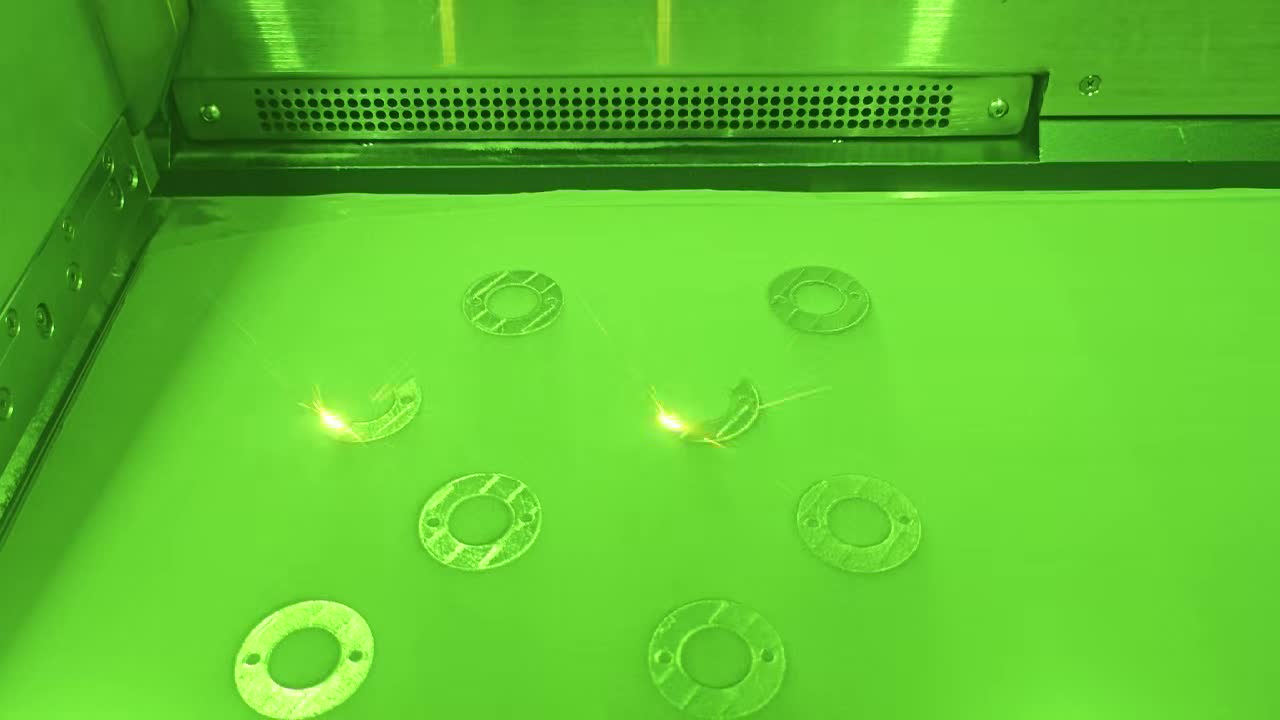
Additive manufacturing (AM) is the formal, industry-standard term for what most people call 3D printing. The defining characteristic is simple: material is added layer by layer to build up a three-dimensional object from a digital file. Nothing is removed or reshaped — material goes from raw form (powder, filament, resin, or wire) to finished geometry through successive layers of deposition and solidification.
The ISO/ASTM 52900 standard defines additive manufacturing as "the process of joining materials to make parts from 3D model data, usually layer upon layer, as opposed to subtractive manufacturing and formative manufacturing methodologies."
Common additive manufacturing processes include:
- Laser Powder Bed Fusion (LPBF/SLM) — A laser melts metal powder layer by layer. Used for tool steel, stainless steel, titanium, and aluminum parts. This is the process behind 3D-printed conformal cooling inserts.
- Fused Deposition Modeling (FDM) — Thermoplastic filament is extruded through a heated nozzle. The most common desktop 3D printing technology.
- Stereolithography (SLA/DLP) — UV light cures liquid photopolymer resin layer by layer. Produces high-detail plastic parts.
- Binder Jetting — A liquid binder is jetted onto powder (metal or sand) to form each layer, followed by sintering for metal parts.
The key point: in every additive manufacturing process, the part is built up from nothing. There is no mold, no die, and no block of material being cut away.
3. What Is Injection Molding?
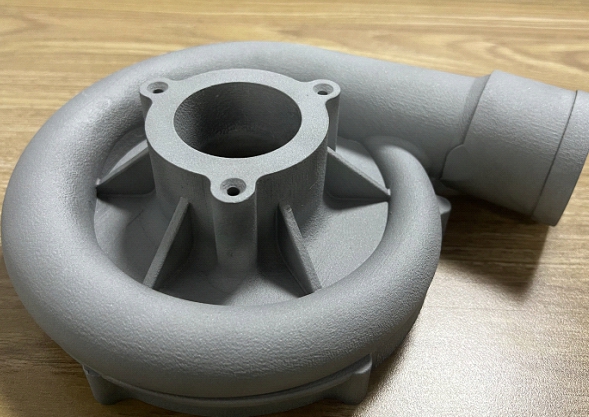
Injection molding is a formative manufacturing process in which molten material — most commonly thermoplastic polymer, but also metals, glass, and elastomers — is injected under high pressure into a closed mold cavity. The material fills the cavity, cools, solidifies, and is ejected as a finished part. The mold is then closed and the cycle repeats.
Here is the basic sequence:
- Clamping — The two halves of the mold are clamped shut under tonnage (typically 50 to 4,000+ tons of force).
- Injection — Molten plastic at 200–350°C is injected into the cavity through a nozzle, runner system, and gate at pressures of 500–1,500 bar.
- Cooling — The plastic cools and solidifies inside the mold. This is the longest phase of the cycle — typically 50–80% of total cycle time.
- Ejection — Ejector pins push the solidified part out of the mold. The mold closes and the next cycle begins.
A single injection mold can produce millions of identical parts. Cycle times range from a few seconds for thin-walled packaging to 60+ seconds for thick automotive components. The per-part cost at high volumes is extremely low — often pennies per piece.
The critical distinction: injection molding requires a pre-made tool (the mold) to shape the material. The material is not added layer by layer — it is forced into an existing cavity and takes its shape. This makes injection molding a formative process, not an additive one.
4. Key Differences: Additive Manufacturing vs. Injection Molding
The following table summarizes the fundamental differences between these two manufacturing approaches. Understanding these differences makes it clear why injection molding is not additive manufacturing — and also reveals where each process excels.
| Factor | Additive Manufacturing (3D Printing) | Injection Molding |
|---|---|---|
| Process Type | Additive — material added layer by layer | Formative — material shaped inside a mold |
| Tooling Required | None — prints directly from CAD file | Yes — mold required ($5,000–$500,000+) |
| Speed per Part | Minutes to hours per part | Seconds per part (after mold is made) |
| Cost at Low Volume (1–100) | Low — no tooling investment | Very high — mold cost dominates |
| Cost at High Volume (100,000+) | Very high — per-part cost stays flat | Very low — pennies per part |
| Geometry Complexity | Nearly unlimited — internal channels, lattices, undercuts | Limited by mold design — no true internal channels |
| Materials | Plastics, metals, ceramics, composites | Primarily thermoplastics; also metals (MIM), elastomers |
| Surface Finish | Moderate — layer lines visible; post-processing often needed | Excellent — mirror finish achievable directly from mold |
| Repeatability | Good — but variation between machines/builds | Excellent — identical parts cycle after cycle |
| Ideal Volume Range | 1 to 500 parts | 500 to millions of parts |
The fundamental difference: additive manufacturing excels at complexity and low volumes without tooling. Injection molding excels at speed, consistency, and cost per part at high volumes. They are not competitors — they serve different production needs, and the smartest manufacturers use both.
5. Where They Overlap: Conformal Cooling Inserts
While injection molding and additive manufacturing are distinct processes, there is one area where they converge in a commercially significant way: 3D-printed conformal cooling inserts. This is the most important intersection of additive manufacturing and injection molding in industrial practice today.
The Problem with Conventional Mold Cooling
Every injection mold needs cooling channels to remove heat from the molten plastic. Conventionally, these channels are created by gun-drilling straight holes through the mold steel. The problem is obvious: straight-line channels cannot follow curved part surfaces. Areas far from the cooling channels cool slowly, creating hot spots that cause warpage, sink marks, and extended cycle times.
The Conformal Cooling Solution
Conformal cooling uses metal 3D printing (additive manufacturing) to create mold inserts with cooling channels that follow the exact contour of the mold cavity. The channels maintain a uniform distance from the part surface throughout, delivering consistent, even cooling across the entire part geometry.
At MouldNova, we manufacture conformal cooling inserts using Laser Powder Bed Fusion (LPBF) in tool steel (MS1 maraging steel, H13) and stainless steel. The process works like this:
- Design — We analyze your part geometry and mold design, then engineer optimal conformal channel layouts using thermal simulation software.
- 3D Print — The insert is printed layer by layer in tool steel on industrial SLM machines, building the internal cooling channels as integral features.
- Post-Process — Heat treatment brings the insert to 50–54 HRC hardness. Critical surfaces are CNC machined to final tolerance.
- Install — The finished insert drops into your existing mold base, replacing the conventional insert. No mold redesign required.
Conformal cooling inserts deliver uniform cooling that eliminates hot spots. Real-world results consistently show 20–40% cycle time reductions, significant warpage reduction, and fewer rejected parts. For a high-volume mold running 24/7, this translates directly to higher output and lower cost per part. Learn more about the economics in our conformal cooling cost analysis.
This is the perfect example of additive manufacturing and injection molding working together rather than competing. The 3D-printed insert (additive manufacturing) goes inside the injection mold (formative manufacturing), and the combination produces results neither process could achieve alone. For a deep dive into this technology, see our complete guide: Conformal Cooling Inserts — How 3D-Printed Tool Steel Cuts Cycle Times.
6. Other Ways Additive Manufacturing Supports Injection Molding
Conformal cooling inserts are the highest-value application, but additive manufacturing supports injection molding in several other ways:
Metal 3D printing can produce functional prototype mold inserts in days rather than the weeks required for conventional machining. This allows molders to test part designs in actual production-grade thermoplastic before committing to expensive production tooling. The prototype inserts typically last hundreds to thousands of shots — enough for design validation and initial testing. Learn more in our rapid tooling guide.
Beyond cooling channels, additive manufacturing enables mold features that are impossible or prohibitively expensive to machine: micro-textured surfaces, integrated venting channels that prevent gas traps, and thin-walled core pins with internal cooling. These features improve part quality and reduce defects. See our full overview of metal 3D printing for injection molds.
Before investing $50,000 to $500,000 in an injection mold, designers can 3D print prototype parts in similar materials to validate form, fit, and function. Plastic AM processes (SLA, SLS, MJF) produce parts that closely approximate injection-molded properties, allowing design iteration without any tooling cost. Once the design is finalized, the mold is cut with confidence.
When a new product needs to reach market before the production mold is ready, 3D printing can produce the first hundreds or thousands of parts to fulfill initial orders. This "bridge production" strategy is increasingly common in consumer electronics and medical device launches, where time-to-market pressure is intense.
7. When to Use Additive Manufacturing vs. Injection Molding
The decision between additive manufacturing and injection molding comes down to three primary factors: volume, geometry, and timeline. Here is a practical decision framework:
At this volume, tooling costs make injection molding impractical. 3D print directly in the final material (or a functional equivalent). Cost per part is higher, but total project cost is far lower. Ideal for prototypes, custom medical devices, and one-off industrial components.
This is the crossover zone. For simple geometries, a rapid-tooled aluminum mold may be cost-effective. For complex parts, 3D printing may still be cheaper. Run the numbers both ways. Consider rapid tooling with 3D-printed inserts as a middle ground — lower tooling cost than conventional steel molds, faster delivery, and conformal cooling included.
At this volume, injection molding is almost always more economical. Use rapid or semi-production tooling to keep mold cost reasonable. Consider 3D-printed conformal cooling inserts to optimize cycle time and part quality — the ROI is strong at these volumes.
Full production steel molds with hardened tool steel inserts. At this volume, every fraction of a second saved on cycle time matters. This is where conformal cooling delivers the highest ROI — a 30% cycle time reduction on a mold running 500,000 shots per year translates to hundreds of thousands of dollars in savings.
The smartest approach is rarely "one or the other." Leading manufacturers use additive manufacturing for prototyping and tooling optimization (conformal cooling), and injection molding for production. The two processes complement each other at every stage of the product lifecycle.
8. FAQ — Injection Molding and Additive Manufacturing
No. Injection molding is a formative manufacturing process — it shapes material by forcing molten plastic or metal into a pre-made mold cavity under high pressure. Additive manufacturing builds parts by adding material layer by layer from a digital file without any tooling. They are fundamentally different process categories, though they work together powerfully when 3D-printed conformal cooling inserts are used inside injection molds.
No. Whether spelled "molding" (American English) or "moulding" (British English), the process is the same — and it is not additive manufacturing. Injection moulding forces molten material into a mold cavity to form a part. Additive manufacturing builds objects layer by layer. They are distinct manufacturing categories defined by ISO/ASTM 52900.
No. Additive manufacturing refers specifically to processes that create parts by adding material layer by layer — such as SLM, FDM, SLA, and binder jetting. Injection molding is a separate manufacturing method. However, additive manufacturing increasingly supports injection molding by producing 3D-printed mold inserts with conformal cooling channels, prototype molds for design validation, and bridge production parts.
For mass production, no — and it is unlikely to in the foreseeable future. Injection molding produces parts in seconds at pennies per piece at high volumes. 3D printing cannot match that speed or per-part cost above approximately 500 units. However, 3D printing is clearly superior for low volumes (under 500 parts), complex prototypes, and custom geometries. The real opportunity is using them together: 3D-printed conformal cooling inserts inside injection molds combine the best of both processes.
Conformal cooling inserts are mold components manufactured using metal 3D printing that contain cooling channels following the exact contour of the mold cavity surface. Unlike conventionally drilled straight-line channels, conformal channels maintain a uniform distance from the part, delivering even cooling that eliminates hot spots. The results: 20–40% shorter cycle times, significant warpage reduction, and fewer rejected parts. They represent the most commercially valuable intersection of additive manufacturing and injection molding.
These are the three fundamental categories of manufacturing. Additive builds parts by adding material layer by layer (3D printing). Subtractive removes material from a solid block (CNC machining, milling, turning, drilling). Formative shapes material using a mold, die, or force (injection molding, casting, forging, stamping). Injection molding is formative. 3D printing is additive. They are complementary, not interchangeable.