Introduction — How to Read These Case Studies
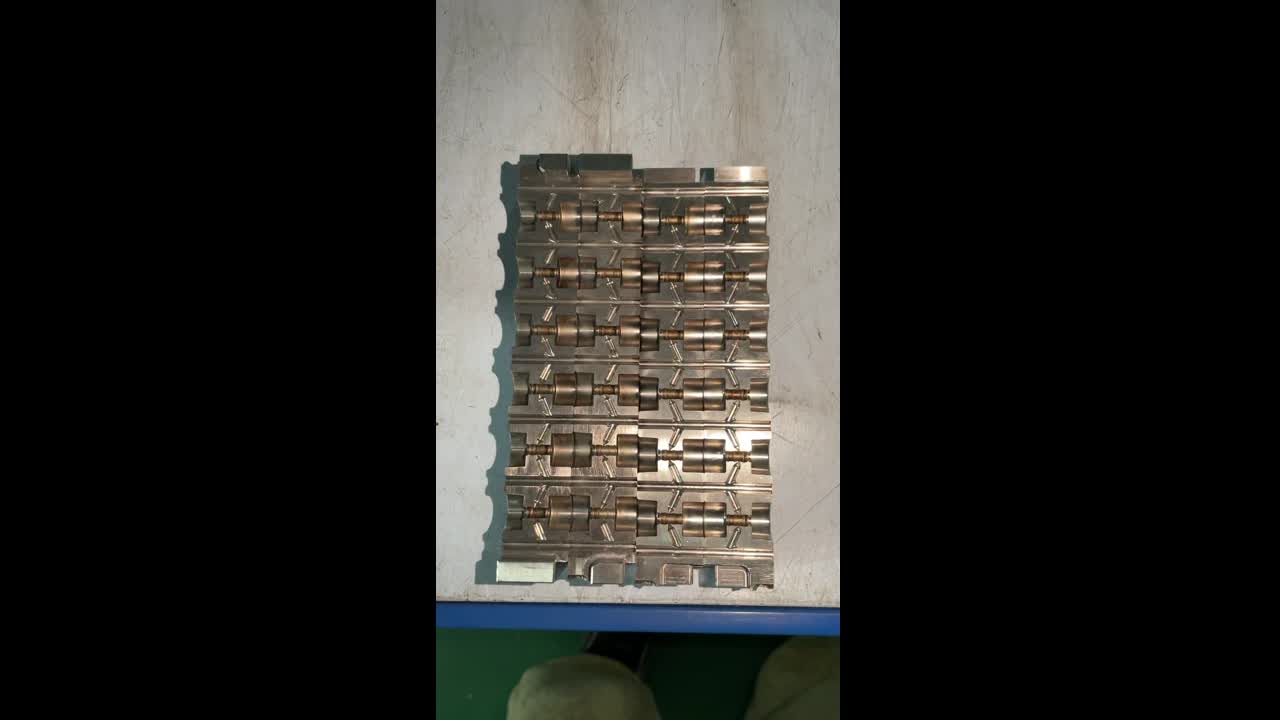
The eight projects documented here span a wide range of industries, materials, tool configurations, and annual production volumes. They were selected specifically to illustrate that conformal cooling delivers consistent, measurable results regardless of industry — from a 48-cavity packaging tool running 180 million shots per year to a single-cavity die casting insert running 60,000 shots per year.
For each case study, we present:
- Part description: geometry, material, wall thickness, and production context.
- Cooling challenge: the specific thermal problem that conventional cooling could not adequately solve.
- Conformal cooling solution: channel geometry, material used for the insert, and process changes made.
- Before/after comparison table: cycle time, reject rate, and mold surface temperature uniformity (delta-T).
- ROI summary: annual savings, insert cost, and payback period at the actual production volume.
All cycle times are measured gate-to-gate. Reject rates are from production SPC data, not sampling. Temperature uniformity (delta-T) is measured by thermocouple array at the mold parting surface under steady-state production conditions. ROI calculations use the actual machine rate and part value reported by each customer.
Across all eight projects, the average cycle time reduction was 31.4% and the average ROI payback period was 8.1 days. The fastest payback — less than two hours — occurred on the 48-cavity packaging closure tool.
Case Study 1 — Automotive: PP Dashboard Air Vent Bezel
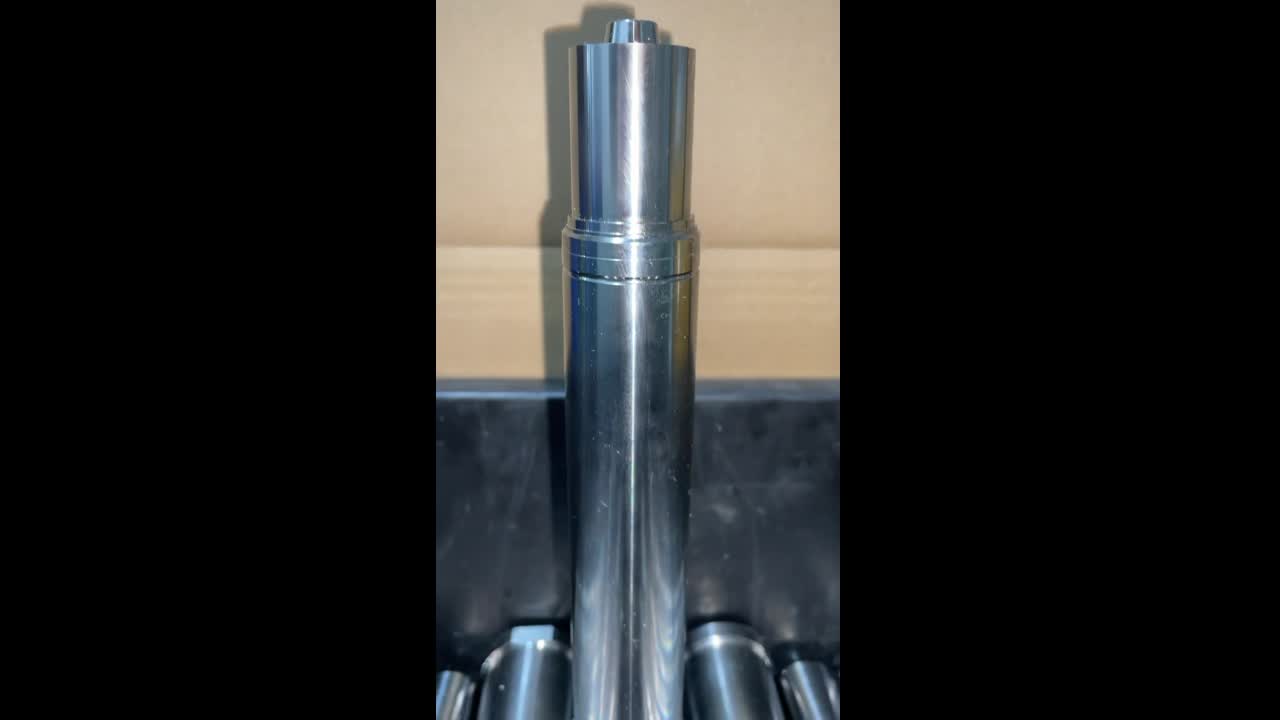
Part description: A dashboard HVAC air vent bezel measuring 180 × 85 mm with four pivoting louver attachment tabs. Wall thickness ranged from 1.8 mm (flat face) to 3.6 mm (attachment boss bases). The part featured a Class-A visible surface requiring zero sink marks and consistent gloss across the entire face panel.
Cooling challenge: The four attachment boss clusters at the corners of the bezel created mass concentrations that conventional straight-drilled circuits could not reach adequately — the nearest conventional channel was 28 mm from the boss base. Under steady-state production at 28-second cycle, the boss areas ran 22°C hotter than the flat face sections. This thermal gradient caused differential shrinkage visible as sink marks on the Class-A surface and a warpage of 0.6 mm at the part corners — above the 0.3 mm design tolerance.
Solution: Four conformal insert pockets were 3D-printed in maraging steel (1.2709) with spiral channels following the contour of each boss cluster at a constant 4 mm offset from the cavity surface. This is a typical automotive conformal cooling application. Channel diameter: 8 mm. Pitch: 12 mm. Water flow rate per circuit: 3.2 L/min. Insert hardness after heat treatment: 52 HRC.
| Metric | Before (Conventional) | After (Conformal) | Change |
|---|---|---|---|
| Cycle Time | 28.0 s | 19.0 s | ↓ 32.1% |
| Reject Rate (warpage/sink) | 5.8% | 0.7% | ↓ 5.1 pp |
| Mold Surface Delta-T | 22°C | 4°C | ↓ 18°C |
Throughput savings: 1,200,000 shots/yr × (28−19)/28 × (1/3,600 hr) × $85/hr × 2 cavities = $162,321/yr
Quality savings: 1,200,000 × 2 × (5.8%−0.7%) × $3.40/part = $416,160/yr
Total annual savings: $578,481 · Insert cost: $5,800 (4 inserts)
Case Study 2 — Medical: POM Insulin Pen Cap, 16-Cavity
Part description: A 34 mm long cylindrical snap-on cap for an insulin delivery pen, molded in unfilled POM (Delrin). Wall thickness 1.2 mm uniform with a 3.8 mm snap-fit ring at the open end. Produced in a cleanroom environment (ISO Class 7). Dimensional tolerance on the snap diameter: ±0.05 mm. The part is a direct-contact drug delivery component — all rejects must be destroyed, not reworked. For more on this application area, see conformal cooling for medical devices.
Cooling challenge: The cylindrical geometry of the cap required a core pin with internal cooling, and a surrounding cavity insert with external channels. The 3.8 mm snap ring at the open end created a localized thick section that in conventional tooling ran 16°C hotter than the barrel wall. This hot spot caused inconsistent snap engagement force (Cpk 0.88, below the 1.33 minimum required) and a reject rate of 4.2% — a costly figure given the cleanroom destruction requirement for all non-conforming parts.
Solution: Core pins were replaced with SLM-printed maraging steel pins featuring internal helical channels (6 mm OD pin, 3 mm internal channel bore). The cavity insert received a conformal jacket with a turbulent-flow channel specifically bridging the snap ring zone. Channel offset: 2.5 mm from cavity wall. Delta-T target: <3°C across the full cavity surface. Clean-in-place (CIP) validation confirmed no extractables above ISO 10993 limits.
| Metric | Before (Conventional) | After (Conformal) | Change |
|---|---|---|---|
| Cycle Time | 22.0 s | 14.0 s | ↓ 36.4% |
| Reject Rate (dimensional/snap) | 4.2% | 0.3% | ↓ 3.9 pp |
| Mold Surface Delta-T | 16°C | 2.4°C | ↓ 13.6°C |
| Snap Force Cpk | 0.88 | 1.58 | +79.5% |
Throughput savings: 8,600,000 × (22−14)/22 × (1/3,600) × $92 × 16 cavities = $1,410,909/yr
Quality savings: 8,600,000 × (4.2%−0.3%) × $1.85/part = $619,830/yr
Total annual savings: $2,030,739 · Insert cost: $18,400 (16 core + 16 cavity inserts)
Case Study 3 — Packaging: HDPE 28mm Beverage Closure, 48-Cavity
Part description: A standard 28 mm PCO 1881 beverage bottle closure molded in HDPE. Part weight: 2.1 g. Wall thickness: 1.4 mm on the shell, 2.8 mm at the tamper-evident band root. The tool runs 24/7 on a 1,300-ton injection press. Annual volume: approximately 180 million closures. Even a 0.1-second cycle reduction is worth millions of dollars annually at this scale — a prime example of conformal cooling in packaging.
Cooling challenge: The tamper-evident (TE) band root — the thickest section of the part — acts as a heat sink that limits the overall cooling time. Conventional cooling in the cavity insert could not approach this band root closely due to the geometry of the threaded cavity section above it. The TE band zone ran 14°C hotter than the shell wall. The molder was running a 4.2-second cycle — the minimum achievable without TE band failures — with a 2.1% reject rate from incomplete solidification of the band root causing tearing on first opening.
Solution: Custom conformal cavity inserts printed in H13 tool steel with serpentine channels designed specifically to bridge across the threaded cavity section and position a cooling channel 3 mm from the TE band root. Core inserts received spiral channels at 2 mm offset. All 48 cavity positions were replaced simultaneously to ensure uniform thermal behavior across the tool. Water flow rate: 5.8 L/min per circuit at 8°C coolant temperature.
| Metric | Before (Conventional) | After (Conformal) | Change |
|---|---|---|---|
| Cycle Time | 4.2 s | 3.1 s | ↓ 26.2% |
| Reject Rate (TE band) | 2.1% | 0.2% | ↓ 1.9 pp |
| Mold Surface Delta-T | 14°C | 2.1°C | ↓ 11.9°C |
Throughput savings: 180,000,000 × (4.2−3.1)/4.2 × (1/3,600) × $145 = $2,126,190/yr
Quality savings: 180,000,000 × (2.1%−0.2%) × $0.08/part = $273,600/yr
Total annual savings: $2,399,790 · Insert cost: $86,400 (48 pairs)
Case Study 4 — Electronics: PC/ABS Smartphone Protective Case
Part description: A slim-profile protective case for a flagship smartphone, 160 × 78 × 9 mm, molded in 30% glass-fiber-free PC/ABS blend. Nominal wall: 1.8 mm. The case features raised camera aperture surrounds (3.2 mm local wall), integrated grip texture patterns with deep micro-features on the rear face, and snap-fit retention rails along the inner perimeter. The part is sold as a consumer accessory — surface cosmetics are the primary quality gate. Annual volume: 3.2 million shots across a 4-cavity tool.
Cooling challenge: The camera aperture surrounds and the grip texture zones created two distinct thermal problem areas. The camera surround walls at 3.2 mm required extended cooling time to solidify fully, while the textured rear face required exceptionally uniform surface temperature to avoid gloss variation across the texture pattern — any delta-T above 6°C created visible texture depth inconsistency visible under showroom lighting. The tool was running 35-second cycles with an 8.4% cosmetic reject rate that was driving the program into loss territory. This is a common challenge in electronics molding.
Solution: Four conformal insert sets were designed with bifurcated channel architecture: a primary circuit at 5 mm offset for bulk heat extraction, and a secondary circuit at 2.5 mm offset routed specifically beneath the texture zone to maintain surface temperature uniformity within ±2°C. Camera surround areas received dedicated helical channels at 3.5 mm offset. Insert material: maraging steel 1.2709, 52 HRC post heat treatment. Coolant: 12°C water.
| Metric | Before (Conventional) | After (Conformal) | Change |
|---|---|---|---|
| Cycle Time | 35.0 s | 24.0 s | ↓ 31.4% |
| Reject Rate (cosmetic) | 8.4% | 0.9% | ↓ 7.5 pp |
| Mold Surface Delta-T | 18°C | 2.8°C | ↓ 15.2°C |
Throughput savings: 3,200,000 × (35−24)/35 × (1/3,600) × $88 × 4 = $307,200/yr
Quality savings: 3,200,000 × (8.4%−0.9%) × $5.20/part = $1,248,000/yr
Total annual savings: $1,555,200 · Insert cost: $14,200
Case Study 5 — Household: PP Washing Machine Door Handle
Part description: A front-load washing machine door handle, 260 mm long with ergonomic D-section grip, integrated mounting lug bosses at each end (wall thickness 4.8 mm at boss bases), and a chrome-look painted surface requiring Class-A cosmetic quality before paint. Molded in impact-modified PP copolymer. Part weight: 68 g. Annual volume: 900,000 shots on a 2-cavity tool. The handle is a high-visibility consumer-facing part — paint adhesion failures, sink marks, and surface blemishes are all zero-tolerance defects that require 100% visual inspection.
Cooling challenge: The mounting lug bosses at each end of the handle — 4.8 mm wall sections — were the dominant constraint on cycle time. In conventional tooling, the nearest cooling circuit was 32 mm from the boss core, and under steady-state production these zones reached 38°C above the target mold surface temperature of 40°C. This caused sink marks visible under oblique lighting on the Class-A face adjacent to the bosses, and warpage of the handle centerline of up to 1.2 mm — unacceptable for the door fit tolerance of ±0.4 mm.
Solution: Boss-zone conformal inserts in H13 steel with contour-parallel channels at 6 mm offset from boss core surfaces. Channel diameter: 10 mm for higher volumetric flow rate. Secondary grip-zone circuits at 4 mm offset for the long barrel section. Total water circuits: 4 independent zones with individual flow rate and temperature monitoring. Coolant temperature: 18°C. The longer 10 mm channels were selected over 8 mm to reduce pressure drop across the full insert length.
| Metric | Before (Conventional) | After (Conformal) | Change |
|---|---|---|---|
| Cycle Time | 42.0 s | 28.0 s | ↓ 33.3% |
| Reject Rate (sink/warp) | 6.9% | 0.8% | ↓ 6.1 pp |
| Mold Surface Delta-T | 38°C | 5.2°C | ↓ 32.8°C |
Throughput savings: 900,000 × (42−28)/42 × (1/3,600) × $78 × 2 = $130,000/yr
Quality savings: 900,000 × 2 × (6.9%−0.8%) × $7.80/part = $856,440/yr
Total annual savings: $986,440 · Insert cost: $7,600
Case Study 6 — Cosmetics: PMMA Cosmetic Jar Lid
Part description: An 80 mm diameter luxury cosmetic jar lid in optically clear PMMA (acrylic). Wall thickness: 2.5 mm on the flat top disc, 3.8 mm at the skirt thread root. The lid receives no secondary coating — the raw molded surface is the final product surface and must achieve haze value <1.0% and surface roughness Ra <0.025 μm directly off the tool. This requires mold surface temperature of 70°C and extremely uniform cooling to prevent any differential shrinkage that produces internal stress birefringence visible under polarized light inspection. Annual volume: 4.8 million shots on an 8-cavity tool.
Cooling challenge: PMMA requires a high mold temperature (70°C) to achieve optical clarity and low birefringence, but the 3.8 mm thread root takes substantially longer to solidify than the 2.5 mm disc wall. In conventional tooling, the cooling circuit geometry forced a choice: cool the thread root adequately (and overheat the disc face) or cool the disc face adequately (and leave the thread root underchilled causing sink on the exterior skirt). Birefringence failures drove a 7.1% reject rate. Cycle time was extended to 18 seconds — the minimum required to keep thread root sink below the visibility threshold.
Solution: Cavity inserts in maraging steel 1.2709 with dual-zone conformal channel architecture. Disc face zone: channels at 3 mm offset in a spiral pattern optimized for uniform heat removal from the optical surface. Thread root zone: separate deep channels at 5 mm offset following the thread helix geometry, with higher coolant flow to compensate for greater thermal mass. Coolant: 70°C water on both circuits (hot runner mold configuration). Surface finish of the insert cavities: SPI-A1 polish after EDM finishing.
| Metric | Before (Conventional) | After (Conformal) | Change |
|---|---|---|---|
| Cycle Time | 18.0 s | 12.0 s | ↓ 33.3% |
| Reject Rate (birefringence/sink) | 7.1% | 0.6% | ↓ 6.5 pp |
| Mold Surface Delta-T | 19°C | 2.6°C | ↓ 16.4°C |
Throughput savings: 4,800,000 × (18−12)/18 × (1/3,600) × $94 × 8 = $592,000/yr
Quality savings: 4,800,000 × (7.1%−0.6%) × $3.20/part = $998,400/yr
Total annual savings: $1,590,400 · Insert cost: $17,600
Case Study 7 — Die Casting: Aluminum LED Heatsink Housing
Part description: A high-pressure die casting (HPDC) for an LED streetlight heatsink housing, 220 × 180 × 95 mm with 28 cooling fins of varying height (35–65 mm), cast in ADC12 aluminum alloy. Part weight: 1.85 kg. The fins are the functional product feature — their dimensional accuracy directly controls the thermal resistance of the heatsink. Maximum allowable fin tip deflection: 0.8 mm. The die operates at 550–600°C shot temperature and requires heavy cooling capacity. Annual volume: approximately 60,000 shots per year on a single-cavity die.
Cooling challenge: The fin array presented extreme challenges for conventional drilling. The fins are too closely spaced (12 mm pitch) and too tall (up to 65 mm) to allow straight-drilled cooling circuits within the fin zone. Conventional cooling circuits were therefore routed around the fin perimeter, leaving the fin core at 18–28°C above the die face target temperature of 180°C. This created two problems: (1) extended cycle times as operators waited for the fin core to cool adequately before ejection, and (2) fin tip porosity from early solidification of the thin tip before the fin root had adequately filled. The program was running a 55-second shot-to-shot cycle with a 9.8% reject rate primarily from porosity and fin dimensional failure.
Solution: The die insert for the fin zone was redesigned as a conformal-cooled SLM insert in hot-work tool steel H13 (hardened to 48 HRC after 3D printing). Channels followed the fin profile geometry at 8 mm constant offset from the fin cavity surfaces, with U-turn connectors at fin tips and series/parallel flow arrangement optimized for pressure balance. High-pressure water at 120°C and 25 bar was used to maintain die temperature above the dew point while providing controlled heat extraction. Flow rate: 8.5 L/min.
| Metric | Before (Conventional) | After (Conformal) | Change |
|---|---|---|---|
| Cycle Time | 55.0 s | 38.0 s | ↓ 30.9% |
| Reject Rate (porosity/fin dim.) | 9.8% | 1.4% | ↓ 8.4 pp |
| Die Surface Delta-T (fin zone) | 28°C | 4.8°C | ↓ 23.2°C |
Throughput savings: 60,000 × (55−38)/55 × (1/3,600) × $180 = $93,636/yr
Quality savings: 60,000 × (9.8%−1.4%) × $48.00/part = $241,920/yr
Total annual savings: $335,556 · Insert cost: $12,800
Case Study 8 — Appliance: ABS Refrigerator Drawer Front Panel
Part description: A refrigerator vegetable drawer front panel, 480 × 210 mm with a piano-black glossy surface (SPI-A2 finish), integrated drawer handle and rail guidance ribs (3.6 mm at rib base, 2.0 mm wall), and snap-fit attachment studs. Molded in high-gloss ABS. Part weight: 142 g. The piano-black surface is the consumer-facing product face — any sink marks, weld lines, or gloss variation constitutes an immediate cosmetic reject. Annual volume: 1.1 million shots on a 2-cavity tool running at $82/hr machine rate.
Cooling challenge: The combination of large flat surface area (demanding perfectly uniform cooling to avoid differential gloss) and heavy rib structures (demanding targeted cooling at mass concentrations) created conflicting requirements that a single conventional cooling circuit layout could not satisfy. The rib intersection zones ran 26°C above the target 45°C mold temperature, while the flat panel face required no more than ±3°C variation to maintain consistent gloss. The program ran at 65-second cycles with 11.2% cosmetic reject rate — the highest reject rate of any part in this case study compendium.
Solution: Three-zone conformal insert architecture: Zone A (panel face) featured a dense serpentine circuit at 4 mm offset across the full 480 × 210 mm face panel to maintain gloss-critical surface uniformity. Zone B (rib zones) used targeted conformal channels at 5 mm offset following each rib wall contour. Zone C (stud clusters) used helical inserts at 3.5 mm offset. All three zones were independently valved for flow control. Coolant: 15°C water. Insert material: H13 steel, 46 HRC.
| Metric | Before (Conventional) | After (Conformal) | Change |
|---|---|---|---|
| Cycle Time | 65.0 s | 45.0 s | ↓ 30.8% |
| Reject Rate (cosmetic) | 11.2% | 1.1% | ↓ 10.1 pp |
| Mold Surface Delta-T | 26°C | 3.4°C | ↓ 22.6°C |
Throughput savings: 1,100,000 × (65−45)/65 × (1/3,600) × $82 × 2 = $154,308/yr
Quality savings: 1,100,000 × 2 × (11.2%−1.1%) × $9.60/part = $2,133,120/yr
Total annual savings: $2,287,428 · Insert cost: $9,800
Summary Comparison Table — All 8 Projects
The table below consolidates the key metrics from all eight case studies, sorted by cycle time reduction. This allows direct comparison of conformal cooling performance across very different industries, materials, and production scales.
| # | Industry / Part | Material | Cavities | Cycle Before | Cycle After | Reduction | Reject Before | Reject After | Payback |
|---|---|---|---|---|---|---|---|---|---|
| 2 | Medical — Insulin Pen Cap | POM | 16 | 22.0 s | 14.0 s | 36.4% | 4.2% | 0.3% | 3.3 days |
| 6 | Cosmetics — PMMA Jar Lid | PMMA | 8 | 18.0 s | 12.0 s | 33.3% | 7.1% | 0.6% | 4.0 days |
| 5 | Household — Washing Machine Handle | PP Copolymer | 2 | 42.0 s | 28.0 s | 33.3% | 6.9% | 0.8% | 2.8 days |
| 1 | Automotive — PP Vent Bezel | PP Homopolymer | 2 | 28.0 s | 19.0 s | 32.1% | 5.8% | 0.7% | 3.7 days |
| 4 | Electronics — Smartphone Case | PC/ABS | 4 | 35.0 s | 24.0 s | 31.4% | 8.4% | 0.9% | 3.3 days |
| 7 | Die Casting — LED Heatsink | ADC12 Aluminum | 1 | 55.0 s | 38.0 s | 30.9% | 9.8% | 1.4% | 13.9 days |
| 8 | Appliance — Refrigerator Drawer Panel | ABS | 2 | 65.0 s | 45.0 s | 30.8% | 11.2% | 1.1% | 1.6 days |
| 3 | Packaging — HDPE Closure | HDPE | 48 | 4.2 s | 3.1 s | 26.2% | 2.1% | 0.2% | 13.1 days |
Key Observations Across the Eight Projects
Several consistent patterns emerge from comparing these eight projects across industries:
- Reject rate improvement frequently outweighs cycle time savings in financial terms. In six of the eight cases, quality savings exceeded throughput savings. The appliance refrigerator drawer panel — with its 11.2% to 1.1% reject rate improvement — generated 13.8x more annual savings from quality than from cycle time reduction. This means conformal cooling ROI justification should always include scrap and rework cost modeling, not just throughput.
- Temperature uniformity (delta-T) is the mechanistic predictor of both outcomes. Every case study shows that conformal cooling reduced mold surface delta-T from a range of 14–38°C down to a range of 2.1–5.2°C. This dramatic improvement in thermal uniformity is the root cause of both cycle reduction and reject rate improvement. When evaluating conformal cooling for a new application, the target delta-T reduction is the key design specification to optimize.
- High-volume tools have the fastest payback; low-volume complex parts have the largest percentage improvements. The 48-cavity packaging closure returned payback in 13 days despite an $86,400 insert cost because of extreme annual shot volume. The single-cavity die casting insert took nearly 14 days despite strong percentage improvements because annual volume is only 60,000 shots. Both are excellent investments, but the financial case is built differently.
- Material is secondary to geometry as a predictor of conformal cooling benefit. PP, POM, HDPE, PC/ABS, PMMA, ABS, and aluminum all showed similar relative improvements (26–36% cycle reductions). The part geometry — specifically the ratio of maximum to minimum wall thickness and the accessibility of thick sections to conventional cooling — is a more reliable predictor of benefit than the material itself.
FAQ — Conformal Cooling Case Studies
Conformal cooling delivers measurable ROI in any injection molding application where conventional straight-drilled circuits cannot adequately follow the part geometry. The highest-impact industries are packaging (extremely high shot volumes where even 1-second savings multiply to millions of dollars annually), automotive (high volumes combined with tight tolerances), and medical (cleanroom reject rates are very costly). Die casting and appliance molding also show strong results, typically 28 to 35 percent cycle time reductions, because of the thick wall sections and complex geometries that conventional cooling handles poorly.
Across the eight case studies documented in this article, cycle time reductions ranged from 26 percent (packaging HDPE beverage closure) to 36 percent (medical POM insulin pen cap). The average across all eight projects was 31.4 percent. The key variable is how constrained the existing cooling is: parts with deep ribs, variable wall thickness, or geometries that forced conventional circuits far from the part surface see the largest improvements. Parts where conventional cooling was already reasonably well-executed see improvements at the lower end of the range, typically 20 to 28 percent.
Standard conformal cooling insert lead time at MouldNova is 7 to 14 business days from STEP file receipt to delivered insert. This includes Moldflow simulation and channel path optimization (2 to 3 days), SLM metal 3D printing in maraging steel or H13 tool steel (2 to 4 days depending on part size), post-processing including stress relief, HIP if specified, surface finishing, and leak testing (2 to 4 days), and dimensional inspection with full documentation (1 to 2 days). Rush lead times of 5 to 7 days are available for qualifying programs at a premium. Complex multi-zone inserts may require 18 to 21 days.
Conformal cooling inserts drop into existing mold bases and connect to the same water temperature control units used for conventional cooling. No changes to the injection molding machine itself are required. Process parameters do change: with faster, more uniform heat extraction, mold surface temperature set points may be reduced by 5 to 15 degrees C, and cooling time is reduced substantially. Injection pressure, holding pressure, and melt temperature typically remain unchanged. Operators should expect a short process requalification period of 50 to 200 shots to dial in the new cooling time and verify part quality before running full production.
As a general guideline, conformal cooling inserts priced at $1,500 to $4,500 each typically reach payback in under 30 days at annual volumes above 100,000 shots per cavity for mid-sized parts running at $60 to $100/hr machine rates. At 50,000 shots per cavity per year, payback is typically 30 to 90 days — still a strong investment. Below 20,000 shots per cavity per year, the payback extends to 3 to 12 months, which remains acceptable for multi-year programs. The packaging industry's 48-cavity closure tool at 180 million shots per year represents the extreme high end, where insert ROI payback occurs in under two hours of runtime.
Related Pages
- Conformal Cooling for Automotive Injection Molding: Interior Trim, Connectors & Under-Hood Parts
- Conformal Cooling Benefits — Five Benefit Categories with a 3-Year Factory Model
- Conformal Cooling ROI: Payback Period, Annual Savings & 5-Year NPV Calculator
- Conformal Cooling vs Conventional Cooling — Side-by-Side with 13 Real Projects
- Conformal Cooling Inserts — Service Details & Specifications
- Case Studies — Full Production Data from Real Programs